
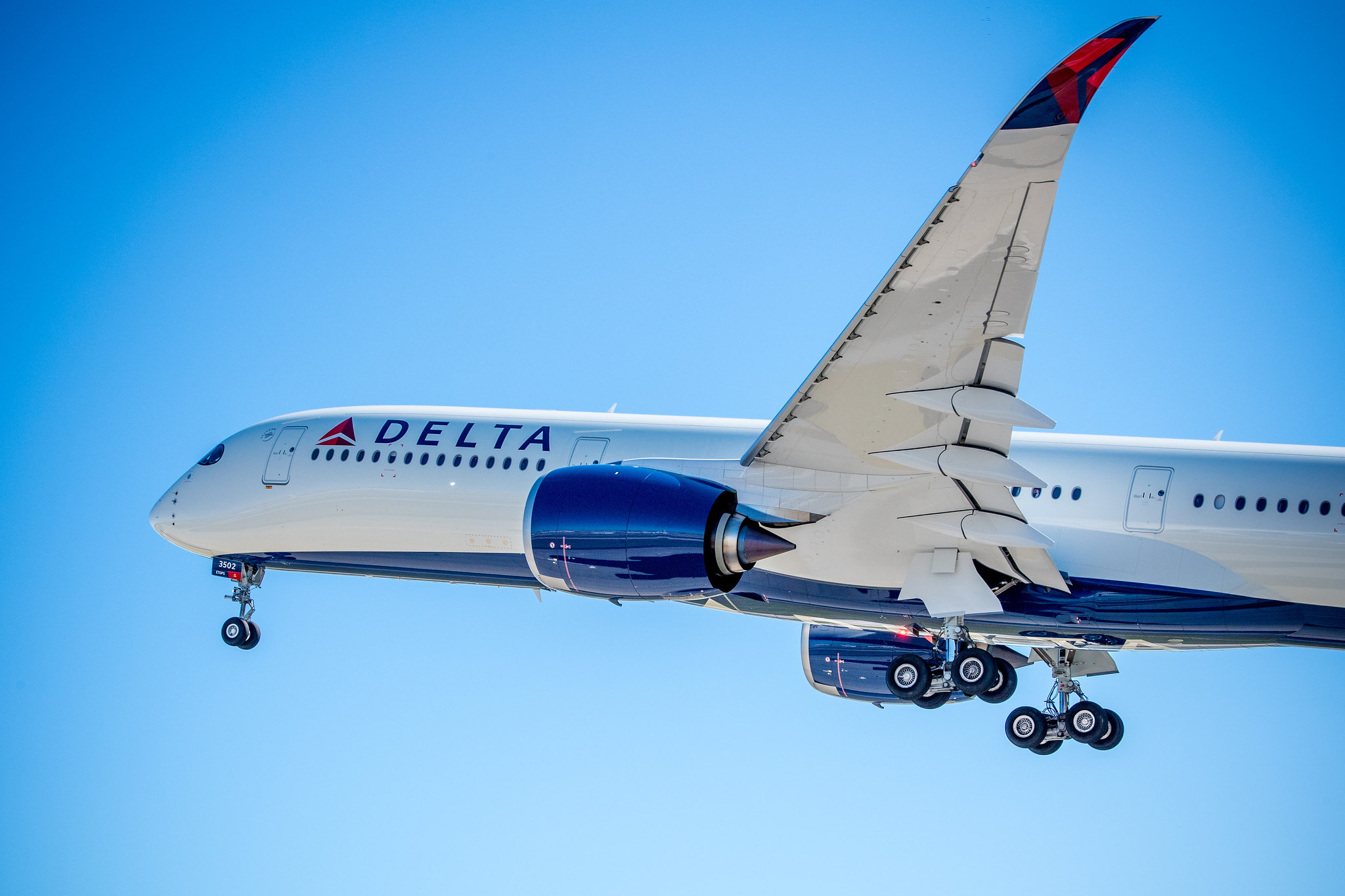
Delta is not only one of the largest airlines in the world, it’s also one of the most awarded. The airline operates as many as 5,500 flights a day to more than 300 destinations across six continents, and employs around 100,000 people. Headquartered in Atlanta, the airline has picked up a slew of awards in recent years, including recognition from J.D. Power, the Wall Street Journal, and Cirium, and it’s often cited as the most-awarded airline in the US.
Delta is a fixture on almost every “best airline to work for” list in the country, and the demand for its flight attendant roles shows it. Tens of thousands of candidates submit an application every time Delta opens a recruitment window, meaning that competition is fierce. Delta remains one of the most sought-after flight attendant jobs in America, and getting through its recruitment process takes real preparation, not just enthusiasm.
We’ve been closely tracking how Delta evolves its recruitment process, including with the use of AI, and we keep building out the details behind Delta’s own careers listings. This hub page pulls everything we’ve built together in one place.
Delta Air Lines: Quick Facts
| Requirement | Details |
|---|---|
| Minimum age | 21 |
| Minimum height | No fixed minimum; reach test applies instead (see below) |
| Reach test | 76 inches vertical and 35 inches horizontal, combined, tested via an in-person exercise Delta calls Reach & Snap |
| Experience required | No prior flight attendant experience needed; hospitality or customer service experience is advantageous |
| Education | High school diploma, GED, or equivalent |
| Tattoos | Visible tattoos not permitted; must be fully covered by clothing or waterproof makeup at all times |
| Contract type | Non-union, direct employment |
| Base | Assigned based on operational need after training, not confirmed in advance |
| Base salary | $38.40 an hour at Year 1, rising to $86.32 by Year 12 (2026 scale) |
| All-in monthly estimate | Approximately $3,100 to $3,500 a month in Year 1, roughly $40,000 to $50,000 annually including boarding pay and per diem |
| Tax status | Taxable; US federal income tax and, depending on base state, possible state income tax |
| Union representation | No, Delta flight attendants are not unionized |
Insight: Delta is the only major US airline without union representation for its flight attendants, and whether that should change is a hotly contested question, one that resurfaces every time an organizing campaign gets underway.
That said, being non-union isn’t automatically a disadvantage. The airline has given its flight attendants an annual pay increase every year since 2022, and its profit-sharing payouts consistently rank among the most generous in US aviation.
The trade-off is that none of this is contractually guaranteed the way it would be under a negotiated agreement, so a candidate weighing Delta against a unionized rival like United is really choosing between Delta’s track record and United’s legal certainty.
What Kind of Airline Is Delta?
Delta operates from its main hub at Atlanta’s Hartsfield-Jackson airport, with major bases also in New York, Los Angeles, Boston, Minneapolis, Detroit, and Seattle. The In-Flight Service team is already more than 28,000 strong and still growing.
Unlike carriers that hire once a year in a short burst, Delta opens flight attendant applications on a fairly regular basis. That doesn’t make getting hired easy. Postings tend to fill and close quickly once they’re live, and candidates have to complete a multi-stage recruitment process involving several online assessments before an in-person Assessment Day.
New hires will start on what Delta calls A-days, its own version of reserve. Compared to the traditional reserve system most other US carriers run, A-days are more flexible, as they can be traded between crew, and they carry a guaranteed minimum of pay even on days you’re never called out. Building the seniority to hold a consistent schedule, or to move to a base you’d actually prefer, still takes time.
Like most US airlines, progression at Delta is mainly through acquiring seniority. Candidates who are patient with a seniority-driven system, and who value Delta’s track record on pay and profit sharing over the certainty of a union contract, tend to do well here. Candidates who want a fixed schedule or a guaranteed base from day one tend to find the early years harder than expected, which is true of every major US carrier, not just Delta.
The Pay and Benefits Package
Starting pay is $38.40 an hour, rising to $86.32 by year twelve, and realistic first-year earnings including boarding pay and per diem run $40,000 to $50,000 before tax. Delta was also the first major US airline to introduce dedicated boarding pay, back in 2022. Its profit-sharing programme is one of the most generous in the industry, paying out at around 10% of eligible earnings in 2024.
For the full salary and benefits breakdown, including the complete year-by-year pay scale, per diem, boarding pay, and how Delta’s non-union raises stack up against United’s newly ratified union contract, see the full Delta Air Lines Flight Attendant Salary and Benefits guide.
Worth knowing: Delta’s top hourly rate now sits slightly below United’s, which recently jumped ahead following a new contract. But total compensation is a different picture. Delta’s profit sharing has generally outpaced United’s, and Delta’s non-union model has delivered smaller, consistent annual raises rather than years without one followed by a single large correction.
The Recruitment Process
Delta’s flight attendant recruitment journey now runs to eight steps:
- Online application,
- The new Monroe AI assessment
- FitMe values-based assessment
- HireVue on-demand video interview
- In-person Assessment Day at Delta’s Atlanta headquarters
- A conditional job offer
- Pre-employment drug and background checks
- Seven weeks of paid training in Atlanta.
The Monroe stage is the newest and most misunderstood part of this process. Delta frames it as a chance to learn more about the role, but it’s also functioning as an early filter, complete with situational, competency-based questions and the ability to ask follow-ups based on what you’ve just said.
For the full stage-by-stage breakdown, including what each step is actually testing and what to do if you’re rejected, see our Delta Air Lines Flight Attendant Recruitment: The Complete Step-by-Step Guide.
Your Delta Air Lines Recruitment Guides
Before You Apply
Is Delta Air Lines Hiring Flight Attendants?: Our live tracker on Delta’s current hiring status, updated as new application windows open.
Delta Air Lines Flight Attendant Salary and Benefits: The full pay scale, per diem, boarding pay, profit sharing, and benefits breakdown, essential reading before you decide whether the package works for you.
Compare Salaries and Benefits Across Six U.S. Airlines: How does Delta’s pay and benefits compare against five other major U.S. carriers? Use our free comparison tool.
The Recruitment Process
💡 Top Article: Delta Air Lines Flight Attendant Recruitment: The Complete Step-by-Step Guide. Covers every stage of the process, including what happens if you’re rejected and what your realistic options are. If you read just one guide, make it this one.
Delta Has Added a New AI Screening Step Called Monroe: What Monroe actually is, how it’s scored, and how it differs from the HireVue interview later in the process.
Break This Rule and You Could Be Permanently Disqualified: What Delta’s six-month rea
Appearance and Presentation
The Full Delta Air Lines Flight Attendant Tattoo Policy and Grooming Standards Explained: Delta’s tattoo, hair, jewelry, and clothing requirements explained in full, straight from the airline’s own appearance documentation.
Companion Guides
The Step-by-Step Guide to Creating Your Perfect Cabin Crew Resume: The first stage of Delta’s process is an automated resume screen. This is essential reading before you touch the application.
SOAR to Success at Your Cabin Crew Final Interview: A framework for structuring competency-based answers clearly, directly relevant to both the Monroe assessment and the HireVue interview.
Cabin Crew Assessment Day Hub: General preparation for performing well in an in-person group assessment setting, applicable beyond Delta specifically.
Get Ready for the Online Assessments
Cabin Crew Values-Fit Practice Assessment: Practice the kind of statement-based values testing Delta’s FitMe stage uses, built around Delta’s own named values: Integrity, Resilience, Care, and Servant Leadership.
What is an On-Demand Video Interview (ODVI)? The Complete Guide: Directly relevant to Delta’s HireVue stage, this breaks down what to expect and how to prepare.
Is Delta Right for You?
Delta suits candidates who want the scale, network, and financial track record of one of the biggest airlines in the world, and who are comfortable trading the certainty of a union contract for Delta’s history of consistent raises and strong profit sharing instead. If you’re drawn to the scale, the network, and the idea of building a long career with one of the most admired airlines in the country, Delta is a strong choice worth taking seriously.
The honest other side: acceptance rates below 1% mean most applicants won’t get through on their first attempt, and Delta enforces its reapplication rules seriously, to the point of permanently blocking candidates who try to circumvent them. Appearance standards are strict and checked more than once during the process. Initial base assignment isn’t in your control, and being non-union means Delta’s generous track record on pay isn’t a legal guarantee the way a negotiated contract would be.
How Delta Compares to Its Rivals
United Airlines operates a larger fleet and international network than Delta, and its flight attendants are unionized under a newly ratified TA2 contract that pushed United’s top hourly rate above Delta’s. United’s tattoo policy is also more permissive; visible tattoos are allowed on arms, wrists, legs, and feet, which Delta doesn’t permit at all.
American Airlines runs a similarly large network under its own union contract, but new hires face a five-year runway of Reserve before consistent schedule control, longer than Delta’s more flexible A-days system.
Southwest is known for paying some of the best rates in US aviation, but operates a different network shape entirely, with no long-haul international routes, a real point of difference if global flying matters to your decision.
Frequently Asked Questions
Starting pay is $38.40 an hour, rising to $86.32 by year twelve. Realistic first-year earnings, including boarding pay and per diem, run $40,000 to $50,000 before tax.
21 years old at the time of application.
There’s no fixed height minimum. Instead, candidates must be able to reach 76 inches and simultaneously span 35 inches, tested in person during an exercise Delta calls Reach & Snap.
No previous flight attendant experience is required, though hospitality or customer service experience is advantageous.
An eight-step journey: online application, the Monroe AI assessment, FitMe, a HireVue on-demand interview, an in-person Assessment Day in Atlanta, a Conditional Job Offer, pre-employment checks, and seven weeks of paid training.
Visible tattoos aren’t permitted. They must be fully covered by clothing or waterproof makeup at all times throughout the interview process and career.
Standard policy requires a six-month wait from your date of disqualification, and a new job requisition must be active. Some candidates are now receiving a waived version of this rule when Delta simply reaches capacity rather than rejecting them on merit. Attempting to bypass the standard rule, creating a new profile or applying early, risks permanent disqualification from any role at Delta.