
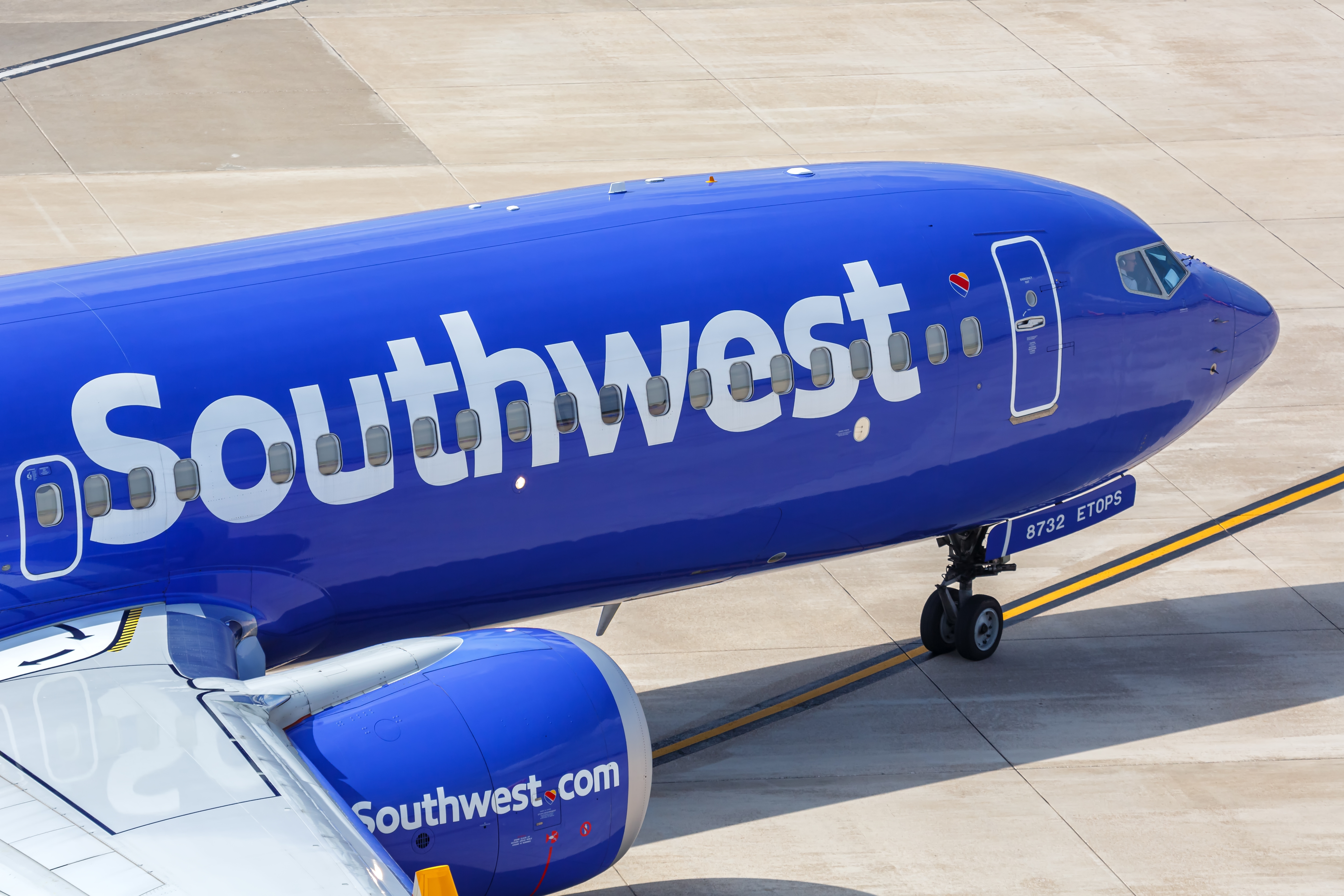
Southwest Airlines is one of the most sought-after employers for aspiring flight attendants, and that’s a detail the Dallas-based carrier is very well aware of. Flight attendant recruitment rarely opens, and when it does, the competition is fierce.
Founded in 1967 by Herb Kelleher and Rollin King, Southwest revolutionized air travel in the United States, winning over millions of loyal fans with its fun-loving personality and unique offering. Not that the airline is standing still: assigned seating, extra legroom rows, a premium credit card in the works, and its first airport lounges are all part of Southwest 2.0, reshaping what flying Southwest looks and feels like, with flight attendants right at the center of delivering it.
This hub page brings together every resource we’ve created to get you through the Southwest Airlines flight attendant recruitment process, along with companion guides you don’t want to miss.
Southwest Airlines: Quick Facts
| Requirement | Details |
|---|---|
| Minimum age | 20 years old at the time of application |
| Minimum height | No fixed minimum; a functional reach and jumpseat test applies instead (see below) |
| Reach test | No stated number. You must be able to reach overhead bins, fit through the overwing window exit, and sit correctly in a jumpseat harness without an extension |
| Right to work | Authorization to work in the United States required |
| Education | High school diploma or GED required; college coursework or a degree preferred but not required |
| Tattoos | Full sleeves permitted on arms, legs, wrists, hands, and feet; not permitted on the head, face, neck, or chest unless completely covered; must not be offensive |
| Base | 13 crew bases, plus a new base under development at Austin-Bergstrom (AUS) |
| Starting pay | $32.62 per TFP credit in year one, roughly $37.51 an hour equivalent |
| All-in monthly estimate | Southwest’s own first-year estimate of around $38,000 a year, working out to roughly $3,167 a month with typical per diem and flying |
| Contract type | Direct employment, ongoing (not fixed-term) |
| Union representation | Yes, TWU Local 556 |
Insight: Southwest pays under a Trip For Pay (TFP) system rather than a straight hourly wage, where one TFP credit works out to roughly 243 nautical miles or about 55 minutes of flying. Reserve flight attendants are scheduled for a minimum of 78 TFP credits a month, rising to 80 once you hold a dedicated line.
What Kind of Airline Is Southwest?
Southwest is the largest domestic carrier in the United States by passengers flown, operating an all-Boeing 737 fleet across 13 crew bases and around 115 to 120 destinations spanning the continental US, Hawaii, and a growing international list. Unlike United or Delta, there’s no hub-and-spoke network: Southwest runs point-to-point routing, which means a far higher proportion of short, quick-turn domestic flying than at the legacy carriers, and no long-haul or widebody flying (at least not yet).
The airline is currently going through a period of massive change. Southwest recently replaced its iconic open boarding policy with assigned seating, introduced its first Basic Economy-style fare tier, and began charging most passengers for checked bags for the first time in the airline’s history. The network is also being reshaped, with routes trimmed at underperforming stations like Atlanta and added at growth cities like Austin, where a brand new crew base is under development.
Southwest still hires on personality first. Its three core values, Warrior Spirit, Servant’s Heart, and Fun-LUVing Attitude, aren’t just buzzwords. These values are a central part of what recruiters are seeking in new-hire flight attendants.
Southwest tends to suit candidates who want a domestic-focused route network with fast turnarounds and a strong, values-driven culture, and who are comfortable with a seniority system that governs bases and schedules from day one. Candidates set on international or widebody flying, at least for now, should look elsewhere.
The Pay and Benefits Package
Southwest pays flight attendants under a Trip For Pay (TFP) system rather than a straightforward hourly wage. New hires start at $32.62 per TFP credit, working out to roughly $37.51 an hour, with Southwest’s own first-year estimate coming in at $38,000 a year, or about $3,167 a month once typical per diem and flying are factored in. Reserve flight attendants are guaranteed a minimum of 78 TFP credits a month, rising to 80 once you hold a dedicated line.
Pay is set under the current TWU Local 556 contract, and benefits include a 401(k) and Southwest’s well-known staff travel perks, both for the employee and eligible companions. There’s no relocation assistance to your assigned base, however, and moving costs are your own responsibility wherever you end up.
Southwest’s TFP structure and the reserve-versus-line-holder gap mean take-home pay varies more in year one than the headline hourly figure suggests, and it can take time to come off reserve depending on which base you’re assigned to. Southwest’s own claim to run the industry’s best-paid flight attendants also predates newer 2024 to 2026 contracts at American and United, which have since moved ahead on headline hourly rate.
For the full breakdown, including exactly how TFP credits translate into a monthly paycheck, see the full salary and benefits guide below.
The Recruitment Process
Southwest’s recruitment process starts off with an online application via the official Southwest careers website, before moving onto a one-way recorded interview and then an in-person Assessment Day in Dallas.
Southwest is explicit that it doesn’t run group interviews the way some rivals do: you’ll be with other candidates for icebreaker and group exercises, but the panel interview itself is one-on-one with a recruiter and a current flight attendant.
Southwest’s hiring windows can also open and close without much warning, so it’s worth checking current application status before you invest time preparing. For the full stage-by-stage breakdown, see the step-by-step guide below.
Your Southwest Airlines Guides
Current Hiring Status
When Will Southwest Airlines Reopen Flight Attendant Applications? Southwest’s flight attendant hiring windows don’t stay open for long. This is the guide to check what signals there are that Southwest will be opening recruitment soon.
Before You Apply
Southwest Airlines Flight Attendant Salary and Benefits The full TFP pay structure, per diem, and benefits breakdown – essential reading before you decide whether the package works for you.
US Airline Flight Attendant Salary Comparison: American vs Alaska vs Delta vs Southwest vs JetBlue How Southwest’s pay and benefits actually stack up against five other major US carriers, side by side.
Southwest Airlines Flight Attendant Bases: The Complete Guide All 13 Southwest crew bases explained: how base assignment and bidding actually work, what’s currently happening at each base, and what commuting really involves.
The Recruitment Process
💡 Top Article Southwest Airlines Flight Attendant Recruitment: The Complete Step-by-Step Guide Every stage of the process, from the online application through to your first day of training in Dallas. If you read just one guide, make it this one.
The Southwest Airlines Flight Attendant Assessment Day Cheat Sheet Southwest’s fleet facts, history, and all the airline knowledge you should have ready before your Dallas Assessment Day or your one-way video interview.
Appearance and Presentation
Southwest Airlines Flight Attendant Appearance and Grooming Guide Southwest’s tattoo, hair, facial hair, makeup, and fingernail standards, explained directly from the airline’s own current guidance, including its newly relaxed tattoo policy.
Is Southwest Right for You?
Southwest suits candidates who want a fast-paced, domestic-focused career built around short-haul, quick-turn flying, and who are drawn to a culture that genuinely rewards personality rather than a scripted, buttoned-up service style.
Remember Southwest is currently going through more change than at almost any point in its history, and the airline is looking for candidates who will embrace this change.
Base assignment depends on where Southwest needs crew that month, not where you’d prefer to live, and coming off reserve can take considerably longer at a large, senior base than a newer, growing one.
If you’re already flying for another US carrier and weighing a move to Southwest, the calculation is different again: you could be trading an established international network for an all-domestic, point-to-point operation, in exchange for Southwest’s distinctive culture and a seniority system you’d be starting again at the bottom of.
For a candidate who genuinely wants Southwest specifically, rather than any US airline that happens to be hiring, that culture and the airline’s current momentum make for a strong case. For a candidate optimising purely for international flying or headline pay, there are other good options elsewhere in the US market.
How Southwest Compares to Its Rivals
American Airlines runs a broadly similar seniority system and domestic base structure to Southwest, but operates a genuine international network alongside it, a real point of difference if long-haul flying matters to you.
United Airlines is larger still, with the most extensive international network of any US carrier, but new hires there typically spend longer on Reserve before a predictable schedule comes into reach.
Delta Air Lines doesn’t have a union for flight attendants, so pay moves proactively rather than through negotiation, a different model from Southwest’s union-negotiated TWU 556 contract, and one that appeals to a different kind of candidate.
JetBlue is a smaller, younger carrier with its own distinct base options and culture, worth a look if Southwest’s scale feels like a downside rather than an advantage, though its salary and benefits currently trail Southwest’s.
Frequently Asked Questions
New hires start at $32.62 per TFP credit, roughly $37.51 an hour equivalent. Southwest’s own first-year estimate, including typical per diem and flying, is around $38,000 a year, or about $3,167 a month.
20 years old at the time of application.
There’s no fixed height minimum. Instead, candidates must pass a functional reach and jumpseat test: reaching overhead bins, fitting through the overwing window exit, and sitting correctly in a jumpseat harness without an extension.
Southwest doesn’t require prior flight attendant experience. You will need a high school diploma or GED, and the right to work in the US.
Yes. Full sleeves are permitted on the arms, legs, wrists, hands, and feet, with no size limit. Tattoos aren’t permitted on the head, face, neck, or chest unless completely covered, and content must not be offensive.
An online application leads into assessments and interview stages, followed by an in-person Assessment Day in Dallas combining group exercises, a reach and jumpseat test, and a one-on-one panel interview.
Not outright. New hires bid for a preferred base in rank order, and Southwest makes the final call based on where it needs flight attendants at that moment.
Southwest is going through more structural change than at almost any point in its history, which cuts both ways. Its culture and current growth trajectory are genuine strengths, but base stability and schedule predictability vary more right now than they would at a carrier not mid-transformation.