
Tattoos are more common than ever, but the airline industry has been catching up with this massive societal change slowly and unevenly. Thankfully, more and more airlines are now starting to get the memo, although that inevitably means that what you may have read online about an airline’s tattoo policy is no longer accurate.
This guide gives the honest, current picture, airline by airline, based on what each carrier’s own recruitment material and assessment process actually requires, not on assumptions carried over from a decade ago. It also explains how the industry got here, because the recent history of tattoo policy reform tells you a lot about where things are heading next.
Quick Reference: Tattoo Policies at a Glance
| Airline | Visible Tattoos Permitted? |
|---|---|
| Virgin Atlantic | Yes Not face or neck; no offensive content |
| EasyJet | Yes Not head, face, or neck; no offensive content |
| United Airlines | Yes Must be non-offensive |
| Southwest Airlines | Limited Maximum badge-size; no face tattoos |
| Alaska Airlines | Limited Small tattoos only |
| Emirates | No Must be hidden by uniform; no bandages or makeup |
| Etihad Airways | No Checked formally at assessment day |
| Qatar Airways | No Checked formally at assessment day |
| flydubai | No Must be hidden by uniform |
| Riyadh Air | No |
| Delta Air Lines | No Must be covered by clothing or waterproof makeup; no bandages |
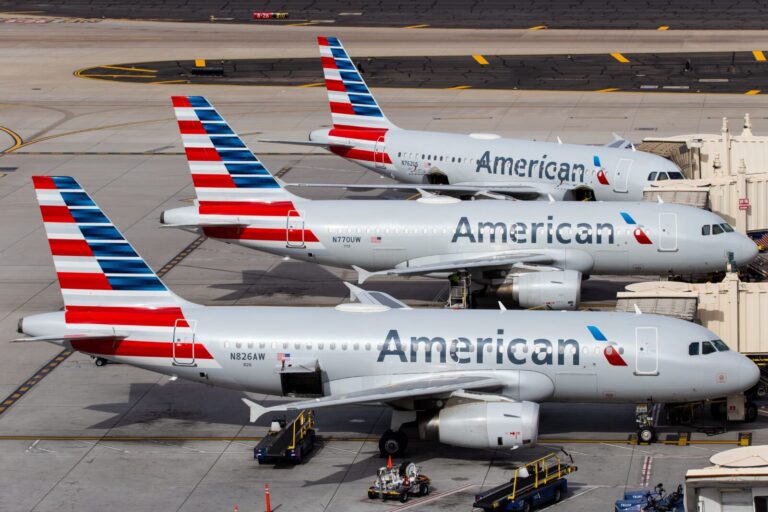
| American Airlines | No Must be covered by uniform or waterproof makeup |
| British Airways | No Must be covered by uniform |
| Ryanair | No Visible tattoos during duty may prevent hiring |
| Air Canada | Limited Permitted if non-offensive; not head or neck |
How We Got Here
For most of commercial aviation’s history, visible tattoos were simply not permitted in uniform, full stop. That started to change with a single, deliberate decision.
In June 2019, Air New Zealand became the first major airline in the world to allow visible tattoos among uniform wearers, including on the face. The change was introduced specifically so the airline would not exclude staff with Tā Moko, a traditional form of Māori tattooing carrying deep cultural significance. Then-chief executive Christopher Luxon described it as reinforcing the airline’s position “at the forefront of the airline industry in embracing diversity.”
What followed was a slow but consistent chain reaction. In 2021, United Airlines became one of the first US carriers to allow some visible tattoos as part of a wider set of gender-inclusive grooming reforms. The same year, a Canadian labour arbitrator ruled against Air Canada’s tattoo ban entirely, after the union representing its flight attendants argued the policy was discriminatory and unsupported by any evidence that tattoos affected a crew member’s ability to do the job. The arbitrator agreed, and Air Canada was ordered to permit visible tattoos provided they are not offensive, not connected to “nudity, hatred, violence, drugs, alcohol, discrimination, or harassment,” and not on the head or neck, except directly behind the ears.
In May 2022, Virgin Atlantic became the first major airline in the UK and the first in Europe to allow cabin crew, pilots, and other uniformed staff to display visible tattoos of any size, provided the design was not offensive. The airline’s then chief people officer Estelle Hollingsworth linked the decision explicitly to the industry-wide staffing shortage at the time, saying it would help Virgin Atlantic “attract talent” while also “championing individuality.”
Since then, the list has kept growing. Scandinavian carrier SAS, Lufthansa’s leisure subsidiary Eurowings Discover, and Southwest Airlines have all introduced more permissive tattoo rules in the years since, generally citing the same combination of recruitment pressure and a genuine shift in social attitudes toward tattoos.
Worth knowing: This is not a uniform global trend. Most Gulf carriers and several major Asian airlines have not moved from the no-visible-tattoo standard at all, and a handful of airlines have tightened other appearance rules even while relaxing tattoo policy specifically, as you will see below with Southwest. Treat each airline’s policy individually rather than assuming the direction of travel is the same everywhere.
The General Rule Across the Industry
Most major airlines still operate on some version of the same principle: tattoos are permitted, but they must not be visible while you are in uniform. What counts as “visible” varies, but the parts of the body most commonly treated as visible are the face, neck, hands, and forearms below where a uniform sleeve sits.
A smaller but growing number of airlines have gone further and now permit visible tattoos within limits, typically excluding the head, face, and neck, and requiring that the content is not offensive. A handful of carriers, mostly in the Gulf, maintain stricter requirements with formal physical checks built into the assessment day.
Covering a tattoo with bandages, plasters, or heavy makeup is explicitly not acceptable at most airlines that check for this. If it cannot be naturally hidden by the uniform itself, it counts as visible.
Worth knowing: This catches more candidates out than almost any other part of the tattoo question. Most airlines with a no-visible-tattoo policy mean exactly that: the uniform itself must hide it, not a plaster, a bandage, heavy concealer, or a sleeve of make-up applied for the assessment day or for line flying. Recruiters and crew managers are trained to spot this, and it is treated as an attempt to deceive rather than a creative solution. Crew have been sent home from assessment days, failed at uniform fitting, or, in some cases, dismissed during training or after joining when a covered tattoo was discovered.
If a tattoo cannot be hidden by the uniform as actually worn, the honest and safer option is to disclose it and find out directly whether it is a genuine barrier, rather than attempting to cover it and hope nobody checks closely.
Gulf Carriers
Emirates
- Visible tattoos: Not permitted
- Coverage: Must be hidden by uniform only — no bandages, no cosmetics
- Formally checked: Yes, at assessment day alongside the reach test
- Key point: No workaround if visible in uniform
Emirates allows tattoos, but they must not be visible while in uniform. Covering a tattoo with bandages or cosmetics is not permitted; it must be naturally hidden by the uniform itself. This is checked formally during the assessment day alongside the reach test, and there is no workaround if a tattoo is visible in a way the uniform does not cover.
Qatar Airways
- Visible tattoos: Not permitted
- Coverage: Must be hidden by uniform only
- Formally checked: Yes, physical check at assessment day — pass or fail
- Key point: Older information claiming Qatar bans all tattoos regardless of visibility is not accurat
Qatar Airways does not allow visible tattoos while in uniform. This is checked at the assessment day as part of a formal process; candidates undergo a genuine physical check for visible tattoos and scars, not an informal glance. Both the reach test and the tattoo check are pass or fail, with no workaround for either.
Some older information circulating online suggests Qatar Airways bans tattoos entirely regardless of visibility. Based on the airline’s current recruitment process, the policy in practice is a no-visible-tattoo standard similar to other major Gulf carriers, rather than a blanket prohibition on having any tattoo at all.
Etihad Airways
- Visible tattoos: Not permitted
- Formally checked: Yes, at assessment day during registration alongside reach test
- Key point: Both tattoos and piercings checked simultaneously
Etihad does not allow visible tattoos or piercings while in uniform. This is checked at the assessment day alongside the reach test during registration.
flydubai
- Visible tattoos: Not permitted
- Coverage: Must be hidden by uniform
- Key point: Standard Gulf carrier no-visible-tattoo policy applies
flydubai requires a well-groomed, professional appearance in line with its grooming standards and does not allow visible tattoos while in uniform.
Riyadh Air
- Visible tattoos: Not permitted
- Key point: New carrier, consistent with Gulf carrier standard across the region
Riyadh Air does not allow visible tattoos or piercings while in uniform, in line with the standard approach across Gulf carriers.
UK and European Carriers
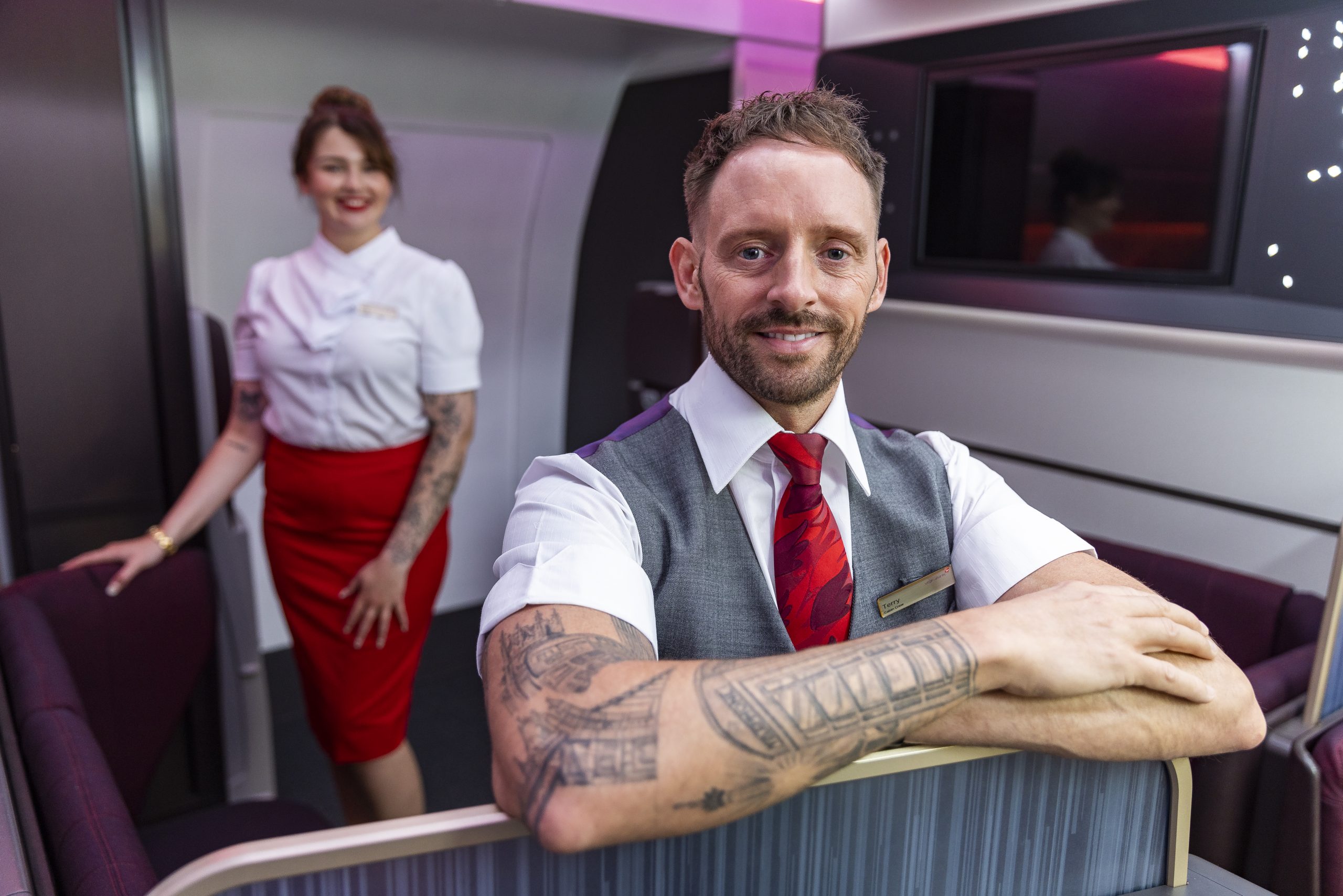
Virgin Atlantic
- Visible tattoos: Permitted within limits
- Permitted locations: Arms, wrists, legs
- Not permitted: Face, neck; offensive content; gang or prison-style tattoos
- Key point: First major UK and European airline to allow visible tattoos — policy changed May 2022
Virgin Atlantic is the airline that changed the most, and changed it most publicly. Until May 2022, the airline required arm and leg tattoos to be covered and banned tattoos entirely on body parts that could not be fully concealed. That policy was scrapped, making Virgin Atlantic the first major British airline, and the first in Europe, to allow visible tattoos of any size in uniform.
Most staff are permitted to display arm, wrist, and leg tattoos. Face and neck tattoos remain under review rather than confirmed permitted, and the airline has indicated it may revisit this in the future. Tattoos containing profanity, nudity, or violence, or otherwise deemed offensive, remain banned, as do gang and prison-style tattoos.
The change followed a broader pattern at Virgin Atlantic of relaxing older grooming rules. In 2019, the airline became the first major British carrier to drop mandatory make-up requirements for female cabin crew and to allow female crew to choose trousers and flat shoes. The same year, the airline allowed male cabin crew to wear non-discreet make-up for the first time.
easyJet
- Visible tattoos: Permitted within limits
- Not permitted: Head, face, neck; offensive, crude, political, or gang-related content
- Key point: Visible tattoos do not need to be covered under the current policy — no makeup or bandages required
EasyJet now permits tattoos, including visible ones, with two conditions: they must not be on the head, face, or neck, and the content must not be offensive, crude, political, gang-related, or contain profanity or nudity. This is a meaningful change from the older no-visible-tattoo standard and brings easyJet broadly in line with where the wider industry has been heading. The physical check at the assessment day confirms tattoos are not on the prohibited areas, and that any visible elsewhere on the body are not covered with make-up or bandages, since under the current policy they do not need to be covered at all.
British Airways
- Visible tattoos: Not permitted
- Coverage: Must be hidden by uniform; long-sleeve uniform available for arm tattoos
- Key point: No detailed published policy — general expectation is uniform coverage
BA does not publish as detailed a tattoo policy as some other carriers, and has not made the kind of public policy announcement that Virgin Atlantic or easyJet have. The general expectation is that tattoos must be covered by the uniform. If you have tattoos on your arms, then you must wear a long-sleeve version of the uniform.
Ryanair
- Visible tattoos: Not permitted during duty
- Key point: Visible tattoos may prevent hiring — treated as a genuine consideration, not a formality
Ryanair’s standard is that tattoos that cannot be covered and remain visible during duty may prevent hiring. Professional grooming standards apply throughout employment, and this is treated as a genuine consideration during recruitment rather than a formality.
SAS
- Visible tattoos: Permitted
- Key point: Policy relaxed as part of broader uniform modernisation programme
SAS became one of the more recent European carriers to relax its rules, announcing that flight attendants and other frontline staff would be permitted visible tattoos as part of an updated uniform policy aimed at creating what the airline described as a “modern, inclusive and welcoming environment for all.” The same announcement allowed staff to wear sneakers instead of traditional dress shoes, a change also adopted in recent years at KLM and Iberia.
The timing is notable. SAS has been emerging from bankruptcy protection after a private equity investment from a consortium that includes the Air France-KLM Group, and the airline is set to leave the Star Alliance for SkyTeam. The uniform reform arrived alongside that broader period of change at the airline.
Eurowings and Discover
- Visible tattoos: Permitted
- Also permitted: Nose and tongue piercings; makeup and nail polish regardless of gender
- Key point: Most liberal grooming policy in the Lufthansa Group — but this has not been accompanied by stronger pay or working conditions
Lufthansa’s low-cost and leisure subsidiaries Eurowings and Discover introduced a notably liberal policy allowing visible tattoos in uniform, along with nose and tongue piercings and make-up and nail polish regardless of gender. This policy has since been extended to cover Eurowings as well as Discover.
It is worth knowing that this came with controversy. The Flight Attendants Union (UFO), which represents cabin crew across several German airlines, has been critical of the airline, describing it in pointed terms as operating on a lower-cost model with lower pay than other carriers in the Lufthansa Group, while lacking a collective bargaining agreement. The union’s argument is not about the tattoo policy itself but about a wider pattern, where more relaxed personal appearance rules have arrived without the pay and working condition protections that exist elsewhere in the same parent group. Worth knowing if you are weighing up a leisure subsidiary against a flagship carrier within the same airline group: a more relaxed grooming policy is not automatically a sign of better overall terms.
North American Carriers
United Airlines
- Visible tattoos: Permitted within limits
- Restriction: Must be non-offensive; must not be visible while in uniform
- Key point: Policy updated September 2021 — one of the first US carriers to allow visible tattoos
United Airlines updated its appearance and grooming standards from September 2021, allowing visible tattoos for the first time in the airline’s history alongside a wider set of gender-neutral changes, including permitting nose studs and removing separate hair, make-up, and nail polish rules for men, women, and non-binary employees. The airline described the goal as providing “a more authentic representation of the people and cultures” that make up its workforce. Tattoos must remain non-offensive.
Air Canada
- Visible tattoos: Permitted within limits
- Not permitted: Head (except directly behind ears), neck; offensive content
- Key point: Policy changed after a formal legal ruling — not a voluntary relaxation
Air Canada’s policy changed only after a formal dispute. The airline had banned visible tattoos, citing concerns about its reputation and the expectations of customers being served by cabin crew. The Canadian Union of Public Employees filed a grievance in 2019, arguing the policy was discriminatory and unsupported by evidence that tattoos affected job performance.
A labour arbitrator ultimately ruled against Air Canada. Discreet tattoos visible in uniform are now permitted, provided they are not offensive and have no connection to nudity, hatred, violence, drugs, alcohol, discrimination, or harassment. Tattoos must not be on the head, except directly behind the ears, or on the neck. The same ruling permitted visible henna art worn for religious, cultural, or celebratory reasons, and allowed nose studs provided they sit flush for safety reasons. Ear expanders remain forbidden.
Southwest Airlines
- Visible tattoos: Limited — permitted if tasteful and no larger than the uniform badge
- Not permitted: Face tattoos; full or half sleeves; anything that cannot be covered by standard uniform
- Key point: Rules relaxed but simultaneously tightened in other areas — Southwest terminated new hires during training for undisclosed tattoos before the policy change
Southwest’s update is a genuinely useful case study because it shows the trade-offs some airlines are making rather than a simple relaxation of the rules. Updated Uniform Appearance Standards permit a single nose stud and tattoos, provided they are “tasteful” and no larger than the airline’s uniform badge. Face tattoos remain banned, as do larger tattoos such as a full or half sleeve. Any tattoo that does not meet these standards must still be coverable by the standard uniform.
The change followed internal pressure from staff who felt Southwest was falling behind rivals that had already relaxed their policies; the airline had recently reminded staff of its longstanding tattoo ban shortly before the reversal. At the same time as relaxing tattoo rules, Southwest tightened other appearance standards, banning neon nail colours, detailed nail art, and certain vibrant shades. Several new-hire flight attendants were reportedly terminated during training after small finger and wrist tattoos were discovered under the older policy, which is a useful reminder that disclosure and honesty during recruitment matters regardless of which way a policy is moving.
Alaska Airlines
- Visible tattoos: Permitted — small tattoos allowed
- Key point: Policy updated 2022 as part of broader gender-inclusive uniform changes
In 2022, Alaska Airlines updated its uniform policy to allow small tattoos, alongside a raft of other changes, including allowing flight attendants to wear makeup and earrings regardless of gender. The changes came about following a legal challenge by a non-binary crew member who wanted the option to wear uniform items that had been traditionally reserved only for flight attendants who were born female or who had fully transitioned.
Delta Air Lines
- Visible tattoos: Not permitted
- Coverage: Clothing or waterproof makeup only — bandages are explicitly not acceptable at any time
- Key point: Undisclosed tattoos discovered during training have resulted in dismissal — honesty is the only safe approach
Delta’s official policy states that visible tattoos are not permitted and must be covered by clothing or waterproof makeup. Bandages are not suitable for coverage of tattoos at any time. Many flight attendants use alcohol-activated makeup for effective tattoo coverage while in uniform. Candidates who attempt to conceal tattoos during the recruitment process rather than disclosing them risk dismissal during training if the tattoo is later discovered.
American Airlines
- Visible tattoos: Not permitted while in uniform
- Coverage: Uniform or waterproof makeup
- Key point: Alcohol-activated makeup is widely used by crew for effective tattoo coverage
American Airlines requires that tattoos are not visible while in uniform. You can either cover the tattoo with your uniform or waterproof makeup. Many flight attendants use alcohol activated makeup for covering tattoos with great effect.
Tattoos covered by the uniform but still visible through the fabric are prohibited and would need to be covered by an undergarment.
How to Approach This If You Have Tattoos
If you have tattoos and are serious about a cabin crew career, here is the practical approach.
Know exactly what counts as visible and acceptable at your target airline. This guide gives you the current picture, but policies are evolving faster in this area than almost any other part of cabin crew recruitment, so confirm directly with the airline’s current careers material before you invest significant time in an application.
Be honest during the process. Several airlines ask directly about tattoos during recruitment, and trying to conceal one rather than disclosing it tends to create bigger problems later than the tattoo itself would have. Southwest’s experience with new hires terminated during training over undisclosed finger and wrist tattoos is a real example of how this can go wrong even at an airline that has since relaxed its rules.
Consider your options if a tattoo is genuinely a barrier. Some candidates choose laser removal for a specific tattoo that sits in a problematic location, which is a meaningful decision requiring multiple sessions over months with a properly qualified provider. Others choose to apply specifically to airlines whose current policies already accommodate what they have, which, given the genuine differences outlined above, changes which airlines are realistic options for you.
Do not assume a borderline case is automatically a problem, and do not assume an older or stricter policy is still current. The pace of change across this topic over the last five years has been faster than almost any other area of airline employment standards, and a policy you read about even eighteen months ago may already be out of date.
Have you got an update for an airline we haven’t covered? Let us know in the comments below…