

The cabin crew recruitment process is getting a BIG change – On-demand video interviews are becoming more and more popular with airlines around the world. In many cases, this is an additional element that has been added to the recruitment process. They’re designed to help recruiters weed out candidates from the thousands of applications they receive. But make no mistake – successfully passing an on-demand video interview is not easy.
The airline’s already using video interviews include Delta Air Lines, American Airlines, Qantas and low-cost carrier, flydubai. When Emirates restarts cabin crew recruitment, they’ll also be adding an on-demand video interview to their recruitment process. Whether you like them or not, it’s likely that you’ll have to face a video interview sooner or later.
The thing is, this type of interview is actually really hard to get right. We decided to hold back writing an article about on-demand video interviews so that we could find out how to successfully pass this element – and it can be trickier than it seems.
The Difference Between On-Demand Video Interviews & Skype Interviews
The biggest problem is that you don’t get any immediate feedback. In a traditional face-to-face interview, you can read the body language of the interviewer. You are constantly receiving feedback that allows you to adjust your answer, attitude and body language to best answer the question. Even in a live Skype interview, the advantage of ‘bouncing off’ the interviewer cannot be underestimated.
What Happens in an On-Demand Video Interview
An on-demand video interview is very different – here’s what happens:
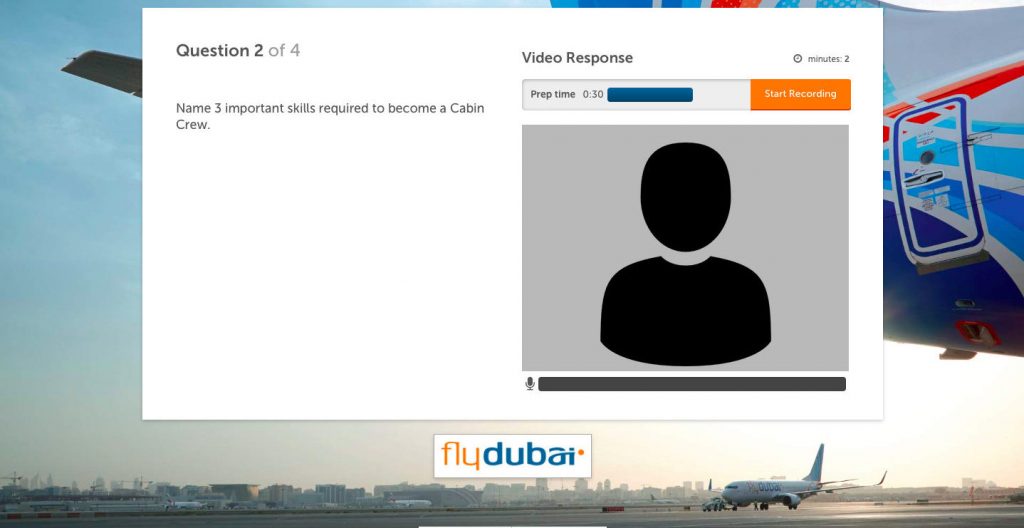
You’ll receive an email that invites you to take part in the video interview. A link within the email will take you to a specially hosted website that will guide you through the process.
- You’ll be expected to answer 4-5 questions.
- A question will be presented one at a time.
- Once the question appears on the screen you’ll be given about 30 seconds to prepare your answer.
- After the preparation time has finished, the video will automatically start recording.
- You’ll then have about 2 minutes to record your answer.
- Once you’ve started, there’s no way to stop the process or re-record an answer.
Some video interviews are just made up of video answers. Some might also have multiple choice or essay style questions included as well. The whole interview will normally be complete in just 10-15 minutes.
The Advantages
That sounds pretty simple and there’s actually quite a few advantages to taking an on-demand video interview. For example, the companies that make the specialist software say you can take the video on any device with a webcam – that could be your laptop computer, a tablet device or even your mobile phone. You can also complete the video interview at a time and place that is most convenient for you.
Gathers More Data Than What Can be Presented in a Resume
One of the biggest companies that sell this software to airline recruiters is called ‘Hirevue’ – this is the software being used by Emirates and flydubai, amongst others. Hirevue says that video interviews are a far better way to shortlist candidates because they gather much more information than what you can present in your resume or CV. In fact, Hirevue claims a video interview provides 100,000x more data than a resume/CV alone.
Software Analyses Your Video and Automatically Shortlists Candidates
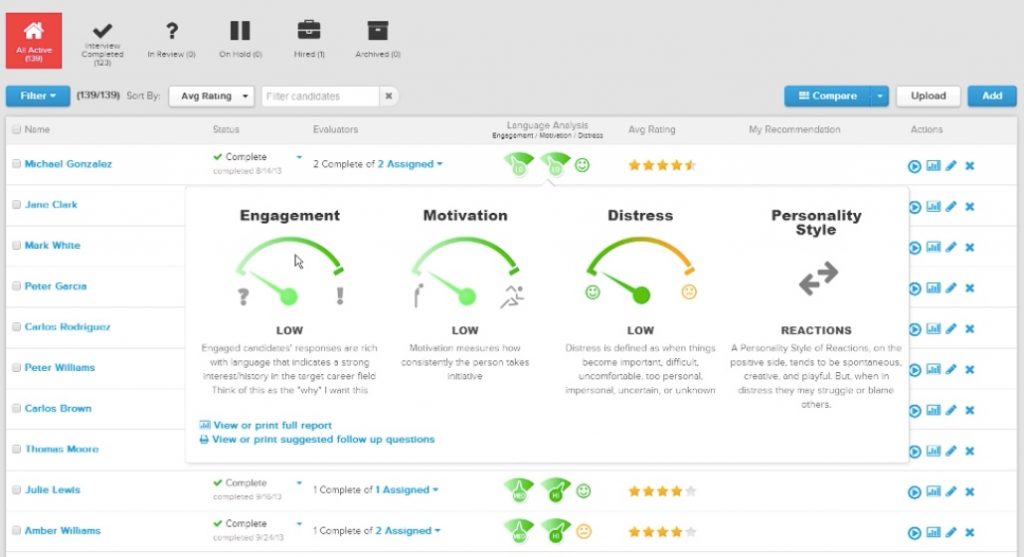
So how does it work? Well, in the vast majority of cases, a recruiter won’t even watch a single second of your interview. Instead, the software will analyse your video and automatically decide if you’re a good match for the job.
Hirevue calls this process, ‘Deep Learning Analytics’ – it likens it to a recommendation engine, like Netflix or Spotify recommending what you might want to watch or listen to. But in this case, Hirevue is recommending potential candidates to a recruiter.
Analyses 15,000 Predictive Attributes
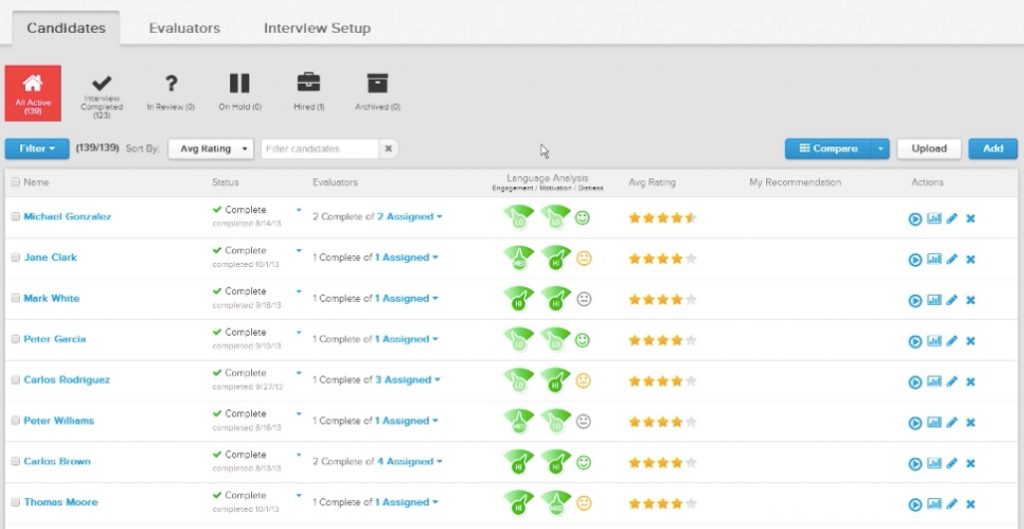
The software does this by analysing 15,000 ‘predictive attributes’ – these include the words you use and the complexity of the words, your expressiveness, your personality, emotional reactions, your engagement and how stressed you appear during the interview.
By analysing these attributes, the software automatically predicts what it considers to be the best candidates. This is based on pre-defined requirements chosen by the hiring manager. Once the software has analysed your interview it provides an ‘insight score’, ‘personality style’ and overall rank. It can even suggest follow-up questions for the Final Interview.
Advantages for the Airline
The advantages for the airline are huge. VidCruiter, another video interview software company says their system eliminates “outdated and time-consuming recruitment practices that were traditionally performed by human resource professionals.” Or to put it another way – On-demand video interviews can save the recruitment team a lot of time and money.
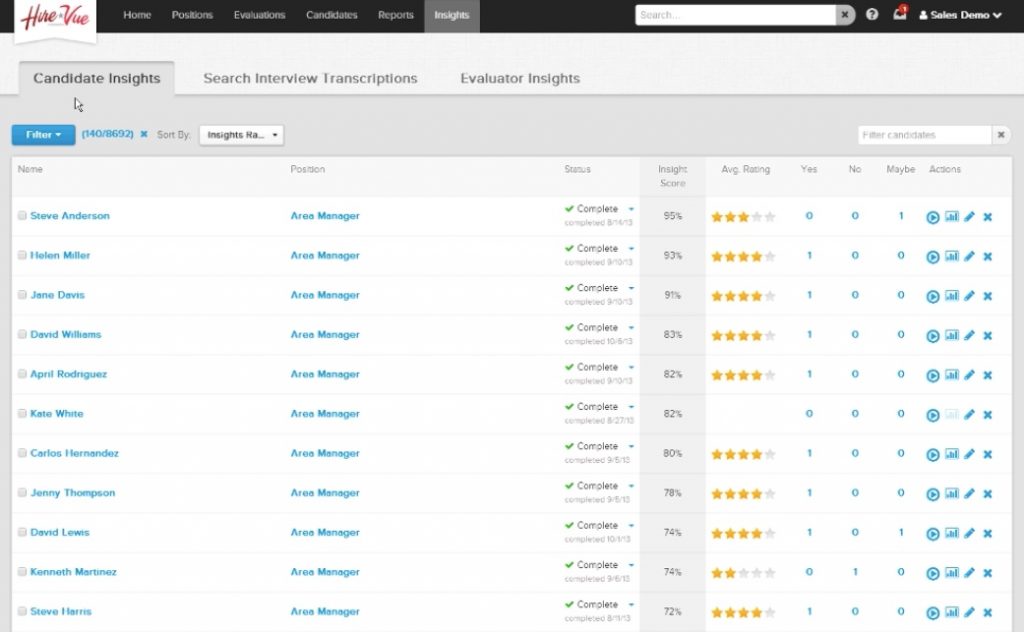
That means an airline can carry out a worldwide recruitment campaign with far fewer recruiters and in a lot less time. They also make the process far more standardised. Instead of relying on the gut instincts of a recruiter, the video interview software makes the decision for them.
Interview Questions are Always the Same
The software does this by creating a baseline of what the ideal candidate should be. This is based on the ideal qualities and attributes that the airline is looking for in its cabin crew. The answers you give and the attitude you convey is then scored against this baseline.
Because of this, the questions asked during the video interview will always be the same for that ’round’ of recruitment. You are therefore being judged against the performance of all the other candidates in the process. Only the best will be shortlisted for the Assessment Day.
Why They Are So Hard
Some people find on-demand video interviews a breeze. But the experience is anything but comfortable for most. The biggest problem for many candidates is they don’t feel relaxed talking to themselves. It’s true, letting your personality shine through when you’re talking to a computer can be difficult. Because of this, successfully passing a video interview takes lots of preparation, planning and rehearsal.
How to Pass an On-Demand Video Interview
We’ve put ourselves through a number of real life on-demand video interviews in the last few months. As a result, we’ve learnt what works – and what most definitely doesn’t.
Now check out: Part Two – How to Ace the Interview. Tips and Advice