
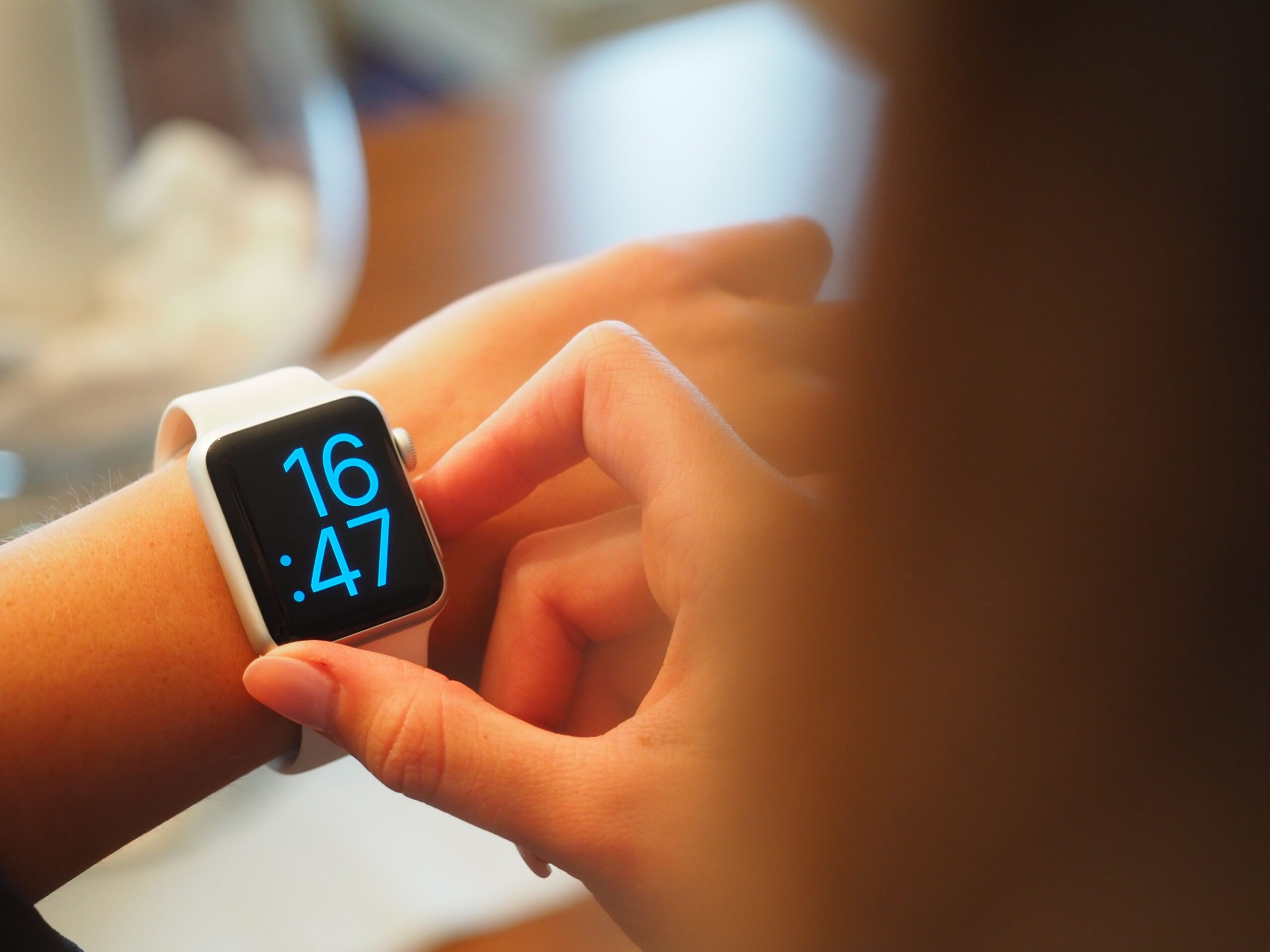

One of the things that can catch new-hire flight attendants off-guard but which is rarely spoken about is how you tell the time: Yes, that simple thing you’ve been doing since you were a child is suddenly more complicated once you work in the aviation industry.
Your schedule, your report time, your flight times, and your hotel pick-up are all written in the 24-hour clock – what most Americans will know as military time, where 1830 means 6:30 pm, and 0015 means a quarter past midnight tonight.
Airlines use it because it removes any chance of an AM/PM mix-up, and you will be expected to read it without hesitation. If you have never used it, don’t worry. It doesn’t take long to get to grips with. This guide gives you everything you need to read your schedule with confidence:
- How the 24-hour clock works, with a full conversion chart
- How to say times out loud, the way crew and schedulers do
- The traps that catch new flight attendants, especially around midnight
- UTC explained, and why some schedules and paperwork use it
- Which time to stay on when your trips cross time zones
- A free practice tool with three ways to test yourself: quick conversions, a listening test that reads times out loud, and real crew maths such as working out your report time and alarm time
How the 24-Hour Clock Works
The 24-hour clock counts the hours of the day from 00 to 23, starting at midnight. There is no am or pm, because every hour of the day has its own number.
There are only two rules to learn:
- Morning times stay the same. Write them as four digits, adding a zero at the front if you need to. 7:15 am is 0715. 11:30 am is 1130.
- Afternoon and evening times get 12 added to the hour. 1:00 pm becomes 1300, 6:45 pm becomes 1845, and 11:20 pm becomes 2320.
To go the other way, from 24-hour to 12-hour, take 12 away from any hour of 13 or above, and add pm. 1915 is 7:15 pm. 2240 is 10:40 pm.
The minutes never change. Only the hour does.
The Cabin Crew Forum
12-Hour to 24-Hour Conversion Chart
Every hour of the day, morning on the left, afternoon and evening on the right.
| 12-hour | 24-hour | 12-hour | 24-hour | |
|---|---|---|---|---|
| 12:00 am | 0000 | 12:00 pm | 1200 | |
| 1:00 am | 0100 | 1:00 pm | 1300 | |
| 2:00 am | 0200 | 2:00 pm | 1400 | |
| 3:00 am | 0300 | 3:00 pm | 1500 | |
| 4:00 am | 0400 | 4:00 pm | 1600 | |
| 5:00 am | 0500 | 5:00 pm | 1700 | |
| 6:00 am | 0600 | 6:00 pm | 1800 | |
| 7:00 am | 0700 | 7:00 pm | 1900 | |
| 8:00 am | 0800 | 8:00 pm | 2000 | |
| 9:00 am | 0900 | 9:00 pm | 2100 | |
| 10:00 am | 1000 | 10:00 pm | 2200 | |
| 11:00 am | 1100 | 11:00 pm | 2300 |
Minutes never change: 6:45 pm is 1845. Midnight is written 0000.
How to Say It Out Loud
Written down, military time is four digits with no colon. Out loud, there are a few simple patterns:
- On the hour, say the hour followed by “hundred”. 1400 is “fourteen hundred”. 0900 is “zero nine hundred” (you can simply get away with saying 9, although that can create ambiguity, which the 24-hour clock is designed to remove)
- With minutes, say the hour and then the minutes. 1845 is “eighteen forty-five”. 2120 is “twenty-one twenty”.
- Times before 10 am start with “zero” (or “oh”). 0630 is “zero six thirty”.
- Minutes from 01 to 09 are said with a zero too. 2005 is “twenty zero five”.
You will hear “hours” added on the end in films (“fourteen hundred hours”), and in the military it is standard.
Where You Will Use It
Almost every time you deal with your working day, it will be in 24-hour time:
- Your schedule. Trip start times, report times, departure and arrival times, and the end of each duty day.
- Calls with crew scheduling. If you are on reserve and get called for a trip, the times you are given will be in 24-hour format, often over the phone and in a hurry.
- Hotel pick-ups. The van time for the next day is usually given as a 24-hour time.
- Rest periods. Working out how much rest you have between landing and your next report means counting hours across the 24-hour clock.
- Paperwork and reports. Anything you write up on board, from an incident report to a cabin defect, needs the time recorded correctly.
What Is UTC?
UTC stands for Coordinated Universal Time. It is the world’s standard reference time, and every time zone is described by how far ahead of or behind UTC it is. UTC is also known as Greenwich Mean Time because the reference point is based in Greenwich, London.
New York in winter is UTC-5, five hours behind London. Dubai is UTC+4, four hours ahead of London.
UTC never changes for daylight saving. That is what makes it useful in aviation: a time in UTC means the same moment wherever you are in the world, so a flight leaving one time zone and landing in another can be planned without any confusion.
In aviation, you will often see UTC written with a “Z” after the time, as in 1430Z. The Z stands for Zulu, the phonetic alphabet word for Z, and you will hear UTC called “Zulu time” for the same reason.
Why it might appear on your schedule
Some airlines show times on schedules and crew paperwork in UTC, some show local time, and some show your home base time. It depends on the airline and the system. Training will tell you which your airline uses, but if you are ever looking at a time and are not sure which time zone it is in, check before you plan around it.
How to convert UTC to local time
Find your time zone’s offset, then add or take away that many hours:
- If the offset is minus (all of the US), take the hours away from UTC to get local time. 1600Z in Chicago in winter (UTC-6) is 1000 local.
- If the offset is plus (most of Europe, Asia, and the Middle East), add the hours to UTC. 1600Z in Dubai (UTC+4) is 2000 local.
To go from local time to UTC, reverse it. And as with any 24-hour maths, watch for the day changing when you pass midnight.
The Cabin Crew Forum
US Time Zones and UTC
How far behind UTC each US time zone sits, in winter and summer.
| Zone | Example cities | Winter | Summer |
|---|---|---|---|
| Eastern | New York, Atlanta, Miami | UTC-5 | UTC-4 |
| Central | Chicago, Dallas, Houston | UTC-6 | UTC-5 |
| Mountain | Denver, Salt Lake City | UTC-7 | UTC-6 |
| Arizona | Phoenix | UTC-7 | UTC-7 |
| Pacific | Los Angeles, Seattle, San Francisco | UTC-8 | UTC-7 |
| Alaska | Anchorage | UTC-9 | UTC-8 |
| Hawaii | Honolulu | UTC-10 | UTC-10 |
Most of Arizona and all of Hawaii do not change their clocks, so their offset stays the same all year.
Worth knowing: US clocks go forward on the second Sunday in March and back on the first Sunday in November. In summer, every zone that changes its clocks is one hour closer to UTC. The UK and Europe change on different dates, so for a few weeks each spring and autumn the gap between the US and Europe is an hour different from normal.
Which Time Should You Stay On When Crossing Time Zones?
Once your trips start crossing time zones, there are two clocks running: the time where you are, and the time your body thinks it is. How you manage that has a big effect on how rested you feel.
There is no single right answer, but there is a common rule of thumb among crew:
- On short layovers, stay on home time. If you are only away for a night or so, there is little point in trying to adjust to local time, because you will be heading home before your body has caught up. Many crew members eat and sleep roughly when they would at home, even if that looks odd on the local clock.
- On longer trips, move to local time. If you are away for several days in the same time zone, adjusting to local time usually makes the trip easier. Daylight, meal times and staying up until a sensible local bedtime all help.
Whichever approach you take, a few habits make life easier:
- Know both times at a glance. Add a second clock for your home time to your phone, so you never have to work it out when you are tired.
- Check your alarms after you land. Most phones change time zone automatically, and an alarm set for 0600 will go off at 0600 in whichever time zone your phone is now in. Set alarms in local time once you arrive.
- Plan your rest around your next report. Work backwards from your report time in local time, and make sure you know how much sleep you can actually get.
This is general advice from the crew side of things, not medical advice. If you find you are struggling to sleep or adjust, talk to your doctor or your airline’s occupational health team.
How to Get Comfortable With It in a Week
- Switch your phone to 24-hour time. Do this the day you get your offer. Seeing every time in 24-hour format, all day, is the quickest way to stop converting in your head.
- Say times out loud. When you check the time, say it the military way: “fourteen twenty”, “zero seven forty-five”.
- Use the practice tool below. Start with conversions, then try Listen, then work through Crew Maths. When you can score 10 out of 10 on Across Midnight and UTC, you are ready.
Practise Military Time
The Cabin Crew Forum
Military Time Practice
Convert times, train your ear, then work out real report times.
Your score
Frequently Asked Questions
Yes. Airlines use the 24-hour clock for schedules, report times, flight times and hotel pick-ups, because it removes any chance of an am or pm mix-up. You will be expected to read it fluently from training onwards.
Morning times stay the same, written as four digits with a zero at the front if needed, so 7:15 am is 0715. For afternoon and evening times, add 12 to the hour, so 6:45 pm is 1845.
Say the hour, then the minutes: 1845 is “eighteen forty-five”. On the hour, say “hundred”, so 1400 is “fourteen hundred”. Times before 10 am start with “zero”, as in “zero six thirty”.
Midnight is 0000, the start of a new day. A time such as 0030 is half an hour after midnight, so it belongs to the night that has just started, not the following night.
UTC is Coordinated Universal Time, the world’s standard reference time, which never changes for daylight saving. In aviation, UTC times are often written with a Z, as in 1430Z, and called Zulu time.
A common rule of thumb is to stay on home time for short layovers and adjust to local time on longer trips. Whichever you choose, keep a second clock for home time on your phone and set alarms in local time once you land.