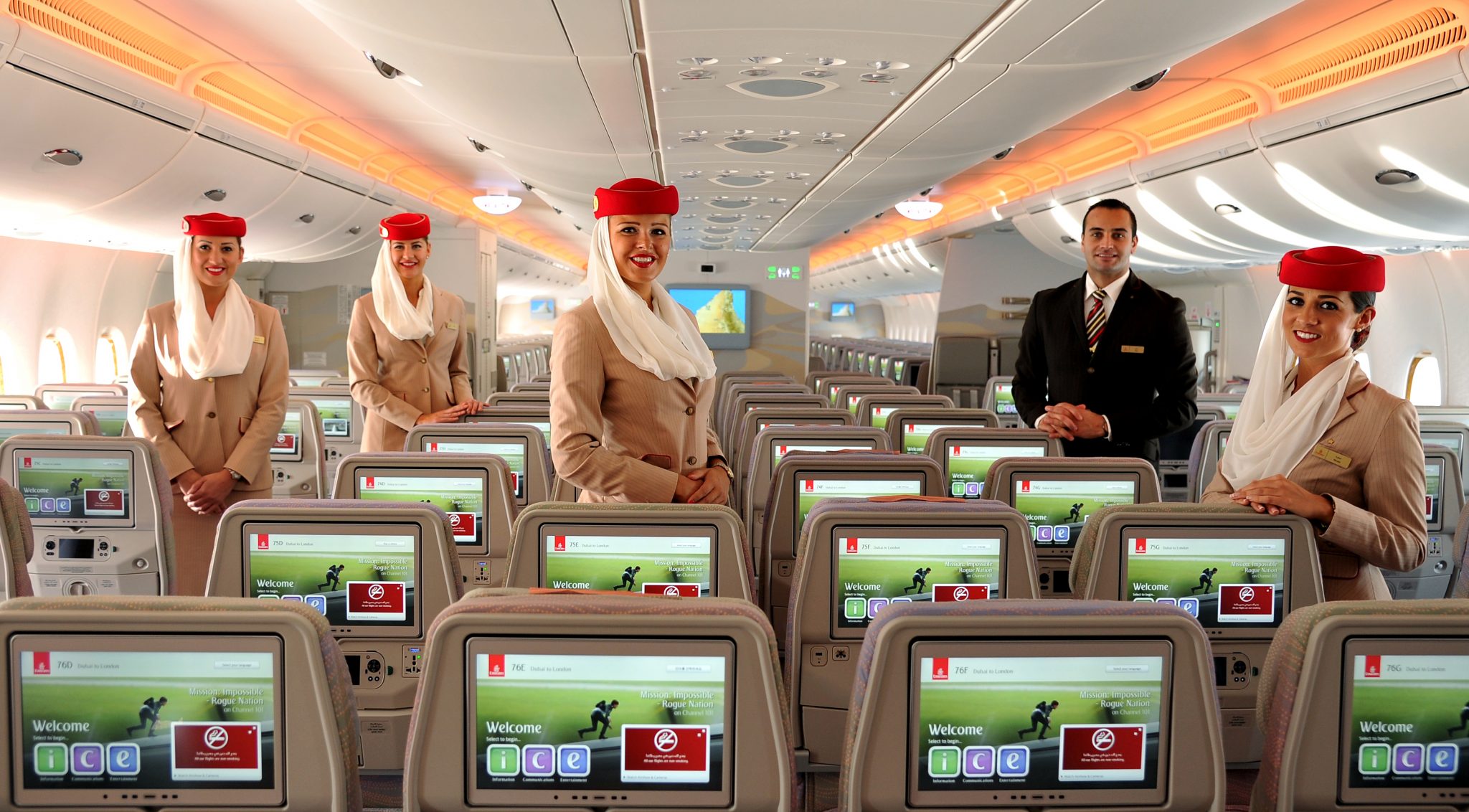

Emirates cabin crew have one of the best pay and benefits packages in the airline industry, especially for new joiners. Not only is the base salary competitive, but a whole host of additional benefits make for a generous package.
As Emirates cabin crew, you will be based and live in Dubai, the home of Emirates, and you’ll be paid in Dirhams (AED), the local currency of the United Arab Emirates. The airline also operates an exchange rate protection scheme, as the Dirham is pegged against the US Dollar.
Read on for everything you need to know about what Emirates pays its cabin crew and the benefits they receive, and if you’re ready to start thinking about applying, our complete guide to the Emirates recruitment process has you covered.
At a Glance
New Emirates cabin crew take home approximately AED 11,244 a month in year one (around $3,061), based on flying between 80 and 100 hours as Grade II Economy crew.
What you would actually be paid
Figures reflect Emirates official current pay structure, not third-party estimates. Business Class crew and those in supervisory roles report significantly higher earnings, see Economy vs Business Class Pay below. Housing and transport are provided in kind, not included in the figures above.
The Contract
New cabin crew are required to sign a three-year contract (36 months) with Emirates. The first six months are a probationary period during which you’ll have limited rights.
During your first 12 months, Emirates deducts 334 AED from your pay each month. This covers any debt you might accrue if you leave before completing your contract. Complete all three years, and you’ll receive a Contract Completion Bonus of 6,000 AED.
Emirates Cabin Crew Salary
As a new joiner, you’ll be assigned to work in the Economy cabin, as what is known as Grade II cabin crew. There’s no seniority-based pay scale here: your salary increases through promotion from Economy into Business Class crew, and then on to First Class, not through years of service. You can also progress into a Cabin Supervisor or Purser role. More on that below.
The confirmed 2026 package for a new joiner (Grade II, Economy):
- Basic monthly salary: AED 4,980 (approximately USD 1,356 / EUR 1,249)
- Flying pay: AED 69.6 per hour (approximately USD 19 / EUR 17), calculated from pushback to arrival at the gate. Expect between 80 and 100 flying hours per month
- Average monthly total: AED 11,244 (approximately USD 3,061 / EUR 2,821), based on flying hours in that 80-100 range
- Layover allowance (per diems): paid in local currency on arrival at your crew hotel, to cover food and drink during stopovers. Whatever you don’t spend, you keep
Worth knowing: Per diems vary from one layover destination to the next and are designed primarily to help you cover the cost of food, drink and other incidentals. The amount you will receive will depend on the length of the layover and the cost of living at the destination. Some crew self-cater so they can pocket the per diems, and this is allowed.
All pay is tax-free in the UAE, but depending on your nationality, you may still be liable for tax in your home country. Check with the relevant tax authority before you join.
Insight: you might see a basic salary figure of AED 5,255 quoted elsewhere online. That’s the basic salary that applies if you also receive a “live out” allowance, rather than the AED 4,980 figure above. As a new joiner, though, you’re required to live in company-provided accommodation, so that additional allowance isn’t available to you.
Economy vs Business Class Pay
Unlike some airlines, Emirates doesn’t run an automatic seniority scale where pay rises gradually with years of service. The way your basic salary and flying pay actually increase is through promotion from Economy into Business Class crew, or by being promoted to an onboard leadership role, a structural jump rather than a gradual climb.
What crew report: In a strong month, Business Class crew living outside company accommodation describe earning in the region of AED 18,000 to 20,000, at around 80 to 90 flying hours. As a Grade II Economy Class member of cabin crew, you’re more likely to earn closer to AED 13,000 to 15,000 a month, though without a clear breakdown of flying hours or living arrangement behind that figure.
What Does This Look Like in Your Currency?
Based on the confirmed average monthly total of approximately AED 11,244 for a new Emirates cabin crew member:
| Currency | Monthly Estimate |
|---|---|
| 🇺🇸 US Dollars (USD) | $3,062 |
| 🇪🇺 Euros (EUR) | €2,821 |
| 🇦🇺 Australian Dollars (AUD) | AU$4,669 |
| 🇨🇦 Canadian Dollars (CAD) | CA$4,194 |
| 🇮🇳 Indian Rupees (INR) | ₹254,021 |
| 🇵🇭 Philippine Peso (PHP) | ₱171,190 |
Converted at approximate rates as of June 2026. Currency rates change, verify current rates before making any financial decisions.
Accommodation and Transport
- Shared accommodation: new cabin crew live in fully furnished, company-provided apartments. Utility bills are covered by Emirates, though you’ll pay for TV, phone, and internet
- Choice of accommodation: you’ll be assigned an apartment before you arrive in Dubai. Blocks are located across the city, and once you’ve passed your probationary period, you can bid to move to a different building or area
- Married persons accommodation allowance: married crew can opt out of shared accommodation and receive a monthly allowance instead. Crew report this works out to around AED 6,000 a month toward rent, worth weighing against actual rental costs in Dubai before deciding to live out
- Transport: a free shuttle bus runs between accommodation and the airport. Live independently and you’ll receive a monthly transport allowance
Insight: where your accommodation is located is one of the biggest topics of debate among crew. In the past, you might have found yourself either living in the center of all the action right on the Sheikh Zayed Road, or in the middle of nowhere on the outskirts of Sharjah. Nowadays, one of Emirates’ biggest crew accommodation villages is in Silicon Oasis, with more purpose-built crew villages on the horizon.
End of Service Benefit
Rather than a pension, Emirates pays an end-of-service benefit, a lump sum when you leave. For the first five years, it’s equivalent to 21 days of your final basic salary per year served. The rate increases for service beyond five years.
Emirates Cabin Crew Benefits
- Uniform: fully provided by the company, with dry cleaning and laundering included at no cost
- Annual leave ticket: one free return ticket per year to anywhere on the Emirates network, designed to let you visit home
- ID90 standby flights: unlimited tickets at 90% discount on a standby basis. Immediate family members qualify, too, limited to two tickets per person per year
- Special tickets: nominate up to 20 friends or family members for tickets at a reduced discount
Worth knowing: unlike most airlines, Emirates cabin crew fly in Economy Class only on staff travel. Business and First Class access is reserved for pursers and flight deck crew.
- FACE Card (Flight Attendants Club of Emirates): discounts at beach clubs, restaurants, gyms, and retail across Dubai and the Gulf
- Platinum Card: pay a small monthly fee to upgrade your FACE Card and access a wider range of deals
- Layover hotels: Emirates provides Four or Five-star hotels for stopovers, generally in city centres or close to the airport, private rooms, your own time, no shared arrangements
A Few Things Worth Knowing
Emirates cabin crew do not have access to a union and have no collective bargaining rights. Your take-home also varies month to month depending on flying hours: the base salary alone doesn’t tell the whole story, and in quieter periods, earnings can dip. The 334 AED monthly deduction in year one is worth factoring into your early budgeting, too.
Pay during initial training is lower than with crew members reporting take home pay of around AED 4,000 per month for the first two to three months.
Top Tip: It’s wise to bring some savings with you for the first two or three months you are in Dubai, because training pay is significantly lower than when you’ll start flying, and the jump to full pay only happens once your roster starts.
Dubai is an expensive city. The free accommodation and transport go a long way towards offsetting that, but day-to-day costs, particularly eating out, leisure, and personal spending, add up quickly. Go in with realistic expectations, and you’ll be fine.
It’s well known that Emirates cabin crew are some of the hardest-working in the industry, so you might be thinking that the salary isn’t as high as you were expecting. What you have to take into consideration, though, is the totality of the compensation package.
Company-provided accommodation removes a massive cost that most cabin crew at many other airlines around the world can’t avoid. The fact that the salary is also tax-free means that the figures quoted here are what appears in your bank account, not a gross amount before taxes or other deductions like insurance.
That all being said, the Emirates package mainly appeals to candidates who are looking to do this job for a few years, not build a lifelong career out of it. Promotion to First Class and then Purser does, however, come with additional and significant pay rises.
Compare Emirates cabin crew salary and benefits against Etihad Airways, Qatar Airways and flydubai →
This page is part of our ongoing coverage of Emirates cabin crew recruitment, built from years of first-hand experience with the airline's open days and assessment process. If you're getting ready to apply, here's where to go next.