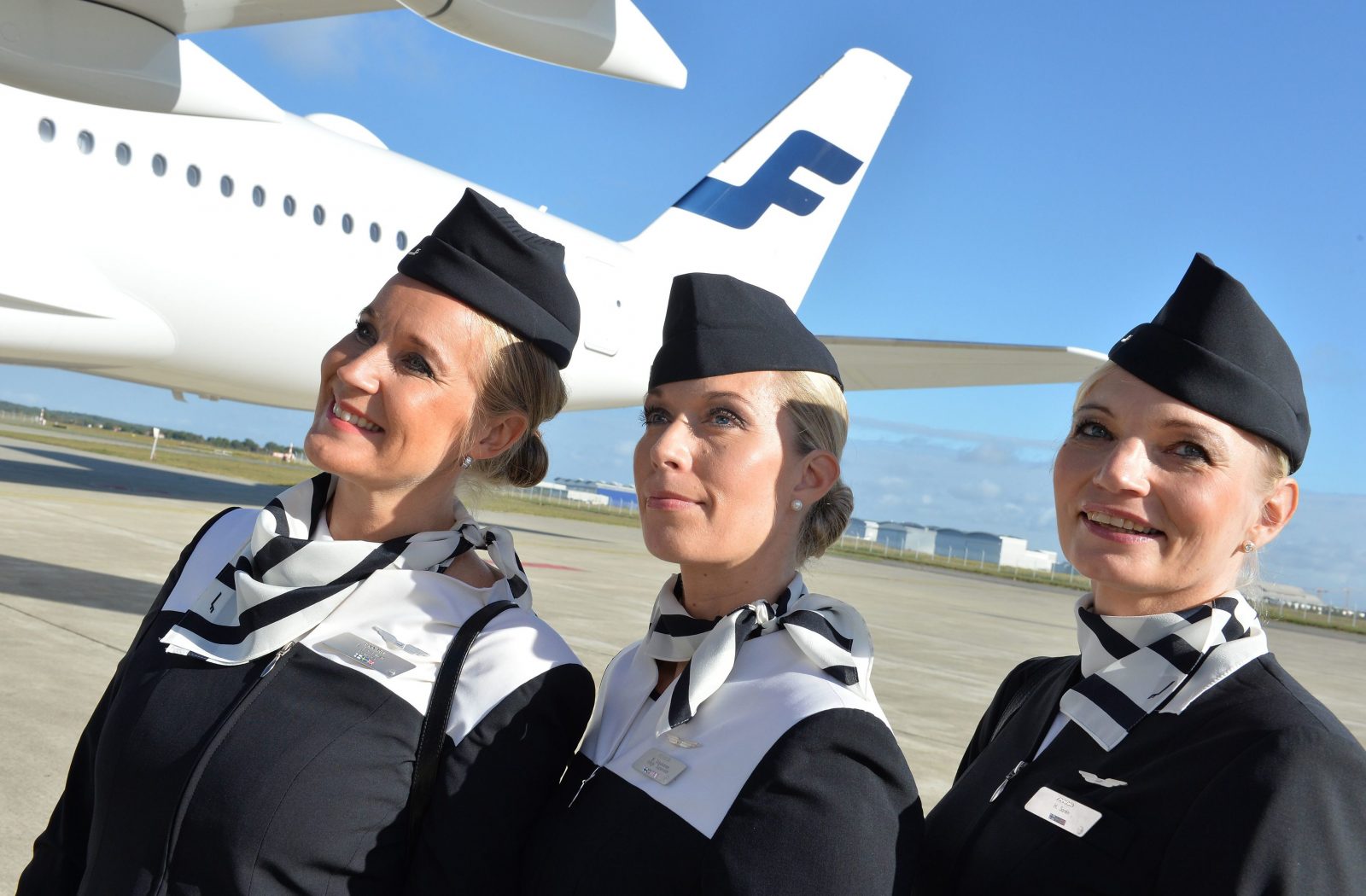

We’ve been impressed with how much information Finnair gives cabin crew candidates about its recruitment process, laying out each stage of the process clearly on its company careers site and through its recruitment partner, Barona. What Finnair won’t tell you, though, is how to actually get through each of those stages.
And that’s where this guide comes in. We’ve spent years working through cabin crew recruitment processes across the industry, and this in-depth guide not only walks you through every stage of Finnair’s process, but also gives you the tips, insight, and preparation material that will be invaluable on your journey to becoming cabin crew.
We keep this guide updated. Everything below reflects the process as it runs in 2026.
Recruitment Status
Finnair last opened cabin crew recruitment on 24th August 2026. The application window was then closed on 6th September 2026. This particular hiring window was for new-hire training courses running through Spring 2027.
Based on that timeline, we do not now expect Finnair to reopen cabin crew recruitment until Spring or Summer 2026. However, the situation can change very quickly and we, therefore, suggest that you familiarise yourself with the recruitment process by reading the full guide and prepare your CV or resume so that you are not caught off guard should a new hiring window open at short notice.
How You Apply
Applications are only accepted online via Finnair’s recruitment partner, Barona. There’s no Open Day or walk-in option, so you need to ensure the resume or CV you submit on your online application is doing all the work.
Finnair then runs a multi-stage recruitment process, which includes online assessments and an on-demand video interview, before shortlisted candidates are invited to an in-person Assessment Day.
You can find all the details below.
Worth knowing: Finnair is only able to recruit candidates as cabin crew for its Helsinki base from those who already have the right to live and work in the EU, EEA, or Switzerland. If that doesn’t apply to you, Finnair also operates local crew bases in Hong Kong, Singapore, and Delhi, run through a separate recruitment partner, which might be worth exploring instead.
Minimum Requirements
Before you apply, you need to meet all of the following:
- Age: 18 or older.
- Education: Secondary education completed, upper secondary or vocational.
- Languages: Fluent English is required. Fluent Finnish is highly valued, and additional languages are an advantage.
- Height and reach: No separate height minimum, but you’ll need a minimum height of 160cm and a reach of 218cm, tested barefoot. Unlike some carriers, Finnair allows standing on tiptoes during this test, so it’s worth practising it exactly that way against a wall at home before you apply, rather than assuming you’ve failed if you can’t reach flat-footed.
- Experience: At least one year in hospitality or customer service. No previous cabin crew experience is required.
- Fitness and swimming: Good general health and the ability to work irregular hours and night shifts, including the fatigue that comes with disrupted sleep patterns. You’ll also need to be able to swim 40 metres.
- Vision and hearing: Normal colour vision and hearing, with distance visual acuity of 0.7 or better in each eye, corrected or uncorrected.
- Appearance: Visible tattoos must be fully covered in uniform, using clothing, make-up, or tattoo cover-up tape. Visible piercings other than earrings must be removed for the shift.
- Background: A clean criminal record.
- Right to work and travel: A valid EU, EEA or Swiss passport allowing free worldwide travel, and eligibility to live and work permanently in Finland.
- Location: You’ll need to be able to reach Helsinki Airport within an hour when called for standby, which for many people means living in the Helsinki Metropolitan area. However, Finnair doesn’t rule out commuting from overseas. You’ll just need to make arrangements to be in Helsinki during standby duties.
Health Requirements
Finnair runs a two-part medical suitability assessment through its own Health Services team. This health assessment covers both general fitness for irregular hours and night work, and the specific medical fitness standards set out in the EASA Part MED regulations.
Certain chronic conditions, cardiovascular issues, sleep disorders, and some mental health conditions can affect eligibility, so this isn’t a box-ticking formality. Health information collected during the assessment is kept separate from the rest of your application and isn’t shared directly with Finnair as the employer.
The Recruitment Process, Step by Step
Step 1: Apply Online
You will need to first submit your resume through the official application portal run by Finnair’s recruitment partner Barona.
Your resume will be screened by an Applicant Tracking System (ATS), designed to check whether you are a good fit for the airline and possess the desired skills, experience and qualifications, before a human recruiter ever sees it.
There is a real art to creating an ATS-proof resume or CV for cabin crew applications, and it’s an area that we have spent years studying.
To learn how to write a resume that gets noticed, visit our Flight Attendant CV and Resume Hub →
Step 2: On-Demand Video Interview
The second stage in the Finnair cabin crew recruitment journey is recording an on-demand video interview. If you pass the initial resume shortlisting round, you will receive a link to take part in the ODVI.
This can be a really nerve-racking part of the recruitment process, and it causes a lot of excellent candidates real anxiety. Understanding what the ODVI is, along with learning top tips on how to prepare for the interview and answer competency-based questions, can help settle those nerves.
To prepare properly, read our two-part breakdown:
- What is an On-Demand Video Interview (ODVI)? Part One and
- How to Ace the Cabin Crew Video Interview: Part Two,
- then check out Common Cabin Crew Video Interview Questions: What to Expect and How to Answer for a sense of what you’ll be asked.
Step 3: Online Assessments
Candidates who pass the ODVI round will be invited to take part in a series of online assessments.
While airlines can change up the online assessments from time to time, we’ve created a series of bespoke tests that closely mimic nearly every online assessment currently used by major international airlines around the world.
Online assessments are designed to check whether you possess the kinds of qualities that airlines are looking for in their cabin crew. Rather than just assessing your resume for these skills, the assessment checks the way you think in real-time.
In many cases, there is no single right or wrong answer. These assessments test whether you consistently possess the underlying qualities that make a great cabin crew member.
To prepare properly, visit our Cabin Crew Online Assessments Hub →
Step 4: Medical Survey
This is your first formal health declaration, ahead of the fuller medical examination that comes later if you’re selected.
Step 5: Finnair Assessment Day
This in-person stage is where Finnair gets a real look at you beyond the paperwork and the video assignment. There’s no single fixed format as exact exercises vary by airline and even by intake, but you should expect a reach test, group exercises, a role play or presentation element, and a competency-based interview.
Recruiters are watching your behaviour throughout the entire day, not only during the structured exercises. How you behave in the waiting room, at registration, and in between activities is being noticed just as closely as what you say in front of recruiters.
The candidates who progress tend to be the ones who stay warm and engaged with everyone in the room, not just the person interviewing them, and who don’t let their guard down the moment they think nobody’s watching.
Insight: In the group exercise, being confident but open and engaging reads well, while talking over people doesn’t and dominating the room is a real turn-off. Candidates who speak the most or are the loudest are rarely the ones who move forward. Recruiters are looking for people who bring others into the conversation as much as they contribute to it themselves.
Getting to the Assessment Day stage is a real achievement in itself. Unfortunately, airlines will invite many more candidates to an Assessment Day than they have available positions for. Getting rejected at this stage is worth being mentally prepared for rather than being blindsided by.
A rejection doesn’t mean the day went badly; it usually just means the volume of strong candidates was higher than the number of roles available.
To prepare properly, visit our Cabin Crew Assessment Day Hub →
Insight: The competencies Finnair is testing for across the Assessment Day map closely to teamwork, resilience, customer experience orientation, and the ability to follow instructions. Coming in with a specific example ready for each of those, rather than a single generic story you try to stretch across every question, is what tends to separate strong candidates from the rest.
Step 6: Selections
If you’re successful, you’ll receive details on your training course dates as part of this stage.
Step 7: Pre-Course Preparation
About two months before your training course starts, you’ll receive preparation instructions. This includes a pre-employment security clearance, a foreign criminal history declaration if you’ve lived outside Finland for six months or more in the last five years, a medical examination with a drug test, and a uniform fitting. An EU-required five-year background check will also verify your employment and education records, including any gaps.
It’s worth starting to gather the documents this requires now, rather than waiting until you’re asked for them.
Step 8: Training
Training runs 6 to 9 weeks, with the exact length depending on whether you’ve flown cabin crew before and how recently. If you have no prior cabin crew experience, expect the full 9 weeks. Training is unpaid and requires full on-site attendance in Helsinki throughout.
Insight: Candidates with previous cabin crew experience normally take part in a shorter, six-week course, but this isn’t guaranteed. How much your training is shortened depends on how recently you last worked as cabin crew and the aircraft types you were working on, so don’t assume the shorter course applies to you until Finnair confirms it.
Course start dates will be confirmed as part of the selection stage above.
Step 9: Starting Work
Once training is complete, you’ll receive a full-time permanent or fixed-term contract at roughly 110 working hours a month, based in Helsinki.
Expect a real mix of flying from day one, from short domestic hops to long-haul sectors, along with standby shifts that require you to be reachable within an hour.
Ready to Prepare?
Whichever stage you’re preparing for, these are the resources worth working through first: