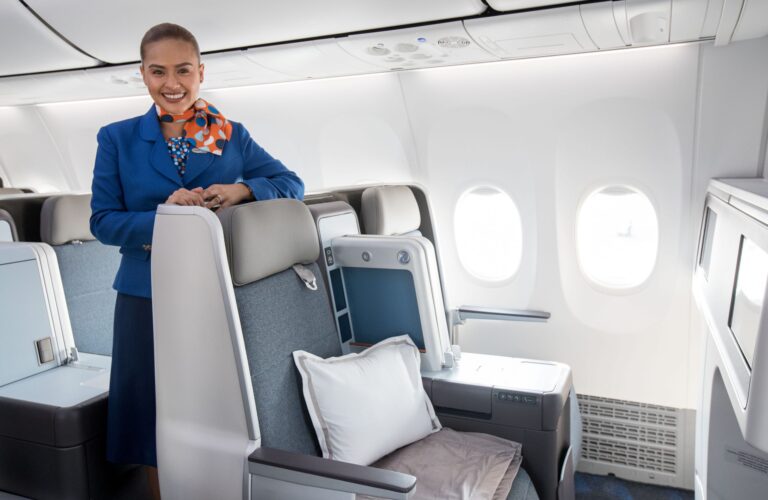
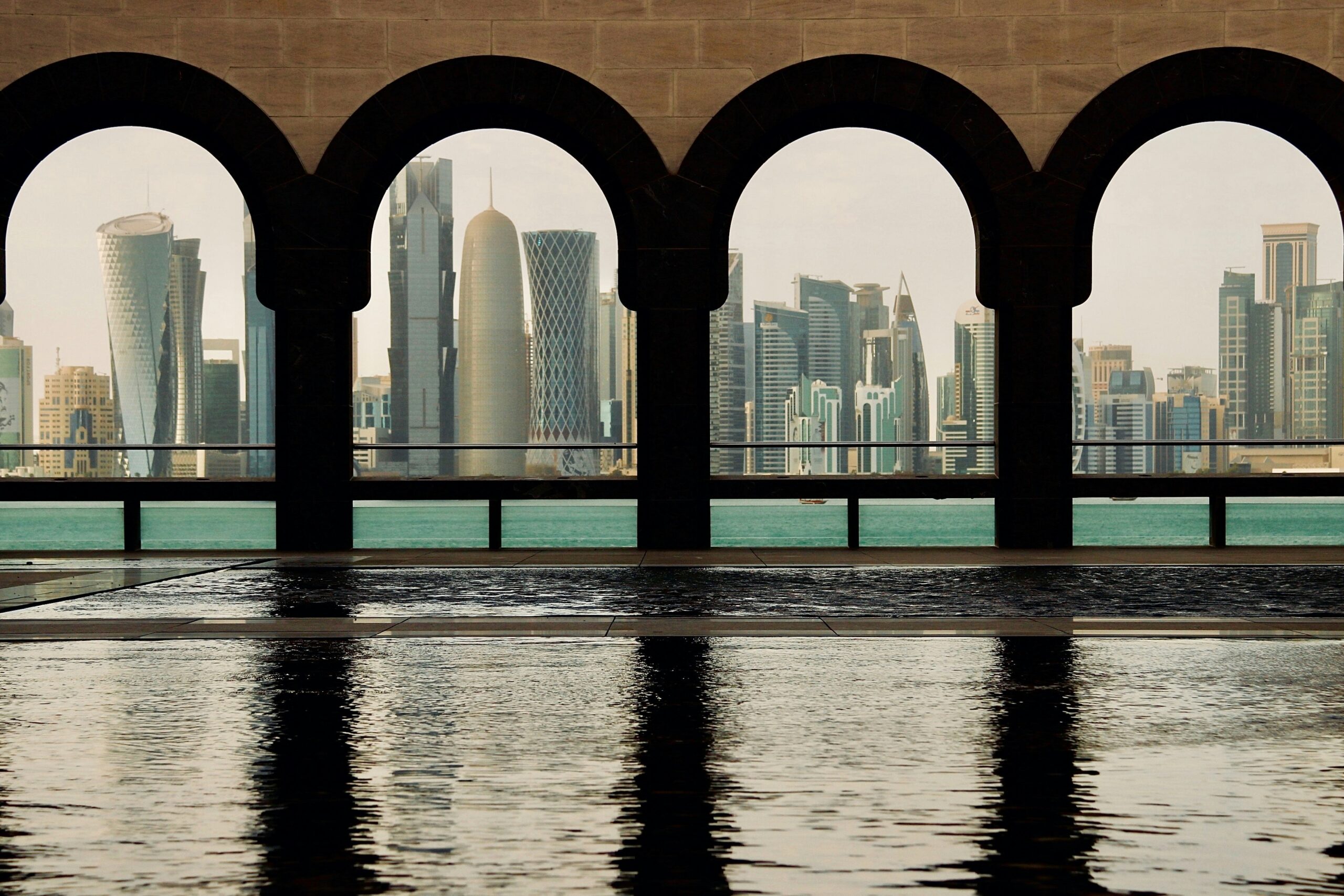

Qatar Airways employs cabin crew from all over the world, and every one of them starts the job by moving to Doha. For many, their time in Qatar is trouble-free and filled with happy memories. Qatar is one of the safest countries in the world, the standard of living is high, and Doha sits at the centre of a network that puts much of the world within a few hours’ flight.
But remember, relocating somewhere to live is very different to visiting for a vacation or a short transit stop. Qatar is a conservative Islamic country, and its laws, customs and social norms can feel very different from what many applicants are used to at home.
This guide is designed to help you understand those differences before you arrive, not to put you off. It covers what life in Qatar is really like: the people, the climate, the cost of living, the laws you need to know, and the questions to ask yourself before you apply.
- Population3.2 millionAround 1 in 10 are Qatari citizens
- CapitalDohaHome of Qatar Airways and Hamad International
- CrimeVery lowOne of the safest countries in the world
- Summer40°C+May to September, and very humid
- Winter22-24°CDecember to February daytime highs
- ReligionIslamShapes the law, dress code and Ramadan
- Cost of livingHighBut crew housing is provided
- LanguageArabicEnglish is widely spoken
- CurrencyQatari riyalQAR, pegged to the US dollar
Population
Qatar is a tiny but incredibly wealthy country in the Persian Gulf, with an interesting mix of nationalities making up its ever-changing population. Just over 3.2 million people live there, and Qatari citizens make up only around 10 to 12% of them. Everyone else is an expat: a foreign worker who is allowed to live in the country temporarily, on a residence visa tied to their job.
For cabin crew, this creates a working and social environment that is international in a way few places on earth can match. You will work alongside colleagues from dozens of nationalities, and your neighbours and friends are likely to come from just as many.
The expat community is not uniform, though. Alongside well-paid professionals, including airline crew, is a much larger population of lower-paid migrant workers, mostly from South Asia and Africa, who work in construction, security, hospitality and domestic service. The contrast is visible in daily life, and it is something you should be prepared to see.
Safety
Qatar is regularly ranked among the safest countries in the world, and crime levels are low. Most residents feel comfortable walking around Doha at any time of day or night, and many crew who have lived elsewhere say the sense of personal safety is one of the things they value most.
Serious personal attacks, including sexual assault, are rare but do happen. Qatari law places a high burden of proof on a victim to show that sexual relations were not consensual. If a court decides the sex was consensual, both the victim and the attacker can be prosecuted for sex outside marriage. This is not just us saying it: it is the official advice of the British government, through the UK Foreign Office (FCDO), for anyone visiting Qatar.
Worth knowing: Qatar’s location means regional tensions can affect daily life. Airspace closures linked to conflict involving Iran disrupted flying across the Gulf in 2025 and again in early 2026, and Qatar Airways had to suspend much of its network for a time. Day-to-day life in Doha has remained safe throughout, but it is part of the reality of living and flying in the region.
Climate
Qatar has two seasons: a pleasant winter and a very long, very hot summer.
From November to March, the weather is warm and comfortable, with daytime temperatures in the low to mid-20s Celsius in December, January and February. This is when outdoor life comes alive: beaches, the Corniche, parks and outdoor dining.
From May to September, the heat takes over. Daytime temperatures regularly pass 40 degrees, nights rarely cool down much, and the humidity on the coast makes it feel even hotter. Life moves indoors, into air-conditioned malls, gyms, cafes and apartments.
Worth knowing: The summer is the adjustment most people underestimate. It is not just hot. For several months, it is too hot to spend much time outside at all. Crew from cooler climates often find this the hardest part of life in Qatar, so factor it into your expectations before you go.
Cost of Living
Doha is not a cheap city, but for cabin crew, the biggest cost is covered. Qatar Airways provides accommodation and transport to and from work, and housing is by far the largest expense for most expats. Day-to-day costs are where your budget goes: food, eating out, leisure, travel, phone and personal spending. Eating out and socialising, particularly anywhere that serves alcohol, can be expensive, and these costs add up quickly. Plan for them realistically rather than assuming a tax-free salary will stretch as far as social media might suggest.
Lifestyle and Getting Around
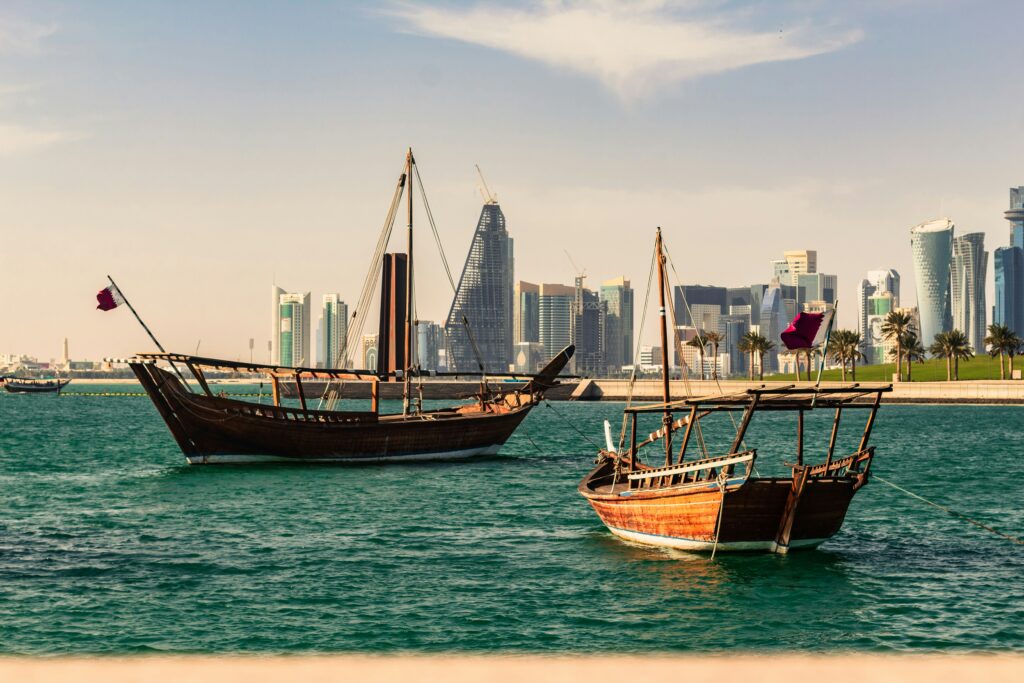
Life in Doha is built around restaurants, cafes, malls, hotels and, in the cooler months, the beach and the waterfront. The Corniche, Katara Cultural Village, Souq Waqif, The Pearl and Msheireb Downtown are popular places to spend time, and the city has world-class museums, including the National Museum of Qatar and the Museum of Islamic Art. Compared with Dubai, the social scene is quieter and more low-key, which some crew love and others find limiting.
The working week runs from Sunday to Thursday, with Friday and Saturday as the weekend, although as cabin crew, your roster will decide your days off.
Getting around has improved a great deal in recent years. The Doha Metro, which opened in 2019, runs three lines across much of the city, and taxis are plentiful, including Karwa taxis and ride-hailing apps such as Uber and Careem. Even so, Doha was built around the car, and anywhere off the main routes is easier to reach by taxi or car.
Laws and Customs
Qatar is an Islamic country, and its legal system is based on a combination of civil law and Sharia principles. Some things that are legal, or simply unremarkable, in your home country can be crimes in Qatar. You are expected to respect local traditions, customs, laws and religions, particularly during Ramadan.
Dress
Dress modestly in public, including while driving. Both men and women should cover their shoulders and knees. The dress code is strictly enforced in government buildings, healthcare facilities and banks, and you may be refused entry or asked to leave if you do not meet it.
Religion
Religion is a sensitive subject in Qatar, so approach any discussion of it with care. Defaming or insulting Islam, Christianity or Judaism can lead to imprisonment. Public worship and attempts to convert people by non-Islamic faiths are illegal and can lead to deportation or imprisonment.
Alcohol
Alcohol is available, but tightly controlled.
- Only licensed hotels, restaurants and bars can sell it.
- Expat residents can buy alcohol to drink at home through a permit system.
- The legal drinking age is 21, and venues will ask to see your original photo ID. Copies are not accepted.
- Do not carry alcohol around with you, except when taking it home on the day you collect it.
- Drinking alcohol in a public place that is not licensed, or being drunk in public, is illegal. The penalty can be up to six months in prison or a fine of up to 3,000 Qatari riyals.
Relationships Outside Marriage
This is the area where Qatari law differs most from what many expats are used to, and you need to understand it.
- Public displays of affection between any couple can lead to arrest.
- Living together while unmarried is illegal.
- Sex outside marriage is illegal for both opposite-sex and same-sex couples. Punishments can include a fine, a prison sentence and deportation once the sentence is complete.
- Pregnancy outside marriage can lead to both partners facing imprisonment or deportation. Doctors ask for proof of marriage during antenatal checks, and a birth cannot be registered without a marriage certificate. Authorities may compare the date of the marriage with the estimated date of conception.
Swearing and Rude Gestures
Swearing and making rude gestures are treated as obscene acts, and can lead to imprisonment or deportation. Take particular care when dealing with the police and other officials.
Photography and Social Media
Qatar has strict privacy laws. Taking or sharing photos or videos of people without their consent can lead to imprisonment or a fine of up to 100,000 Qatari riyals. People have been arrested for filming or photographing near religious, military, government and construction sites, so if in doubt, ask permission first. Flying a drone needs permission too.
Social media is covered by the same laws. Posting anything that could be seen to insult or slander someone, or that is culturally insensitive, may be treated as a crime, and people have been detained, prosecuted and convicted for it.
Drugs and Medication
Qatar has zero tolerance for drug offences. Penalties for using, possessing or smuggling drugs, including cannabis, are severe, even for residual amounts, and include long prison sentences, heavy fines and deportation. This applies to passengers transiting through the airport too, and Qatar’s airport scanning technology is highly effective.
Some medications that are legal in other countries are illegal in Qatar, so be sure to check whether you need permission before bringing any prescription or over-the-counter medicine into the country. Even common items such as nasal decongestants can be controlled in some Gulf countries.
Smoking and Vaping
Smoking is banned in all enclosed public spaces, including malls, restaurants, public transport, healthcare facilities and government buildings.
Vaping is illegal in Qatar. It is against the law to import, sell, buy or use vapes and e-cigarettes, including the liquids and electronic shisha pipes. This applies regardless of quantity, and customs officers can confiscate them from your luggage or from post. Using one can lead to arrest, a fine, a prison sentence or deportation.
Insight: If you vape, stop before you move, not after you arrive. Packing a vape “just for the flight” or having one sent from home is exactly how new arrivals end up in trouble with customs. Qatar treats it as a criminal matter, not a minor rule.
Ramadan
Ramadan is the holy month of fasting, and it changes daily life across Qatar. Its dates move forward by around 11 days each year, following the Islamic lunar calendar. Ramadan 2027 is expected to begin on or around 8 February, depending on the sighting of the moon.
During Ramadan, Muslims do not eat, drink or smoke between sunrise and sunset. In public, during daylight hours, you must not:
- eat, drink, smoke or chew gum, including in your car
- play loud music or dance
- swear
Shops and restaurants change their opening hours, and places serving food during fasting hours may screen off non-Muslim customers. Dress codes matter even more than usual, and driving can be erratic around sunset, as people rush home to break their fast.
The city also changes character. Days are quieter, but evenings come alive after Iftar, the meal that breaks the fast each day. Midway through the month, Qatar celebrates Garangaou, when children dress in traditional clothing and go from house to house collecting sweets and nuts.
LGBT Rights
Same-sex sexual activity is illegal in Qatar. Under the Penal Code, it can be punished with up to seven years in prison, and the law applies regardless of nationality. There are no LGBT support organisations, no openly gay venues, and no legal recognition of same-sex relationships. Gender transition is not recognised.
In practice, Qatar’s large expat community does include LGBT people, among them cabin crew, who live and work in Doha. They do so with a level of discretion that is very different from life in most Western cities. Public displays of affection between same-sex couples carry real legal risk, dating apps are used but carry their own dangers, and the need for caution is constant.
For LGBT candidates considering Qatar Airways, this deserves honest reflection rather than reassurance. Some people build happy lives in Doha. Others find the constant need for discretion a source of stress that builds over time. Only you can weigh that against everything else the job offers.
Human Rights and the Bigger Picture
Qatar’s international reputation took a battering in the build-up to the 2022 FIFA World Cup, and it is fair to know why.
Human Rights Watch says the World Cup left a legacy of widespread abuse of migrant workers, including thousands of unexplained deaths, widespread wage theft and excessive recruitment fees, and that many workers have never been compensated. It also criticises Qatari laws that discriminate against women through male guardianship rules, which mainly affect Qatari women, and against LGBT people, as well as restrictions on free expression and growing surveillance.
There has also been real reform. Under pressure from the International Labour Organization and others, Qatar dismantled the most restrictive parts of the kafala sponsorship system in 2020. Workers no longer need an exit permit to leave the country, and they can change jobs without their employer’s permission. Qatar also introduced a minimum wage covering every nationality. Campaigners argue that enforcement still falls short, but the legal framework today is very different from what it was a decade ago. We covered the original announcement on our sister site, Paddle Your Own Kanoo.
For Qatar Airways cabin crew, the practical effect is that you can resign and leave the country without needing your employer’s permission to go.
So Is Qatar Right for You?
For many cabin crew, the answer is yes. Qatar is safe, the career opportunities at Qatar Airways are excellent, housing is taken care of, and Doha puts the world on your doorstep. Plenty of crew look back on their years there as one of the best chapters of their lives.
What it needs is an honest conversation with yourself first. How will you cope with five months of extreme summer heat? Are you comfortable living somewhere with far less freedom of expression than you may be used to? Can you accept laws on relationships, alcohol and behaviour that are much stricter than at home? And if you are LGBT, are you prepared for the level of discretion life in Qatar will require?
None of these questions has a single right answer. But asking them before you apply is far better than discovering the answers after you have signed your contract.
How we sourced thisWhere this information comes from
This guide combines official sources with our own knowledge of life and work in the Gulf. Laws and penalties are paraphrased from official government advice rather than quoted, and where something is an estimate or an opinion, we say so. The Matt Says section is Matt’s personal view.
- Laws and customsUK Foreign Office (FCDO) travel advice for Qatar
- PopulationQatar National Planning Council, end of 2025
- Human rightsHuman Rights Watch, World Report: Qatar
- Labour reformsInternational Labour Organization and ITUC coverage of the 2020 reforms
- LGBT lawQatar Penal Code, as summarised by ILGA World
This page is part of our ongoing coverage of Qatar Airways cabin crew recruitment, including the airline's working conditions and recent developments as well as the recruitment process itself. If you're getting ready to apply, here's where to go next.