
American Airlines has published more detail about its own hiring process than almost any other US major, but that transparency cuts both ways. Recruiters expect you to have done something with all that information before you show up to the in-person group experience in Dallas-Fort Worth, not just watched the preview video and shown up.
This document gives you the background and depth to have ready before your virtual interview and your in-person day. Use it the way you’d revise for an exam: read it once for the full picture, then skim the Key Facts and Sample Questions sections again right before each stage.
Key Facts
- Full name: American Airlines, Inc.
- Founded: April 15, 1926 (as American Airways, Inc.), commencing operations June 25, 1936. American marked its centennial in 2026.
- Headquarters: Fort Worth, Texas
- Parent company: American Airlines Group Inc. (NASDAQ: AAL)
- CEO: Robert Isom, in the role since March 2022
- Alliance membership: oneworld, a founding member
- Frequent flyer programme: AAdvantage, the world’s first frequent flyer programme, launched in 1981
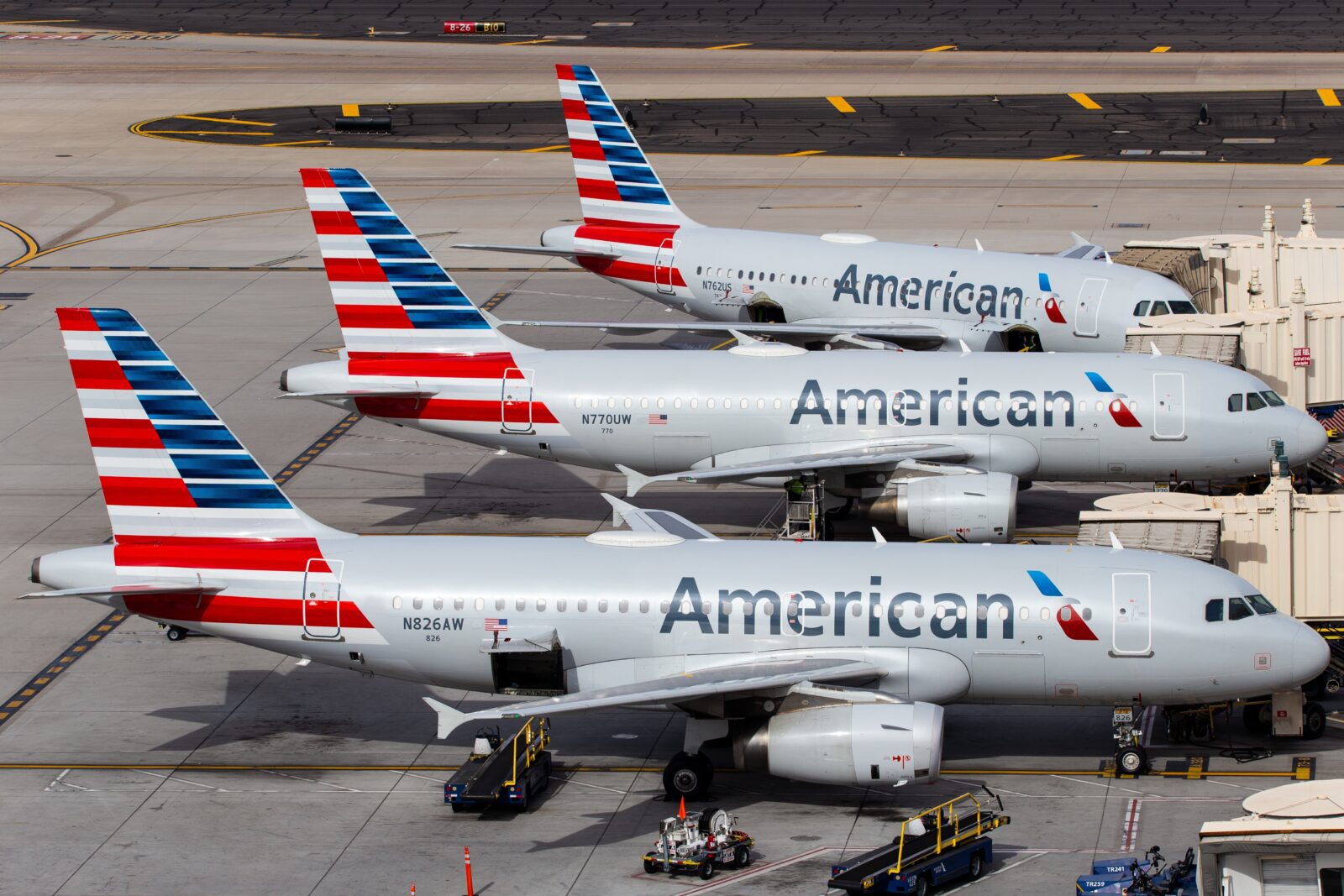
- Fleet size: over 1,000 mainline aircraft (1,022 as of Q1 2026), one of the largest mainline fleets in the world
- Destinations: 350+ across more than 60 countries, on six continents
- Hubs: Ten: Charlotte (CLT), Chicago O’Hare (ORD), Dallas-Fort Worth (DFW), Los Angeles (LAX), Miami (MIA), New York (JFK and LGA, grouped operate as a combined crew base), Philadelphia (PHL), Phoenix (PHX), and Washington, D.C. (DCA)
- Employees: roughly 130,000 across American Airlines Group
- Recent financial performance: record FY2025 revenue of $54.6 billion, though net income (around $111 million GAAP) trails Delta and United by a significant margin, a real and honest part of American’s current story.
Main Talking Points
- American just marked its centennial. Founded in 1926, American is currently a hundred years old. A centennial-liveried Boeing 737 is flying, while a Boeing 777-300 has been repainted in a classic ‘Flagship’ retro livery. Other celebrations include centennial-themed menus in premium cabins.
- The 2024 Flight Attendant contract was historic. After years of high-level federal mediation and a 99.47% strike authorization vote, American’s Flight Attendants ratified a five-year deal worth over $4.2 billion above the previous agreement, an average of roughly $160,000 in added value per active Flight Attendant over the life of the contract. Boarding pay was introduced for the first time in the airline’s history.
- American is going through a major cabin product transition. The airline is phasing out Flagship First entirely in favor of an upgraded Business Class product, Flagship Suite, a lie-flat seat with a sliding privacy door, currently rolling out on new Boeing 787-9 deliveries, the new Airbus A321XLR, and via retrofit on Boeing 777-300ERs. American was the last US carrier to still operate a true First Class cabin, and 2026 is the year that changed.
- American was the first US carrier to fly the Airbus A321XLR. Deliveries began in December 2025, and the type is now flying premium transcontinental routes (Boston to Los Angeles) and American’s first XLR transatlantic route, New York-JFK to Edinburgh. This is a big fleet development, as this narrowbody aircraft opens new transatlantic routes that weren’t feasible with widebody airplanes.
- American is making a real push for premium. 2026 is proving to be a year of major change. The airline is adjusting its business strategy to make itself more premium, with recent announcements including the rollout of free ultra-fast Starlink internet, the return of seatback screens on narrowbody planes, and upgraded dining and beverage options.
- Record revenue hasn’t meant a comfortable financial position. American reported record 2025 revenue, but net income trails Delta and United by a wide margin, and the airline carries significant fuel and debt exposure.
History and Heritage
American Airlines traces its roots to April 15, 1926, as American Airways, Inc., with an even earlier lineage reaching back to some of the original US airmail routes. Commercial operations under the American Airlines name began in 1936. The airline became a founding member of the oneworld alliance, and AAdvantage, launched in 1981, was the world’s very first frequent flyer programme.
2026 marks American’s centennial year, a milestone the airline has visibly leaned into, including a centennial-liveried aircraft and themed touches across its newest premium cabin product. It’s also a year of real transition: the airline is phasing out its historic Flagship First cabin, delivering its first Airbus A321XLR aircraft, and operating under a newly ratified Flight Attendant contract that represents the first major renegotiation in years.
Fleet in 2026
American operates a mixed fleet of narrowbody and widebody aircraft, totaling roughly 1,022 mainline aircraft as of early 2026:
- Airbus A319/A320/A321 family: the backbone of American’s domestic network, including 84 Airbus A321neo aircraft in the fleet, with more on order
- Airbus A321XLR: American’s newest and most distinctive addition, first delivered in December 2025, an extended-range narrowbody opening long, thin international routes that wouldn’t support a widebody.
- Boeing 737 MAX: 93 in operation, with 125 more on order, a growing share of the domestic narrowbody fleet
- Boeing 777-200ER: an older widebody type (47 in the fleet) currently the subject of a widebody replacement decision, with American reportedly weighing new Boeing 787 orders against the Airbus A350
- Boeing 777-300ER: American’s larger, newer 777 variant, currently being retrofitted with the new Flagship Suite business class product, and losing its First Class cabin in the process
- Boeing 787 Dreamliner (787-8 and 787-9): American’s primary long-haul widebody, with new 787-9 deliveries (the “789P” subfleet) featuring the Flagship Suite from the factory
Cabin Classes
American’s cabin structure has had some changes in recent years, but this is where it currently stands:
- Flagship Suite: the new flagship business class product, a lie-flat seat with a sliding privacy door, currently available on new Boeing 787-9 deliveries and the Airbus A321XLR, and rolling out via retrofit to Boeing 777-300ER aircraft. This is replacing Flagship First entirely.
- Flagship First: American’s historic true First Class cabin, being phased out as part of the Flagship Suite rollout. American was the last US major to operate a genuine First Class product, so this is a real, current change, not old news.
- Flagship Business: the legacy business class product still flying on older aircraft (Boeing 777-200ER and similar), without the sliding door found on Flagship Suite
- Domestic First Class: Large recliner seats at the front of narrowbody planes like the Airbus A320, and Boeing 737.
- Premium Economy: available on Flagship-Suite-equipped widebody and A321XLR flights
- Main Cabin Extra: American’s extra-legroom economy option, available across the fleet
- Main Cabin: standard economy, the majority of seats on any American aircraft
Frequent Flyer Programme
AAdvantage is American’s loyalty programme and the world’s first of its kind, launched in 1981. Miles are the loyalty currency, and elite status runs through several tiers. As a oneworld founding member, AAdvantage status and mile-earning extend across the full oneworld network, one of the largest airline alliances globally.
What Recruiters Are Looking For
American states its purpose directly: ‘To care for people on life’s journey.’ How do you interpret this motto? It’s worth considering how you would embody this message… being able to demonstrate empathy, kindness, a can-do attitude, and the ability to go above and beyond for customers and coworkers will help you stand out from other candidates.
A few things worth knowing specific to American’s process itself:
- The virtual interview is new for this 2026 hiring cycle, added between the personal introduction video and the in-person group experience. Treat it as a full interview, not a warm-up for the “real” in-person stage.
- The pre-recorded personal introduction video trips up more candidates than you’d expect. Without a live interviewer to react to, candidates either over-rehearse to the point of sounding robotic, or ramble without structure.
- Group dynamics matter as much as individual answers at the in-person stage. Recruiters are watching how you behave when you’re not the one currently speaking, not just your own individual contributions.
The Day Itself: What to Remember
- The in-person group experience takes place in Dallas-Fort Worth. If you live outside the DFW area, American provides free flights for you to get there.
- Polished, professional business attire is required and checked closely: a suit and tie for men, a business suit or professional dress (knee-length or longer) for women, both with closed-toe shoes.
- No visible tattoos or body art, and the same standard applies once you’re actually working, not just on the day itself.
This page is part of our ongoing coverage of American Airlines flight attendant recruitment, covering pay, the application process and what to expect at each stage. If you're getting ready to apply, here's where to go next.