
If you have been considering applying to Qatar Airways and you have seen rumors of a mass cabin crew sickout, then you will want to read this.
Reports are circulating that Qatar Airways cabin crew are taking part in what is being described as a historic, first-ever mass sickout, with around 130 flights delayed departing Doha’s Hamad International Airport. The action appears to be a protest over the airline’s decision to withhold a profit-sharing bonus, despite Qatar Airways posting a profit of nearly USD 2 billion for the last financial year.
The full story, including flight tracking data and the background to the dispute, is reported in detail by our sister site PYOK: Qatar Airways Cabin Crew Reportedly Taking Part in a Historic Mass Sickout as Anger Over Bonus Reaches Boiling Point
This article is for candidates. The question we want to answer is a simpler one: what does this actually mean if Qatar Airways is on your list?
What Is Actually Being Reported
To be clear about what we know and what we do not. Qatar Airways cabin crew are reportedly calling in sick en masse, in what is being described as the first organised work action in the airline’s history. The trigger is the airline’s decision, communicated via internal memo, not to pay staff a profit-sharing bonus this year.
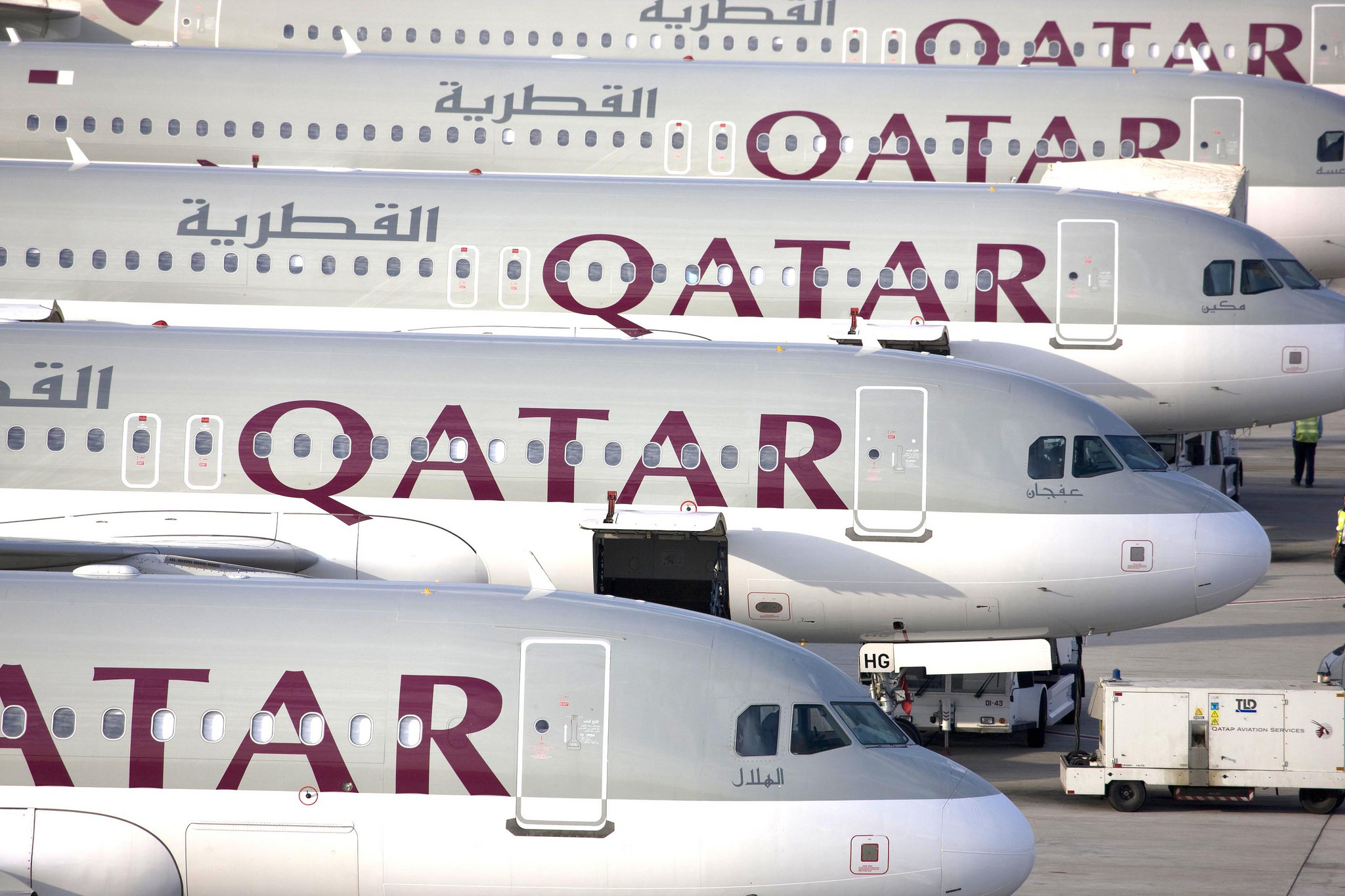
Qatar Airways’ stated reason is that the airline is still recovering from the impact of the Iran conflict, after it was forced to ground its entire operation for several weeks at the end of February. The airline says it is prioritising long-term financial stability because it is still only currently operating around 55% of its pre-crisis schedule.
The sting for cabin crew is two-fold. First, a $1.94 billion profit was announced only last month, while an annual bonus was quietly shelved. Second, with the network running at roughly half capacity, crew are already earning less than normal because a significant portion of Qatar Airways’ pay is made up of flying allowances and layover per diems. Less flying means less money, and now no bonus either.
For context, neighbouring Emirates paid staff a bonus equivalent to around 20 weeks of basic pay.
It is worth being clear about the context in which this is happening. Unions are banned in Qatar. Strike action is illegal. Protests are prohibited. A coordinated sickout in this environment carries genuine personal risk for the crew involved, which makes the fact that it is reportedly happening at all a significant signal about how serious the frustration has become.
The Bigger Picture: A Story That Has Been Building
This did not come from nowhere. Understanding the context matters if you are making a decision about whether to apply.
For much of its history, Qatar Airways, under the then chief executive, Akbar Al Baker, operated with strict controls on cabin crew. Curfews, social media bans, and working conditions that drew consistent criticism from human rights organisations. Al Baker’s abrupt departure in late 2023 and his replacement by Badr Al Meer genuinely changed the atmosphere. The curfew was relaxed. The social media ban was lifted. Crew reported a meaningful shift in tone.
Then, in December 2025, Al Meer was just as suddenly replaced by Hamad Ali Al-Khater, former COO of Hamad International Airport. No reason was given. Al-Khater remains largely unknown on crew welfare, and today’s events are the first real signal of what his tenure means in practice.
The timing is significant. The sickout comes just six months into Al-Khater’s leadership. Whether this represents a one-off flashpoint or a broader reversal of the welfare progress made under Al Meer is not yet clear.
Should This Change Your Decision to Apply?
Honestly, it depends on where you are in your thinking and what you are looking for.
If Qatar Airways has been at the top of your list primarily because of the name, the product, and the career opportunity, today’s news is worth taking seriously, but it does not automatically change the calculus. One difficult episode, even a significant one, does not undo the genuine improvements of the last two years or the fact that many crew members continue to have rewarding careers at the airline.
If you have already had reservations about working conditions, the legal environment in Qatar, or the fixed-term contract model, today’s events are a fair reason to revisit those concerns rather than set them aside. The sickout is a reminder that in Qatar, crew members have very limited formal recourse when they are unhappy, and that the welfare environment is closely tied to the individual at the top.
Worth knowing: Pay at Qatar Airways is partly fixed and partly variable, based on flying hours and layover allowances. When the network is disrupted, as it has been for much of early 2026, crew earn less than the headline figure suggests.
What to Watch
Today’s situation is still developing. Qatar Airways has not commented. It is not yet clear what, if any, consequences the crew will face for taking part. It is also not clear whether this will result in any response from management on the bonus question.
If you are still considering applying to Qatar Airways, the most important thing you can do is go in with clear eyes. Read the contract carefully. Understand what the accommodation arrangement means day to day. Know what the legal landscape looks like for workers in Qatar. And make a decision that is right for you based on the full picture, not just the uniform and the route network.
For everything you need to prepare an application: