
A Qatar Airways open day can be a disorienting experience if you walk in without knowing what to expect. Unlike Emirates, which runs a familiar presentation-then-CV format, Qatar’s process is faster and more opaque. Candidates can be cut within two minutes of meeting a recruiter, and not always for obvious reasons. The good news is that the process is well-documented, very preparable, and the airline itself is in decent shape heading into 2026.
We have covered Qatar Airways recruitment for years, spoken with serving and former crew, and attended assessment days. What follows is the most complete and honest account of the process available. Everything below reflects how Qatar Airways recruits in 2026.
Recruitment Status
Qatar Airways is currently ramping up cabin crew recruitment with invite-only Assessment Days planned in a growing number of cities around the world, including London, Warsaw, Paris, Bangkok, Bogota, and Johannesburg.
Note that this list isn’t exhaustive, and more Assessment Days are planned in different cities in the near future. The important point is that these are all invite-only recruitment events. Anyone interested in attending one of these events must submit their application online via the official Qatar Airways recruitment website.
- Search for the Assessment Day location that you are interested in attending
- Submit only one application – don’t apply to multiple Assessment Days
- If you apply for an Assessment Day in a different country from where you live, you’ll have to cover all the expenses of traveling to the event if you receive an invitation
- If a city close to you isn’t listed, be patient – more Assessment Day locations will be announced soon
Qatar Airways in 2026: What You Need to Know
Before you attend an open day, you need to know this airline. Recruiters will ask. Here are the facts that matter.
Qatar Airways has been named World’s Best Airline for a record ninth time at the 2025 Skytrax World Airline Awards, also taking World’s Best Business Class, Best Airline in the Middle East, and World’s Best Business Class Lounge for its Al Mourjan lounge at Hamad International Airport. The airline posted a post-tax profit of USD 1.94 billion for the 2025/26 financial year, and its route network is expanding to reach more than 160 destinations by Summer 2026.
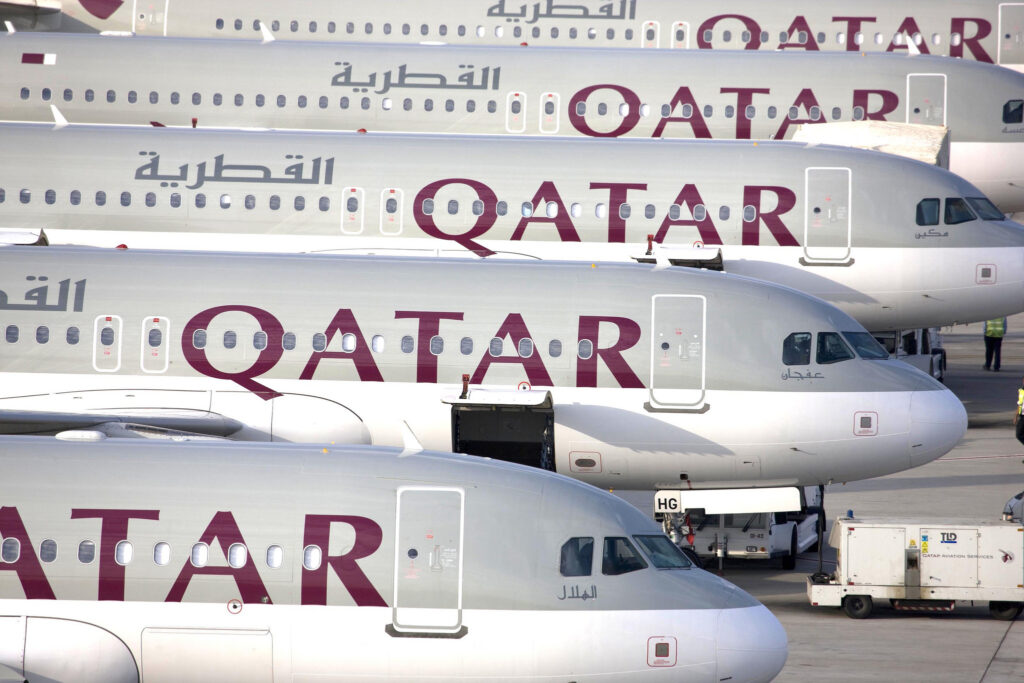
The fleet now comprises more than 230 aircraft, with an average age of just 7.9 years – one of the youngest among global full-service carriers. The airline operates a wide mix of aircraft types, including state-of-the-art models like the Airbus A350 and Boeing 787 Dreamliner, as well as the iconic Airbus A380 superjumbo and the Boeing 777-300 workhorse. Qatar Airways operates the world’s first and largest Starlink-equipped widebody fleet, with free high-speed in-flight Wi-Fi now rolled out across most of its Boeing 777 and 787 fleets, as well as its Airbus A350s.
Qatar Airways is perhaps most famous for its award-winning Business Class product, the QSuite. Launched in 2017, Qsuite redefined commercial Business Class with fully enclosed private suites, privacy doors, personal storage, and a 1-2-1 layout giving every passenger direct aisle access. It has won World’s Best Business Class at Skytrax for twelve consecutive years.
Qatar Airways is a member of the oneworld alliance and operates its hub through Hamad International Airport (DOH) in Doha. The airport handled 52.7 million passengers in 2024, making it the Middle East’s second busiest airport for international travel after Dubai.
Insight: When recruiters ask why you want to work for Qatar Airways specifically, generic answers about “world-class service” do not stand out. Every candidate in the room will say something similar. What does stand out is specific knowledge, like the Qsuite product, the Skytrax record, the Starlink connectivity rollout, and the route network from Doha as a global hub. Know the airline in detail, and connect it to something genuine about what you want from the role.
Minimum Requirements
You must meet all of the following before applying:
- Age: At least 21 years old at the time of joining
- Height and reach: Able to reach 212 cm while standing on tiptoes without shoes. This is physically tested at the assessment day.
- English: Fluent in both written and spoken English. Arabic and other languages are a significant advantage and are actively sought for specific open days.
- Education: Minimum high school graduate (Grade 12 or equivalent)
- Health: Excellent physical health and fitness
- Appearance: No visible tattoos in uniform. This is checked at the assessment day — a body inspection for scars and tattoos is a formal part of the process.
- Relocation: All Qatar Airways cabin crew are based in Doha. You must be willing to relocate to Qatar and live in company-provided accommodation.
Qatar Airways recruits from around the world. You do not need to be from the country where the open day is held to attend. However, the airline selects open day locations strategically based on the nationalities, language skills, and cultural backgrounds it is seeking at that time. This matters — and we will come back to it.
The Honest Context: Working Conditions at Qatar Airways in 2026
Any honest guide to Qatar Airways has to address the controversy over working conditions at the airline. For years, Qatar Airways had some of the most restrictive cabin crew employment policies in the world, and that reputation lingers. But the picture has changed quite a bit in the last few years, and candidates deserve an accurate account of where things stand rather than an outdated one.
The Akbar Al Baker era: For 27 years, Qatar Airways was run by Akbar Al Baker, a CEO who was simultaneously celebrated for building one of the world’s great airlines and criticised for presiding over working conditions that drew repeated scrutiny from human rights organisations. Under Al Baker, cabin crew were subject to a nightly curfew requiring them to be in their company accommodation between set hours, with movements monitored by security staff and electronic key cards. Posting photographs of yourself in uniform on social media was a terminable offence. The environment was, by the accounts of many who lived through it, highly controlled.
Eng. Badr Al Meer and the “new era” (November 2023 to December 2025): Al Baker’s sudden departure in October 2023 marked a genuine turning point. His successor, Eng. Badr Mohammed Al Meer, took the helm with an explicit promise of a “new era” in which “a culture of trust and empowerment will be the building blocks of our shared success.” He backed this up quickly. Within weeks of taking over, the nighttime curfew was relaxed — crew no longer faced restrictions on before their days off or prior to annual leave, though a nine-hour rest requirement before flying duties was retained. In February 2024, the social media ban was lifted entirely. Cabin crew could, for the first time, post photographs of themselves in uniform without risk of dismissal. These were not cosmetic changes. They brought Qatar in line with regional rivals Emirates and Etihad and removed two of the most criticised aspects of life as Qatar crew.
Hamad Ali Al-Khater (December 2025 onwards): Al Meer’s tenure lasted just over two years before he was succeeded by Hamad Ali Al-Khater, former Chief Operating Officer of Hamad International Airport, in December 2025. Al-Khater is a relative unknown quantity when it comes to crew welfare, specifically. His background is in airport operations and energy sector strategy rather than airline management. Industry observers have noted that Al-Meer was genuinely well-regarded by staff and that his departure was unexpected. Whether Al-Khater will continue the welfare improvements, pause them, or take the airline in a different direction is not yet clear. It is an open question worth watching.
What this means for candidates in 2026: The honest summary is that Qatar Airways is a meaningfully better place to work than it was five years ago, and the specific restrictions that defined the Al Baker era have been largely dismantled. That is real progress. At the same time, you are still signing a fixed-term contract to live in employer-provided shared accommodation in Doha, in a country with its own legal framework and cultural norms. The new leadership is an unknown quantity on crew welfare. Many crew members go on to have genuinely rewarding careers at Qatar. Others find the reality does not match their expectations.
Go in with clear eyes. Read your contract carefully before you sign. Understand what the accommodation arrangement means day to day, what personal conduct rules apply in Qatar, and what the process is for leaving before your contract ends. Well-informed candidates make better decisions and tend to have better experiences.
How Qatar Airways Recruits in 2026
The recruitment process has changed significantly since this guide was first written. In 2026, a large part of the Qatar Airways cabin crew recruitment process is now digital. Successful candidates are invited to complete an online English test and video interview before being shortlisted for any in-person contact. The full process typically runs as follows:
- Online application and CV submission
- Online English test and video interview (if shortlisted from online application)
- Open Day (walk-in or by invitation)
- Assessment Day (invitation only — held the following day)
- Final Interview
- Photograph submission and HR review
- Medical tests and background check
- Formal offer and joining formalities
The full process can span up to three months from initial application to offer.
The Open Day
Qatar Airways open days are held in hotels in cities around the world. For most of these events, you do not need an invitation to attend — you arrive, submit your documents, and meet a recruiter. Some open days do require a prior online application and invitation; check the Qatar Airways careers portal to confirm the format for the specific event you are attending.
Dress code is formal business attire throughout. This is non-negotiable and is assessed from the moment you arrive.
What to bring:
- Updated CV with your applicant ID if you have one
- One full-length photograph in business attire (6×4 inches / 15×10 cm)
- One passport-sized photograph in business attire (45×35 mm)
- Copy of your passport
- Copy of your highest education certificate (bring it, even if rarely asked for)
Photograph standards: Professional business attire, including a jacket and tie for men. Stand facing directly toward the camera, hands at your sides, natural smile showing teeth. Light blue backdrop.
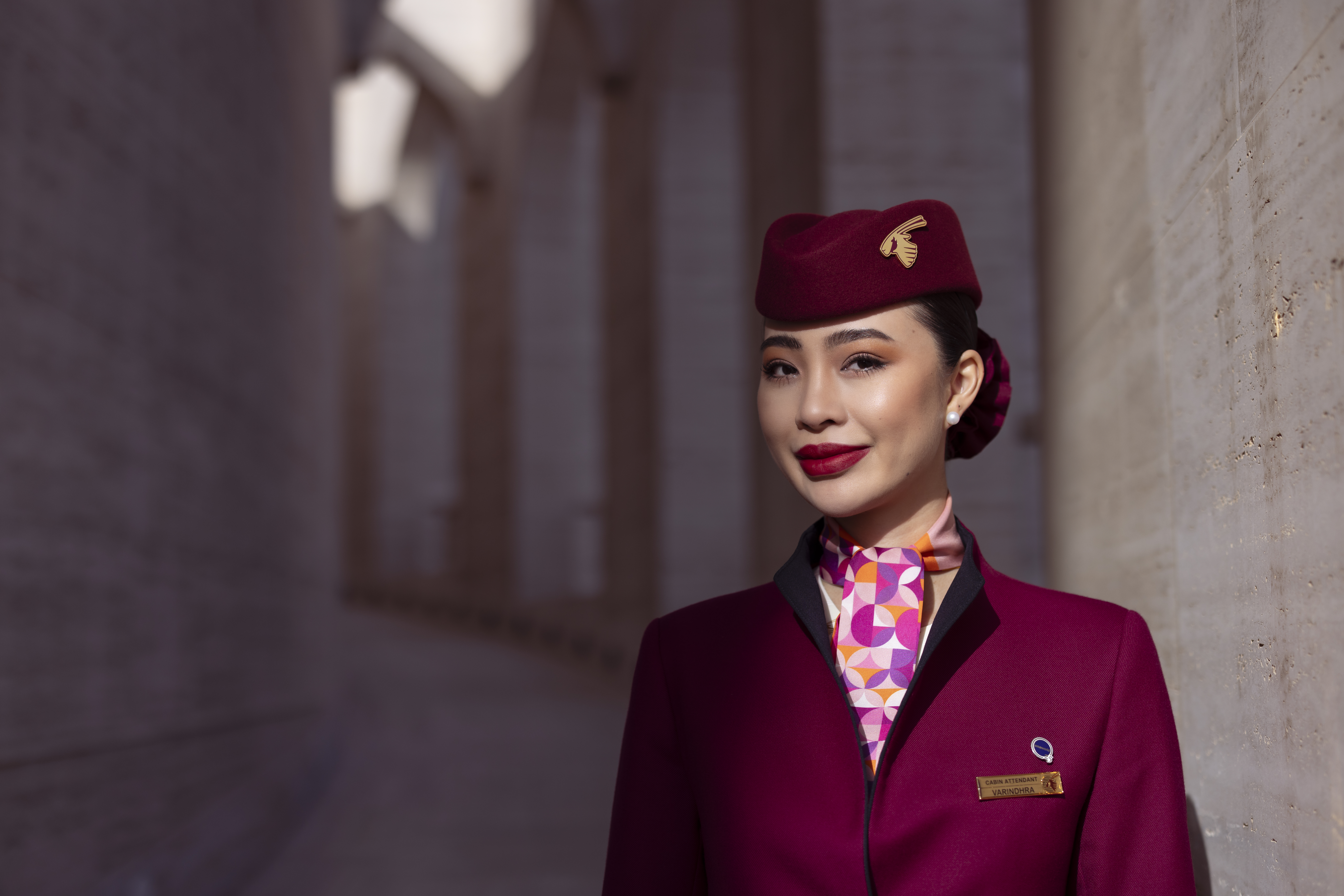
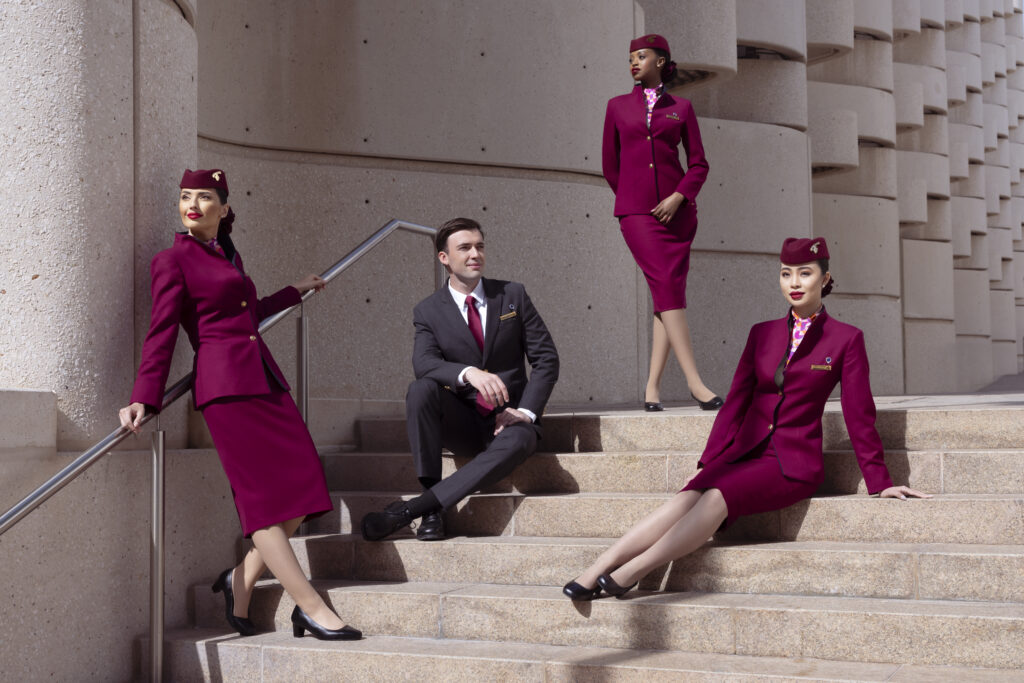
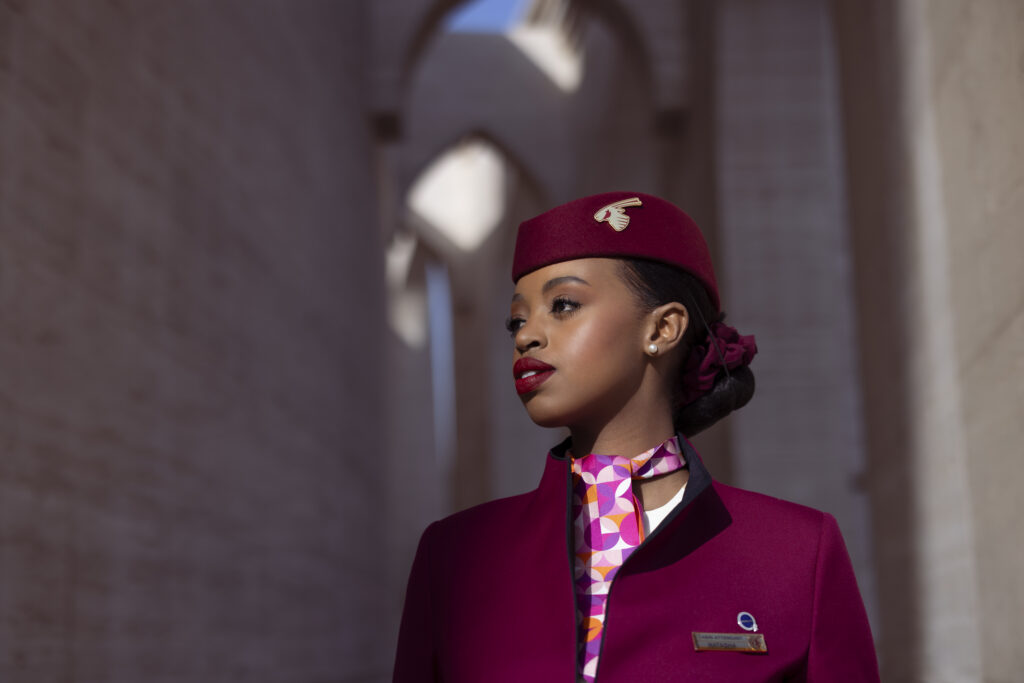
The classic look for female candidates is a black jacket and skirt that sits just below the knee, along with a white blouse that covers the entire chest and black high-heeled shoes. Long hair should be worn up in a tight bun, with all baby hairs carefully tucked away. Jewellery should be kept minimal: a classic watch (not a smart watch), a pair of pearl earrings, and a simple necklace only. Makeup is required, including lipstick.
What happens:
You wait outside until called in. The meeting with a recruiter typically lasts around two minutes. Each candidate hands over their resume and photos and responds to one or two questions — “Why do you want to be a flight attendant?” or “Why did you choose Qatar Airways?” are the most common.
At that point, one of two things happens. The recruiter hands you a piece of paper with details of the assessment day — your invitation. Or you are told to expect an email or phone call later that day. If you are told to wait for a call, you have not been shortlisted.
This is the most opaque part of the entire process, and the part candidates find most unsettling. The selection at the open day stage is highly subjective and can depend on factors beyond your control — the nationalities and language skills being sought that day, the specific recruiter who reviews your CV, and an element of timing that is genuinely difficult to predict or influence.
Worth knowing: Qatar’s open day selection is influenced by what the airline needs at that particular moment — specific nationalities, language skills, age ranges, and cultural backgrounds that recruiters have been briefed to look for. This means a candidate who is cut at one open day may well be shortlisted at another, in a different city, at a different time. It is not always a reflection of your suitability for the role. If your first open day is unsuccessful, consider trying again — a different event, in a different city, potentially run by a different recruiter, can produce a very different outcome.
The Assessment Day
The assessment day is held the following day. It is invitation-only — do not travel to the venue unless you have been specifically told to attend.
The day begins with a presentation about Qatar Airways and life in Doha. Candidates then sit a written English test lasting 45 minutes, which consists of five types of exercises: text-dependent questions, multiple choice, fill-in-the-blank grammar, five mathematical lateral logic questions, and a short essay on a given subject. The difficulty level is medium to upper-intermediate, broadly B1 to B2 on the CEFR scale.
Do not underestimate the English test. It is consistently reported as one of the stages at which the highest number of candidates are eliminated, and it is more demanding than many applicants expect. The essay component in particular requires you to construct a coherent argument under time pressure — practise this before you attend.
The Oral Test and Reach Test
After the written test, each candidate enters a room individually, draws a topic from a bowl, and speaks about it for one minute. During this exercise, the reach test is also performed — candidates must reach 212 cm while on tiptoes without shoes. Recruiters also check for visible tattoos at this point. This is a formal body inspection, not an informal glance.
Both the reach test and the tattoo check are pass or fail. There is no workaround for either.
The Group Exercise
Candidates are divided into teams and given a task to solve in approximately 15 minutes. The task changes from assessment to assessment, but always involves working as a group toward a solution or decision.
Qatar Airways recruiters at this stage are watching the same things as every other airline — communication, composure, active listening, teamwork — but with a specific additional lens: how you function in a multicultural group, whether you include others, and whether you can maintain warmth and professionalism under pressure. Qatar crew work in some of the most culturally diverse cabins in aviation. Candidates who dominate the group exercise, or who retreat into passivity, both tend to underperform against those who contribute clearly and make space for others.
There are elimination rounds after the English test, after the oral test, and after the group exercise. You can be cut at any of these checkpoints. Stay composed and consistent throughout the entire day, not just in the exercises where you know you are being watched.
The Final Interview
Candidates who pass all elements of the assessment day are invited to a final interview, which normally takes place on the same day.
Many candidates report that the Qatar Airways final interview is shorter than they expected — sometimes as brief as 15 to 20 minutes. This is not an indication of how well you have performed. The process can involve multiple interviewers and assessments. Answer the questions you are asked directly and specifically. The SOAR method (Situation, Obstacle, Action, Result) is the most reliable framework for structuring competency answers: SOAR to Success at Your Cabin Crew Final Interview
Common question types at the Qatar Airways final interview:
- Why Qatar Airways specifically? Know the airline in detail. The awards, the product, the route network, the culture of the Doha hub. Generic enthusiasm does not progress.
- Tell me about a time you dealt with a difficult customer. Specific, real, and with a clear resolution. Avoid anything where you come across as the hero and the customer as the villain.
- Describe a time you worked in a team with people very different from yourself. Qatar crew are among the most culturally diverse in aviation. This question is not incidental.
- How would you handle a situation where a colleague was not meeting the service standard? Qatar expects high standards and crew are expected to hold each other accountable with professionalism.
- What do you know about life in Doha? This comes up. Know that accommodation is provided, that Qatar has its own cultural norms around dress and conduct, and that many crew find the experience of living in Doha genuinely rewarding. Have a genuine and considered answer.
After the Final Interview: Photographs and Medical Tests
If you are successful at the final interview, you will be asked to create an account on the Qatar Airways careers website and upload photographs of yourself for review by the central HR team in Doha. Follow the photograph instructions provided by your recruiter precisely. Some candidates are unsuccessful at this stage, and it is almost always because the photographs do not meet the standard required.
Once your photographs are approved, you will be assigned a recruitment coordinator who will guide you through the medical tests required. Medical requirements include a general health evaluation, blood tests for common conditions, and a medical screening conducted by a registered doctor or healthcare professional. The costs of these tests are borne by the candidate. The results must meet Qatar Airways standards before a formal offer is extended.
Training takes place in Doha, lasts several weeks, and covers safety, service, and aircraft-specific exams. You must pass all assessments before starting line flying.
Find out how much you could earn as Qatar Airways cabin crew with our full Salary and Benefits Guide.
How to Apply
Open day dates and locations are listed on the Qatar Airways careers portal, updated on a rolling basis. Applications can also be submitted online at any time.
Apply at qatarairways.com/careers
For everything you need to prepare, start here: