
United Airlines has spent a huge amount of time, money, and effort in differentiating itself from other U.S.-based carriers. It seems only fair, then, that recruiters expect you to know something about the airline before you step into an interview in Houston on your Assessment Day.
This document gives you the background and depth you need before you take part in United’s live video interview or attend an in-person interview as part of the airline’s multi-stage recruitment process.
Use it the way you’d revise for an exam: read it once for the full picture, then skim the Key Facts and Sample Questions sections again right before your live interview or your in-person day.
Key Facts
- Full name: United Airlines, Inc.
- Tagline: Good leads the way
- Founded: Traces its roots to Varney Air Lines, launched April 6, 1926, one of the original airmail carriers that merged to form United Air Lines by 1931
- Headquarters: Willis Tower, Chicago, Illinois
- CEO: Scott Kirby, in the role since May 2020
- Alliance membership: Star Alliance, one of five founding members (1997)
- Frequent flyer programme: MileagePlus, with over 130 million members
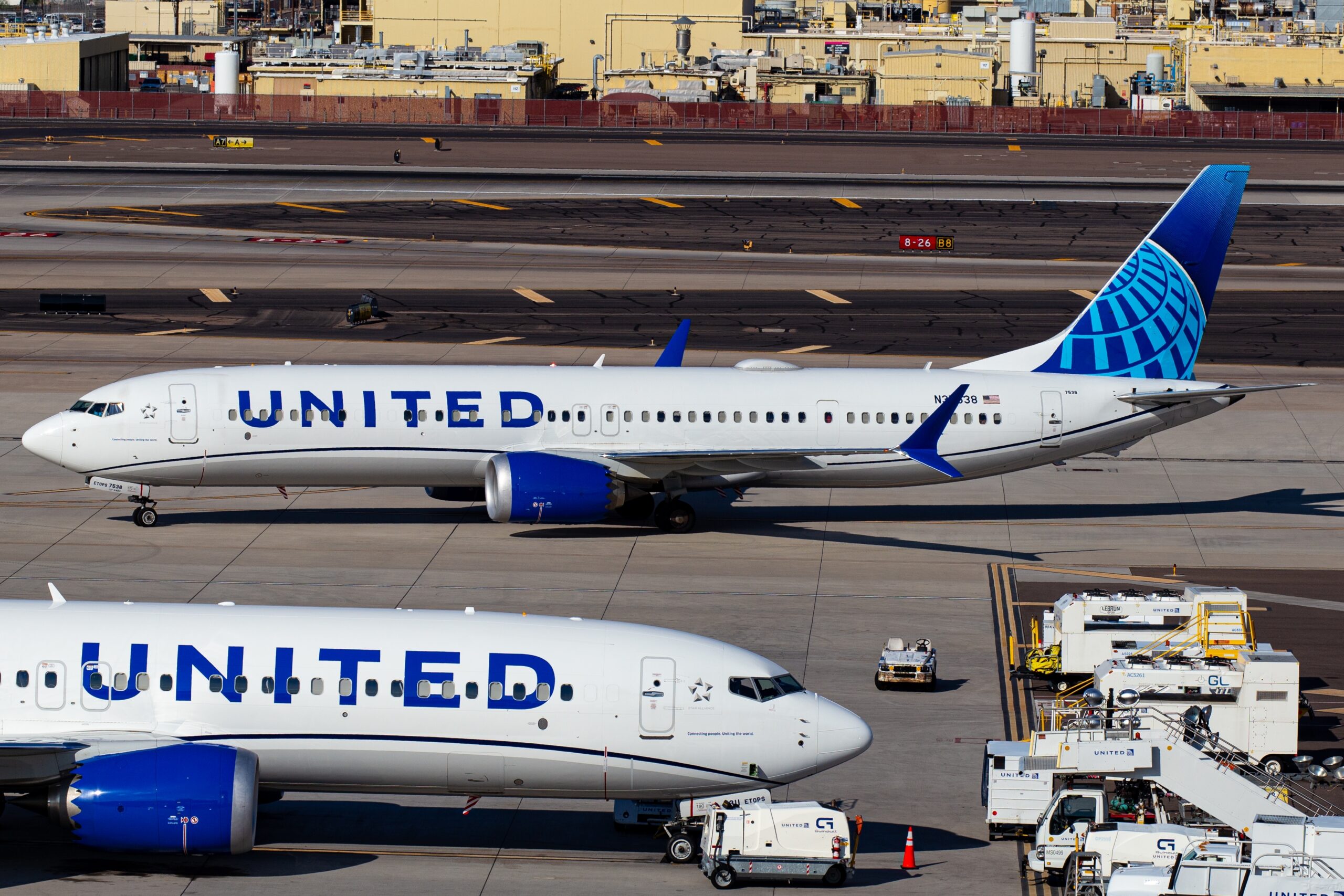
- Fleet size: Over 1,100 mainline aircraft, the largest mainline fleet of any airline in the world as of 2026
- Destinations: More than 380, across six continents
- Hubs: Seven in total – Chicago O’Hare (ORD), Denver (DEN), Houston (IAH), Los Angeles (LAX), Newark (EWR), San Francisco (SFO), and Washington Dulles (IAD).
- Employees: Over 113,000
- Recent financial performance: Record 2025 results – $59.1 billion in revenue, $3.4 billion net income, and 181 million passengers carried, also a record

Insight: United’s international route network is a step above its US rivals, flying to 41 international destinations that no other US-based carrier serves, and operating 46 transatlantic cities for summer 2026 alone.
Main Talking Points
1. United Next is the story behind almost everything happening at the airline right now. Since 2022, United has hired more than 60,000 employees as part of this growth and modernisation plan, and expects to take delivery of more than 250 new aircraft by April 2028, including a fleet of new Boeing 787-9 with the ‘United Elevated’ interior and a new Airbus A321neo variant called the ‘Coastliner’.
2. 2025 proved to be a record year for United. The airline reported $59.1 billion in revenue, $3.4 billion in net income, and 181 million passengers. United’s premium positioning is proving to be a real hit with passengers.
4. Deliveries of new A321XLR aircraft this year are a real fleet milestone. United took delivery of its first Airbus A321XLR on June 3, 2026, a narrowbody with a long range, opening up thinner long-haul routes that wouldn’t be commercially viable with a widebody.
5. United has installed Starlink on more aircraft than any other U.S. airline. Starlink is a real game-changer for fast, broadband-quality internet at 38,000 feet. United has installed Wi-Fi across its regional fleet, is making good progress on mainline narrowbody planes, and has started the retrofit process on its widebodies.
6. United is leading the industry in tech innovations. Under the leadership of CEO Scott Kirby, United Airlines has invested a lot in upgrading its tech stack, and the airline frequently wins accolades for its feature-packed mobile app. Other tech innovations include its ‘ConnectionSaver’ program that holds connecting flights for transit passengers.
Insight: If you’re asked “why United” in the room, naming United Next, the fleet modernisation, or the international network specifically shows you understand the airline as a business in the middle of real change, not just as a brand you’ve flown with. That’s a stronger answer than generic enthusiasm, and it’s the kind of specificity interviewers notice.
History and Heritage
United Airlines can trace its roots back to Varney Air Lines, launched by Walter Varney on April 6, 1926, as one of the earliest U.S. airmail carriers. William Boeing, having founded the Boeing Airplane Company a decade earlier, acquired Varney and several other early carriers, completing a merger by 1931 to form United Air Lines.
A defining early moment came in 1961, when United merged with Capital Airlines, becoming the largest airline in the Western world at the time. A stranger chapter followed in the late 1980s: United’s parent company rebranded itself Allegis Corporation, attempting to build a full-service travel conglomerate combining the airline with hotels and car rental businesses. Shareholders revolted against the strategy, and it was abandoned by 1988, with the airline reverting to the United name.
United became one of five founding members of Star Alliance in 1997, cementing its international network strategy. In 2010, United merged with Continental Airlines, forming the modern United Airlines Holdings and significantly expanding its international reach.
Since 2022, the United Next plan has driven the airline’s current era of fleet modernisation and hiring growth, and 2026 has brought both the ratification of the TA2 flight attendant contract and record annual financial results.
Fleet in 2026
United operates a mixed narrowbody and widebody fleet of over 1,100 mainline aircraft, the largest mainline fleet of any airline globally:
- Narrowbody (A319, A320, 737 family, A321neo, including the new Coastliner variant): The backbone of United’s domestic and regional network, also used on shorter international routes.
- Airbus A321XLR: The newest addition to the fleet, first delivered June 3, 2026, is an extended-range narrowbody built for long, thin international routes that wouldn’t support a widebody.
- Widebody (767, 777, 787 Dreamliner family): United’s long-haul international workhorses, flying transatlantic and transpacific routes from its major hubs. The 787-9 is now being delivered with a new United Elevated interior, an upgraded cabin experience across every class on board.
Cabin Classes
- United Polaris: United’s international lie-flat business class, found on widebody aircraft flying long-haul international routes. The newest 787-9 deliveries feature the United Elevated version of this cabin.
- United Premium Plus: A premium economy product sitting between Polaris and Economy Plus, available on widebody international flights.
- United First / United Business: Domestic and shorter-haul premium cabins on narrowbody aircraft, recliner-style rather than lie-flat.
- Economy Plus: Extra-legroom economy seating, available across the fleet.
- Economy: Standard cabin, the majority of seats on any United aircraft.
What is United Elevated?
The latest phase of the United Next transformation program is ‘United Elevated’ – the name for United’s latest aircraft and product innovations. United Elevated encompasses:
- New Boeing 787-9 Dreamliners with next-generation Polaris Business Class suites and the Polaris Studio (a larger Business Class Plus seat).
- New Airbus A321neo ‘Coastliner’ aircraft that will replace older planes operating transcontinental routes between Los Angeles and the East Coast. These planes feature new Polaris Business Class lie-flat seats.
- New Airbus A321XLR aircraft that will allow United to open up new long-haul routes that wouldn’t be possible with a widebody aircraft.
Frequent Flyer Programme
United’s loyalty programme, MileagePlus, has amassed over 130 million members. Miles act as the loyalty currency, and elite status is earned through Premier Qualifying Points rather than miles flown alone. Elite status runs through the Premier tiers: Silver, Gold, Platinum, and 1K.
As a Star Alliance founding member, MileagePlus status and mile-earning extend across the full Star Alliance network.
What Recruiters Are Looking For
United’s evaluation, from the Talent Assessment through to the in-person interview in Houston, is built around its Core4 values: Safe, Caring, Dependable, and Efficient. This framework isn’t named on United’s own careers page, but it underlies almost everything you’ll be asked. The United Airlines Flight Attendant Recruitment Step-By-Step Guide covers Core4 in full, including how it came to be and what kind of examples work best for each pillar.
A few things worth knowing specific to the assessment itself:
- Group activities in Houston are watched for team dynamics, not individual standout performance. Recruiters notice candidates who talk over others just as much as those who barely participate. Composure between exercises, not just during them, is being observed too.
- The most common mistake is defaulting to the same Core4 value in every answer. Candidates who always reach for Caring because it sounds warmest come across as less prepared than candidates who also have examples prepared for Dependable or Efficient.
- The pre-recorded interview trips up more candidates than the live one. Without a live interviewer to react to, candidates either over-rehearse to the point of sounding robotic or ramble without structure. Both read poorly.
Insight: Only two in-person interview attempts are permitted within any five-year period. For candidates fortunate enough to be invited to Houston for an in-person interview, the stakes are very real.
Sample Questions and How to Answer Them
Question: “Why United, specifically, rather than another US carrier?”
- What this is testing: Whether you’ve done real research into United versus a generic interest in flying.
- What a strong answer looks like: Name something specific and current, United Next, the record 2025 results, or the international network’s scale, rather than reciting United’s size or history as though it were a unique selling point.
Question: “Which of United’s Core4 values, Safe, Caring, Dependable, or Efficient, resonates with you most, and why?”
- What this is testing: Whether you know United’s actual evaluation framework, not just its general reputation.
- What a strong answer looks like: A genuine, specific example tied to Dependable or Efficient often lands better than Caring, simply because fewer candidates prepare one.
Question: “Tell me about a time you had a team member unexpectedly unavailable and had to provide additional support.”
- What this is testing: Dependability and adaptability under real pressure, not hypothetical willingness to help.
- What a strong answer looks like: A specific, honest account of stepping up without resentment or exaggeration, structured clearly using situation, task, action, and result.
Question: “What do you know about United’s current fleet and network?”
- What this is testing: Basic airline knowledge and whether you can speak with real specificity.
- What a strong answer looks like: Name the fleet’s scale (over 1,100 mainline aircraft, the largest globally), the recent A321XLR delivery, and United’s international reach, rather than a vague “they fly a lot of planes.”
Question: “How would you handle a passenger who is frustrated about a flight delay?”
- What this is testing: Composure and genuine empathy under a specific, common type of pressure.
- What a strong answer looks like: Acknowledge the passenger’s frustration honestly before moving to solutions, reflecting Caring and Dependable together rather than reciting a generic customer service script.
The Day Itself: What to Remember
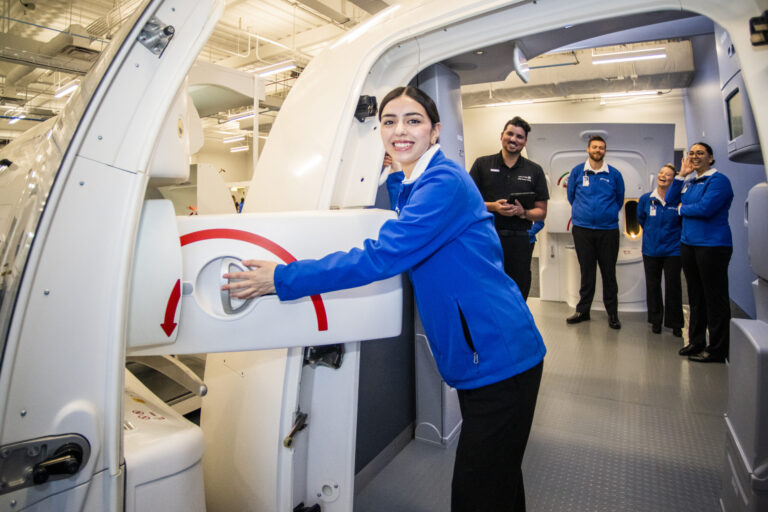
- Houston’s in-person day runs six to eight hours and includes both group and one-on-one assessments.
- The reach assessment (76 inches vertical, 43.5 inches horizontal, combined, without shoes) is verified in person here, alongside confirming you can sit in a jump seat with seatbelt and shoulder harness fastened.
- Only two in-person interview attempts are permitted within any five-year period.
- United provides a flight voucher for candidates travelling from outside the Houston area.
- Bring your passport (minimum 12 months’ validity, two consecutive blank pages) and any documentation of your customer service experience referenced in your application.
This page is part of our ongoing coverage of United Airlines flight attendant recruitment, built from close tracking of the airline's hiring process and what candidates can expect at each stage. If you're getting ready to apply, here's where to go next.