
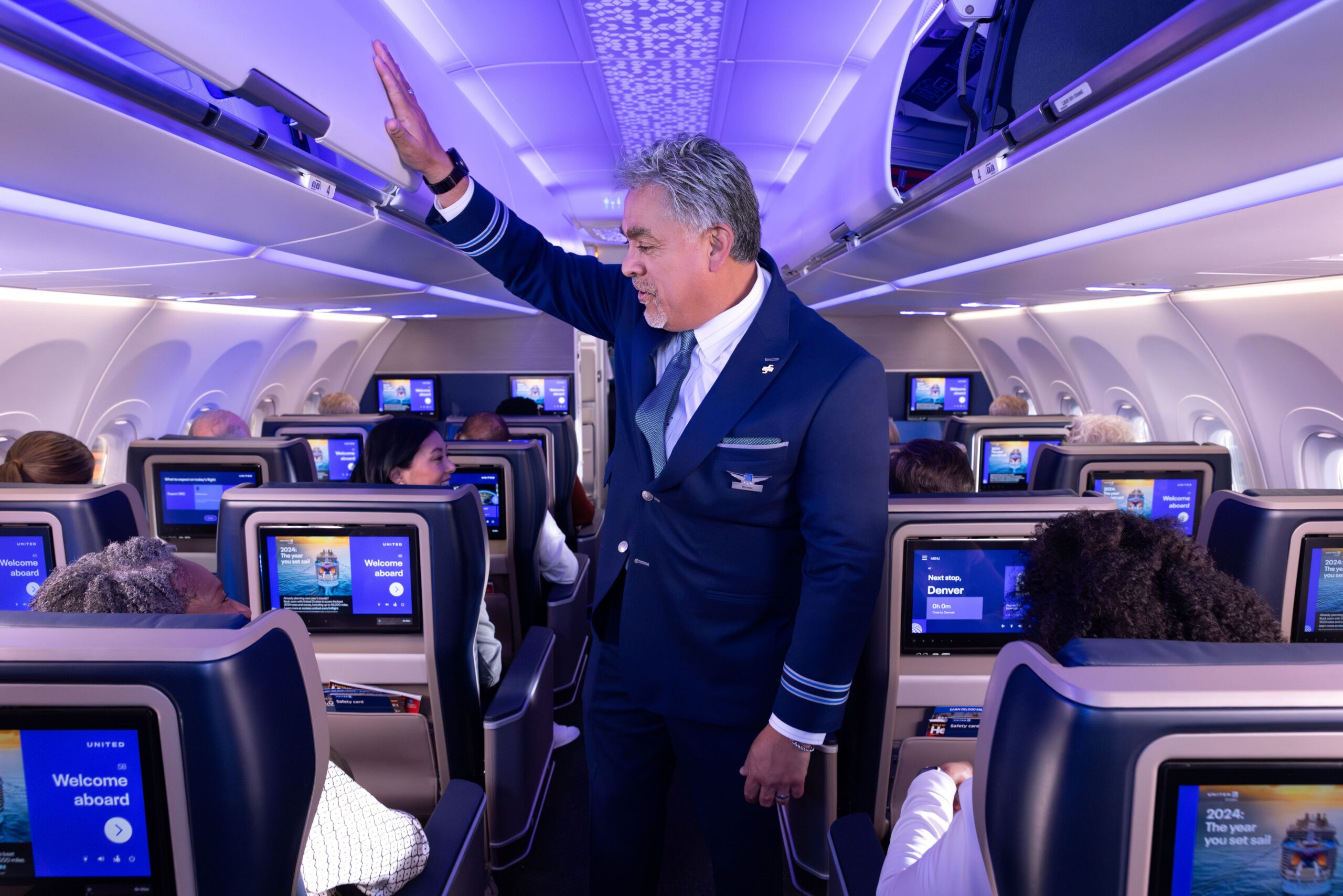

We’ve been genuinely impressed with how much information United Airlines provides candidates about its own recruitment process. The airline has clearly gone to a lot of effort to lay out each stage clearly, in a way that plenty of competitors don’t bother with. But what United’s page won’t tell you is how to actually pass each stage.
That’s where this guide comes in. Having been immersed in cabin crew recruitment for years, we’ve built an extensive library of resources covering exactly how to prepare for the assessments, interviews, and testing that you’ll face in the United Airlines flight attendant recruitment process.
This guide walks through every stage in order, with honest detail, real candidate timelines, and preparation links layered in at each step. We keep this guide updated. Everything below reflects the process as it runs in 2026.
- Recruitment Status
- How You Apply
- Minimum Requirements
- What to Bring
- The Online Application
- The Talent Assessment
- The Flyer Friendly Q&A
- The Pre-recorded Interview
- The Live Virtual Interview
- The In-Person Interview
- The Conditional Training Offer
- Training
- Graduation and Your First Weeks
- How Long Will the Process Take?
- How to Apply
Recruitment Status
United Airlines last reopened flight attendant applications on July 14, 2026, with the window shutting in mid-August 2026. At this time, we do not have an indication of when general flight attendant recruitment will reopen at United Airlines.
Despite the fact that United isn’t currently recruiting flight attendants, that doesn’t mean you shouldn’t be using this time to prepare. Recruitment windows can open with very little notice, and preparing a winning resume and application isn’t something that you can rush.
Remember, if you have previously applied to United and were unsuccessful, you cannot reapply until 12 months have passed from the date that you submitted your last application.
How You Apply
United runs a single application route through its online careers portal. There are no Open Days or walk-in alternatives. Postings can close quickly once they open, so having your resume ready before the window opens matters more here than at airlines with a longer-running application cycle.
A separate application track exists for language-qualified Flight Attendant positions (Language of Destination or LOD for short), which requires a formal language fluency assessment later in the process, in addition to all of the other assessment steps. If you’re bilingual, it’s worth checking which languages United is currently hiring for before you apply, since being a language-qualified candidate can be a real differentiator.
Worth Knowing: If you applied in a previous United hiring round and haven’t heard back, don’t submit a second application; it won’t move you up the line and could harm your application. If you were previously unsuccessful, you become eligible to reapply 12 months after the date you submitted your last application, not 12 months after you were rejected.
Minimum Requirements
Before you apply, you need to meet all of the following:
- Age: 21 or older at the time of application.
- Height: No fixed minimum. Unlike several other carriers, United doesn’t set a height threshold; what matters instead is passing the reach assessment below.
- Reach: A combined 76 inches vertical and 43.5 inches horizontal, tested simultaneously, without shoes. This is physically tested, not self-reported, and there’s no allowance for standing on tiptoes.
- English: English fluency is required. Additional languages aren’t required, but open up language-qualified positions with their own assessment stage.
- Education: High school diploma or GED.
- Experience: At least one year of customer service experience in retail, hospitality, food service, teaching, aviation, or social service. No prior flight attendant experience is required.
- Appearance: Visible tattoos are permitted on arms, wrists, ankles, and feet, provided they’re no larger than a United badge or covered by uniform, and provided the content isn’t violent, obscene, sexual, racist, or otherwise offensive. Tattoos on the head, hands, or neck, including behind the ear, are barred, regardless of size. Makeup and colored nail polish are permitted for all genders.
- Fitness: You’ll need to stand, walk, kneel, bend, stoop, stretch, reach, lift heavy items into overhead bins, and push or pull a beverage cart weighing up to 250 pounds. There’s no swim requirement in the sense of needing to be a strong swimmer, but you will need to demonstrate you can manoeuvre in a pool wearing a life jacket during training, under lifeguard supervision throughout.
- Relocation/right to work: You must be legally authorised to work in the US, with no visa sponsorship route available. A valid passport with at least 12 months’ validity and two consecutive blank pages is required at the time of application, and you must be able to travel to and from every country United serves without restriction.
Two things worth clearing up. First, plenty of applicants assume the reach test functions like a height minimum in disguise; it doesn’t. It really is about reach rather than stature, so don’t rule yourself out based on height alone. Second, the one-year customer service requirement is checked: Make sure your resume clearly documents it rather than assuming it’s implied by your job titles.
Check out United’s full and official grooming and appearance guidelines here
What to Bring
For the in-person stage, which is held in Houston, you will need to bring:
- A valid, unexpired passport meeting the validity requirement above
- Any documentation of your customer service experience that you referenced in your application
- Professional attire is suitable for both the group assessment and one-on-one interview portions of the day
Insight: United provides a flight voucher for candidates travelling from outside the Houston area, so you won’t need to cover the cost of getting there yourself, though personal costs around the trip (meals outside what’s provided, any additional nights) are worth budgeting for regardless.
The Online Application
Submit your application, including your resume, through United’s careers site. What United’s page doesn’t say clearly: your resume goes through an applicant tracking system (ATS) before a human ever sees it, so make sure your one year of customer service experience and any relevant keywords are clearly documented.
Writing a resume that will pass this stage isn’t nearly as simple as many people think. United will likely receive tens of thousands of applications, and the ATS is designed to cull a lot of candidates before they get invited to progress to the next stage of the recruitment process.
Ensuring that your resume is written to pass this initial screening exercise is essential and shouldn’t be downplayed.
To learn how to write a winning resume, visit our Flight Attendant CV and Resume Hub →
The resume hub provides simple guides to walk you through writing a winning resume, along with free ATS-friendly resume templates that a human recruiter will also enjoy reading. There are lots of resources within the hub, but if you’re short on time, then our Step-by-Step Guide to Creating Your Perfect Cabin Crew Resume is your essential resource.
The Talent Assessment
Once your application clears initial screening, you’ll be invited to complete an online Talent Assessment. United frames this as a fit check for its community of “friendly, forward-thinking people,” but what it’s really measuring is alignment with United’s so-called Core4 values: Safe, Caring, Dependable, and Efficient.
Core4 isn’t just a recruitment buzzword United invented for candidates. It dates back to 2018, when it was introduced in the aftermath of the widely publicised incident in which a passenger was dragged from a United flight, and originally ran as a mandatory four-hour training session for roughly 30,000 customer-facing employees.
United defines each pillar specifically, and knowing the actual definition, not just the word, is what separates a candidate who sounds like they’ve prepared from one who’s guessing:
- Safe: “We protect ourselves, each other, and our customers from any harm.” This is explicitly first in the hierarchy as the airline industry takes safety incredibly seriously. A strong example here isn’t just ‘I follow rules,’ it’s a specific moment where you noticed a risk and acted on it, or spoke up about a safety concern even when it wasn’t comfortable to do so.
- Caring: “We show that United appreciates everyone by being welcoming, kind, and compassionate with our customers and fellow employees.” This is where genuine warmth belongs, not performed friendliness. A strong example would be you acting with compassion and empathy toward a colleague or customer in a moment where you went above and beyond.
- Dependable: “We develop trust by being reliable and consistent with the quality of our performance.” This is about being accountable and following through with your promises, particularly when nobody would necessarily notice if you hadn’t. A strong example demonstrates consistency under pressure, not just showing up on time.
- Efficient: “We create excellence by conducting ourselves in an organized and effective way.” This is the pillar candidates most often reach for last and prepare for least, so it’s worth having a specific example ready rather than assuming Safe and Caring will carry the whole assessment.
Insight: When you’re asked which Core4 value resonates with you most, resist the instinct to always say Caring because it sounds warmest. Recruiters hear that answer constantly. A genuine, specific example tied to Dependable or Efficient are the values that candidates prepare for less, but often land better.
Treating this as a throwaway personality quiz is a mistake candidates make more often than they’d think, and poor alignment here ends the process quietly, usually with no specific feedback on why.
To prepare properly, visit our Cabin Crew Online Assessments Hub →
The Online assessments hub covers personality testing, video interviews, and situational judgement testing in depth across every major airline that uses them, along with practice tests to help you prepare and get a sense of how it all works.
If you’re short on time, start with How to Ace the Cabin Crew Online Personality Test.
The Flyer Friendly Q&A
Candidates who pass the Talent Assessment are invited to an optional Flyer Friendly Q&A session with United’s Inflight Recruiting team. There’s no penalty for skipping it, and it doesn’t affect your status either way. That said, it’s a good opportunity to ask real questions and to show your face to the recruiters who will be assessing you later.
If you’re hesitant about any stage of the recruitment process or what it’s like to be a United Airlines flight attendant, then we recommend making the time to take part in the Flyer Friendly session.
The Pre-recorded Interview
This is United’s on-demand video interview stage, and it’s the one candidates most often underestimate. You’ll answer a set of between six and eight behavioural questions. Before you answer each question, you’ll be given a short prep window. Candidates who ramble, sound over-rehearsed, or clearly haven’t practised speaking to a camera are the ones who don’t progress here.
This format isn’t unique to United; most major carriers now use some version of it, and treating it casually because there’s no live interviewer watching is one of the most common ways strong candidates get filtered out at this exact stage.
To prepare properly, visit our Cabin Crew Online Assessments Hub →
The hub includes our extensive two-part breakdown on what an on-demand video interview is, and how you should prepare to pass this stage: What is an ODVI? Part One and How to Ace the Cabin Crew Video Interview: Part Two.
Want to know what kinds of questions you’ll be asked in an ODVI? Check out this guide: Common Cabin Crew Video Interview Questions: What to Expect and How to Answer
The Live Virtual Interview
Candidates who progress from the pre-recorded stage move to a 30-minute live virtual interview with a member of United’s Talent Acquisition team. This is the first time you’ll come face-to-face with a human recruiter, even if it is virtually. The interview is about testing the same Core4 behaviors that you encountered earlier, but now with follow-up questions and real-time judgment involved.
United’s own advice here is to structure answers using situation, task, action, and result, in other words, the STAR method. Knowing the method’s name is one thing, having answers actually built to that structure under real interview pressure is another, and that gap is where candidates who thought they were ready lose the room.
To prepare properly, visit our Cabin Crew Interview Preparation Hub →
The hub will help you master how to answer competency-based questions, and has seperate guides on how to deal with telephone and video interviews. We have a slightly different version of STAR, which is SOAR to Success. This is an essential resource if you’re short on time.
Worth knowing: Every question in this stage maps back to one of the four Core4 pillars covered above, even when it isn’t phrased that way. A question about handling a frustrated colleague is testing Caring and Dependable together. A question about a mistake you caught before it became a problem is testing Safe. Listening for which pillar a question is really aimed at, rather than answering it generically, is what separates a strong live interview from an average one.
The In-Person Interview
Very few candidates reach this stage, and getting here is worth acknowledging on its own terms before anything else. Candidates who succeed at the live virtual interview are invited to Houston for what United describes as an “immersive interview experience,” a day that in practice runs six to eight hours and includes both group and one-on-one assessments with qualified Flight Attendant recruiters.
The Group Assessment
What United’s page doesn’t explain is what recruiters are actually watching for during group activities. It isn’t simply who talks the most or who seems most confident. Recruiters are watching how you interact with other candidates throughout the day, not just during the structured exercise itself. Being assertive reads well, talking over people doesn’t, and maintaining your composure in the moments between exercises matters as much as your performance during them.
To prepare properly, visit our Cabin Crew Assessment Day Hub →.
The hub covers group exercises, first-hand assessment day accounts, and what to wear in depth. Our Introduction to the Cabin Crew Assessment Day is the essential starting point.
The Reach Test
Alongside confirming you can sit in a jump seat with a seatbelt and shoulder harness fastened, you’ll be required to complete the 76-inch vertical, 43.5-inch horizontal combined reach requirement. Height does, obviously, play a role in this test, but flexibility can have a big impact on your ability to pass. Stretching exercises can significantly help shorter candidates pass this element of the Assessment Day.
Prepare for the Assessment Day by carefully reviewing the qualities United’s recruiters are looking for throughout: genuine warmth rather than performed enthusiasm, composure under the specific pressures of aviation (delays, medical situations, turbulence, security concerns), and team energy that reads as collaborative rather than competitive.
Worth knowing: Only two in-person interview attempts are permitted within any five-year period. If you’re unsuccessful here, that’s a real constraint on trying again soon, so treat this stage with the seriousness it deserves rather than as a low-stakes dry run.
The Conditional Training Offer
Candidates who succeed at the in-person stage receive a Conditional Joining Offer (CJO). This is contingent on successfully passing United’s pre-employment DOT background check, drug screening, fingerprinting, and vision and hearing tests, all of which happen before training begins, not after. Candidates applying to language-qualified positions also complete a virtual ALTA language assessment at this point, covering reading, speaking, writing, and comprehension in the relevant language.
Candidates can have their CJO rescinded if background checks show anything that wasn’t disclosed during the initial application. It’s far better to be honest from the outset than to try to hide something from the recruiters. They are likely to find out, and your job offer could be pulled at the very last second.
Training
Initial training runs 6.5 weeks at United’s dedicated training facility in Houston. Trainees only receive a $140 weekly stipend, plus two meals a day, and a $1,000 cash bonus on successful completion of the course.
Accommodation in a hotel is provided for the duration, but you will be sharing your room with another trainee.
The programme itself covers emergency procedures, First Aid and CPR, aviation safety, security, service standards, and fleet-specific training, with training flights and in-flight evaluations built in throughout.
Trainees learn their assigned base during the first week of training, not before, and only United’s domestic hub bases (cities like Chicago, Houston, Denver, Newark, Los Angeles, San Francisco, and Washington Dulles) are offered to new hires.
Graduation and Your First Weeks
After successfully completing the initial training course, you’ll graduate and officially become a United Airlines employee. You’ll get a week off immediately after graduation, then a week of hotel accommodation at your new base, courtesy of United, to help you get settled. A one-day base orientation covers your new work location, transportation, and practical local tips. Depending on the schedule you’re awarded, your first trip could come as soon as the day after orientation.
The first six months are a probationary period, with monthly check-ins scheduled with a supervisor rather than being left to work things out alone. After probation, you become eligible to bid for a transfer to a different base, awarded based on company need and in seniority order, the same principle that governs almost everything else about schedule and base life at a US carrier.
How Long Will the Process Take?
United is currently in the midst of a huge recruitment campaign, and real-world accounts suggest that the hiring timeline has slipped considerably compared to just a few years ago. Expect each step in this process to take several weeks, if not longer.
How to Apply
Apply directly at United’s careers site.
This page is part of our ongoing coverage of United Airlines flight attendant recruitment, built from close tracking of the airline's hiring process and what candidates can expect at each stage. If you're getting ready to apply, here's where to go next.