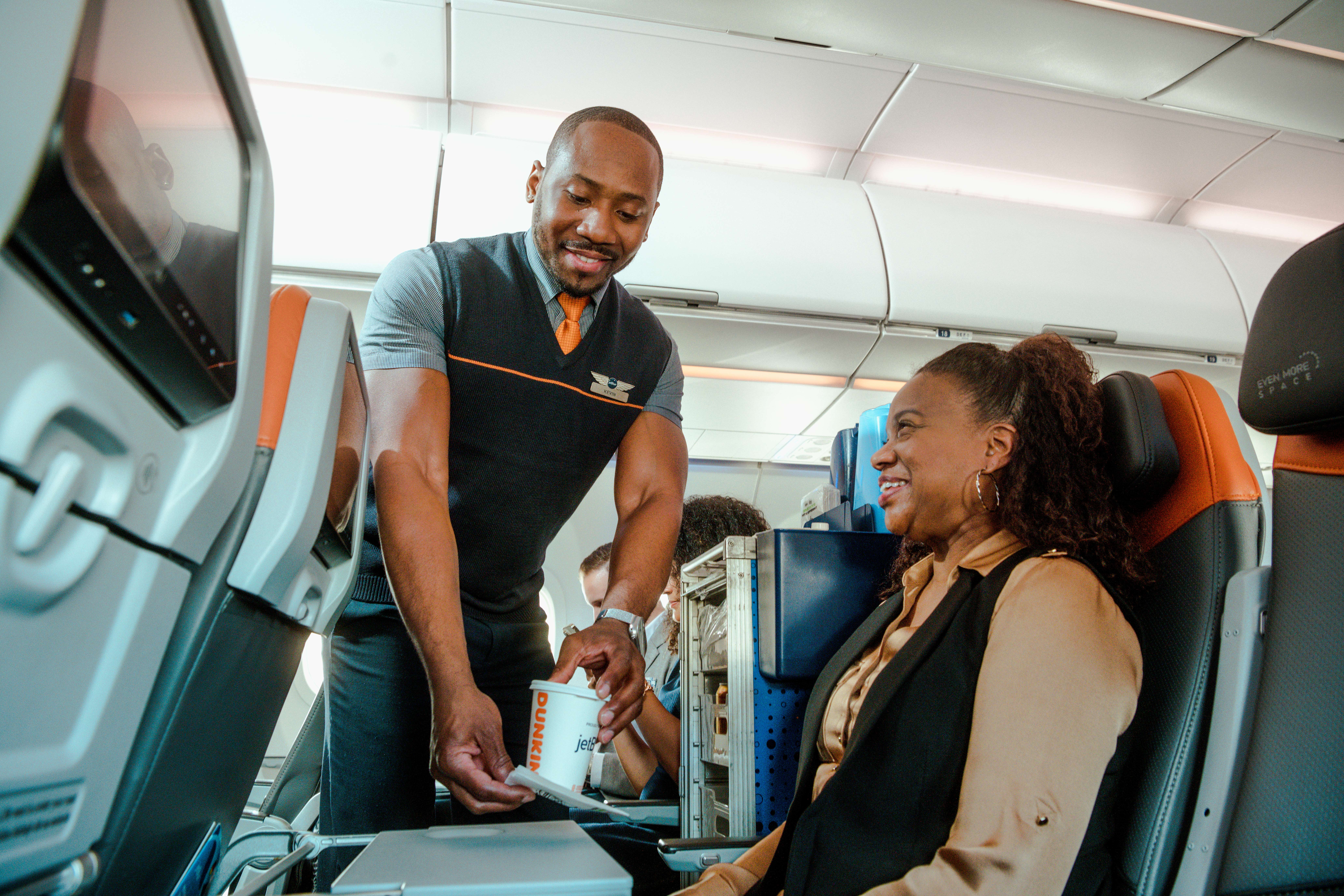

When an airline like JetBlue is recruiting new flight attendants, it tests your knowledge of the company as much as it tests your competencies and qualifications. A candidate who can only talk about their desire to become an Inflight Crewmember with no awareness of JetBlue won’t get through the door. This guide is everything you need to know before you walk into a JetBlue Assessment Day.
Use it the way you’d use notes the night before an exam: read it once for the full picture, then skim the Key Facts and Sample Questions sections again right before you walk in.

Key Facts
- Full name: JetBlue Airways Corporation
- Founded: August 1998 (originally as “NewAir”), began flying February 2000
- Home base: New York’s JFK, with major focus cities at Boston (BOS), Fort Lauderdale (FLL), Orlando (MCO), Los Angeles (LAX), and San Juan (SJU)
- Headquarters: Long Island City, Queens, New York
- Ownership: Publicly traded, NASDAQ: JBLU. Not owned by a parent company.
- CEO: Joanna Geraghty, the first woman to lead a major US airline
- Tagline: “Bringing Humanity Back to Air Travel”
- Alliance membership: Not a member of any global alliance (oneworld, Star Alliance, or SkyTeam). Instead runs bilateral partnerships, most notably the new “Blue Sky” partnership with United Airlines
- Frequent flyer programme: TrueBlue (see below)
- Fleet size: 291 aircraft, all Airbus, as of early 2026
- Destinations: Around 104, concentrated across the US, Caribbean, and Latin America, with a small number of routes into Europe
- Cabin crew union: Represented by TWU Local 579, roughly 7,000 Inflight Crewmembers
Insight: JetBlue has no widebody aircraft in its fleet at all. If you’re coming from a background where you assume a major international airline has to have Boeing 777s or Airbus A350s, drop that assumption before you walk in. This is a narrowbody airline through and through, even on its transatlantic routes.
Main Talking Points
1. JetBlue’s tagline isn’t just a meaningless slogan. When JetBlue launched in 2000, it was built on the idea that it was ‘Bringing Humanity Back to Air Travel.’ In other words, JetBlue would treat passengers like people rather than revenue units, at a time when other US carriers were stripping out amenities. Free in-flight live TV, the most legroom in coach of any US airline by average seat pitch, and America’s first airline Customer Bill of Rights all trace back to that same founding idea.
2. The all-narrowbody fleet is a strategic choice, not a limitation. JetBlue has built its long-haul transatlantic service around the Airbus A321LR rather than a widebody aircraft type, betting that a premium narrowbody cabin can make commercial sense and allow the airline to compete against bigger competitors on similar routes.
3. JetBlue is in a period of real strategic reset. The proposed merger with Spirit Airlines collapsed in 2024 after the Department of Justice (DOJ) successfully blocked it on antitrust grounds, and the earlier Northeast Alliance with American Airlines was also dissolved following its own antitrust ruling. Since then, JetBlue has doubled down on the markets where it’s strongest, particularly Fort Lauderdale, rather than chasing partnerships that regulators won’t allow.
4. The “Blue Sky” partnership with United is new and particularly significant. Rather than another merger attempt, JetBlue has moved to what is known as a bilateral partnership model with United Airlines. This started as a loyalty reciprocity and codeshare partnership as well as shared ticket sales under the ‘Blue Sky’ program.
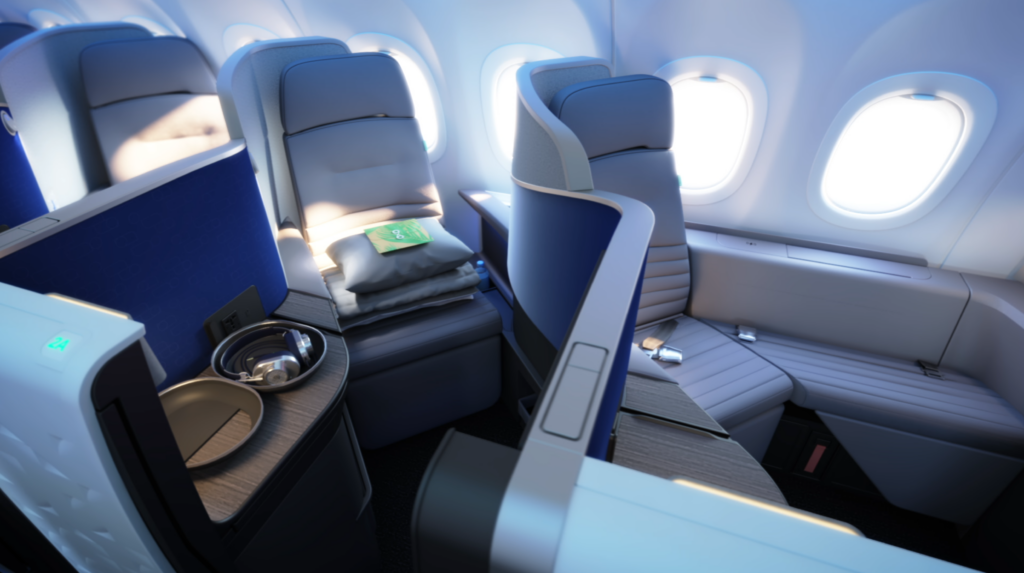
5. JetBlue is finally moving into domestic first class. Starting in 2026, select A320 and A321 aircraft are getting a small forward cabin of recliner-style first class seats, which is to be known as ‘Blue First’; a big change for an airline that has historically been all-economy outside of its transcontinental and transatlantic Mint services.
6. Financial turnaround is the backdrop to everything right now. JetBlue hasn’t posted an annual profit since 2019. Leadership of the airline under the current CEO, Joanna Geraghty, has been focused on returning the airline to profitability. This means cutting routes that don’t work but investing in other areas to attract premium passengers.
Insight: If you’re asked, “Why do you want to work for JetBlue?” in an interview, resist the urge to talk only about the brand’s friendly reputation. Naming the strategic reset, the FLL growth focus, or the Blue Sky partnership shows you understand the airline as a business right now, not just as a consumer brand you’ve flown with. That distinction is exactly what separates candidates who sound prepared from candidates who sound like everyone else in the room.
History and Heritage
JetBlue was founded in August 1998 by the serial airline entrepreneur David Neeleman under the working name “NewAir,” and began flying in February 2000 out of New York JFK. The business idea was simple: Combine full-service amenities like seatback video screens and free snacks with low fares. The idea came at a moment when the rest of the US industry was making major cutbacks to the passenger experience.
A defining early moment in JetBlue’s history was the ‘Valentine’s Day 2007 operational meltdown’, when an ice storm stranded passengers in planes on the tarmac for hours and cascaded into days of cancellations. The airline responded by introducing America’s first airline Customer Bill of Rights, a public commitment to offer specific compensation when service failures were within the airline’s control. That moment still shapes how JetBlue positions itself against larger competitors today.
More recently, the airline pursued a merger with the now-defunct Spirit Airlines. The deal would have reshaped the US low-cost landscape, but the DOJ successfully blocked the merger in a controversial 2024 court ruling on the grounds that it would reduce competition and raise fares.
JetBlue is now leaning harder into the markets where it already had strength, especially Fort Lauderdale, where it has become the airport’s largest carrier.
Fleet in 2026
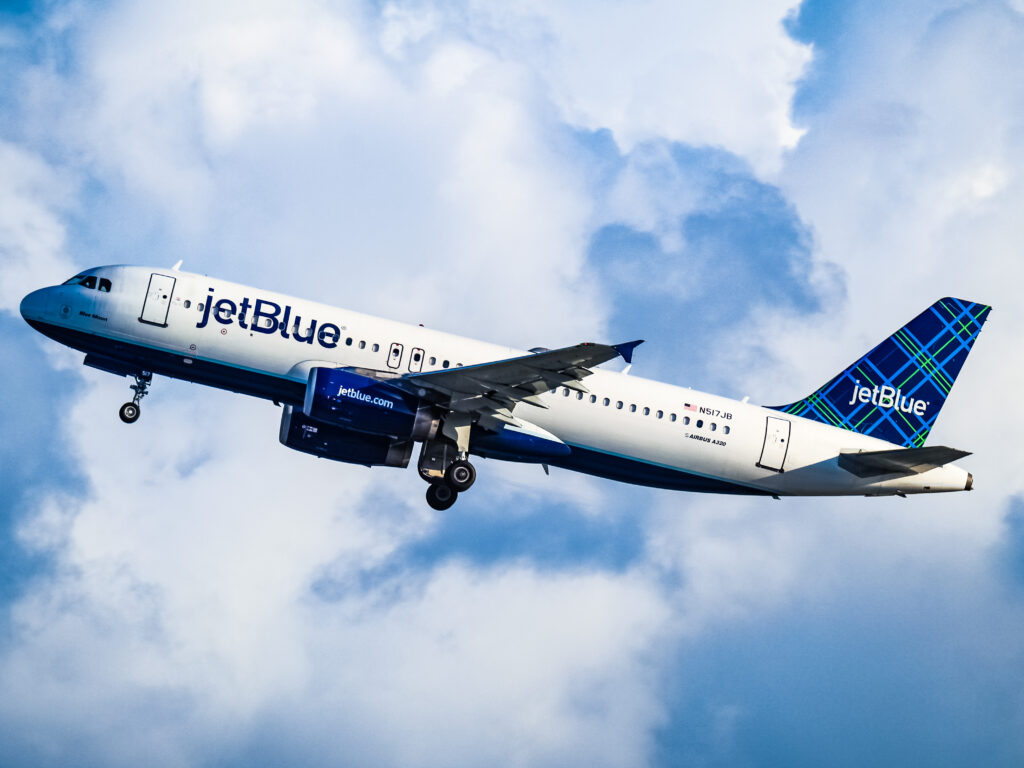
JetBlue operates an all-Airbus, all-narrowbody fleet of 291 aircraft:
- Airbus A220-300 (around 61 aircraft): The newest and smallest jet in the fleet, used on shorter and thinner domestic and regional routes. Popular with crew for its 2-3 seating and larger windows.
- Airbus A320 (around 129 aircraft): The core domestic workhorse, all-economy on most routes, and the aircraft most candidates will fly on in their first year.
- Airbus A321 (around 101 aircraft, across ceo, NEO, and LR variants): The largest aircraft in the fleet. Some A321s carry Mint, JetBlue’s fully lie-flat premium cabin, on longer domestic transcon routes. The A321LR variant specifically is the backbone of JetBlue’s transatlantic network, flying Mint-equipped service from JFK and Boston into Europe.
- Airbus A321XLR (on order): An extended-range version intended to push transatlantic and Latin American range further, though JetBlue has sold two of its original order to Aegean Airlines as it manages near-term financial pressure.
Worth knowing: JetBlue has no widebody aircraft and has no current plans to introduce one. Its entire transatlantic strategy runs on narrowbody jets with a strong premium cabin, which still remains relatively unusual among airlines flying to Europe.
Cabin Classes
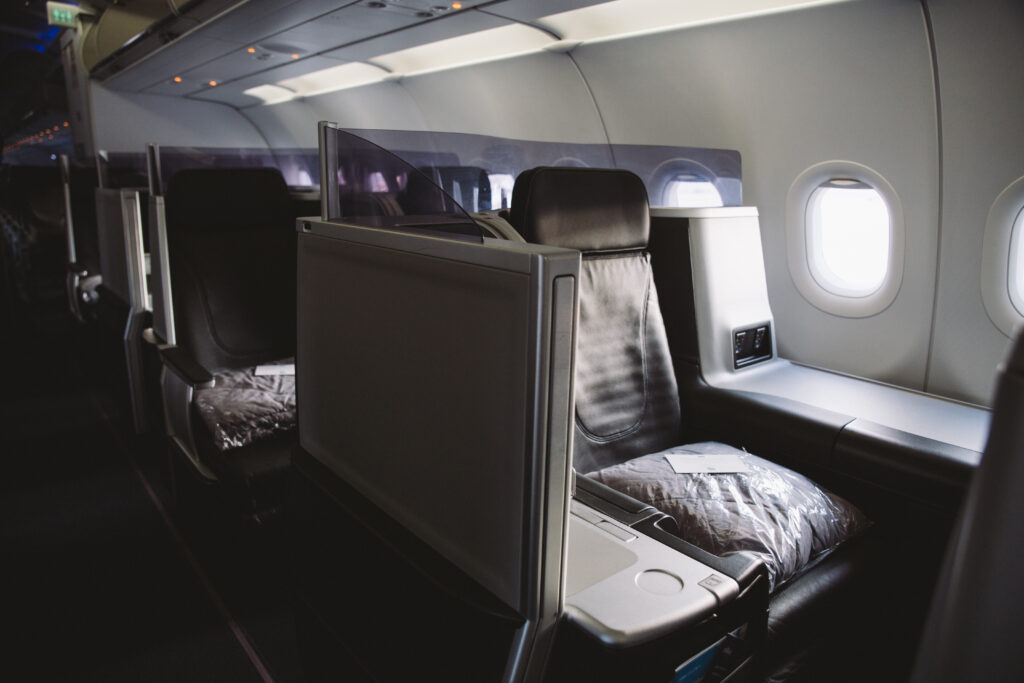
- Mint: JetBlue’s lie-flat Business Class, found on select A321 transcon routes and all A321LR transatlantic routes. The A321LR’s Mint suites include sliding privacy doors on some seats, putting the product in direct competition with legacy carriers’ business class on the same city pairs.
- Domestic First Class (new for 2026): A forward cabin of around 12 recliner-style seats in a 2-2 layout, rolling out on select non-Mint A320 and A321 aircraft. This is not lie-flat and is a separate product from Mint.
- EvenMore Space: Extra-legroom economy seating, available for purchase or as an elite status perk.
- Core: Standard economy, including the more restrictive Blue Basic fare bucket within it.
Earlier this year, JetBlue opened its first-ever airport premium lounge, which is called Bluehouse, and is located within its home hub at New York JFK Terminal 5. Later this year, a second Bluehouse is slated to open at Boston Logan, and both lounges will cater to transatlantic Mint customers, frequent flyers with Mosaic 4 status, and passengers who have JetBlue’s premium credit card.
Worth knowing: Because JetBlue is actively rolling out domestic first class (Blue First) aircraft-by-aircraft starting in 2026, don’t assume every A320 or A321 you’re assigned to has it yet.
Frequent Flyer Programme
JetBlue’s loyalty programme is called TrueBlue, with points as the loyalty currency. Elite status within TrueBlue is called Mosaic, and runs across four tiers (Mosaic 1 through Mosaic 4). Status is earned through “tiles” accumulated from JetBlue spending and co-branded credit card spending rather than flights alone. Mosaic 4, the top tier, carries benefits including bonus points per dollar, Move to Mint upgrade certificates, and complimentary lounge access as JetBlue’s first lounges open at JFK and Boston.
Because JetBlue isn’t part of a global alliance, Mosaic doesn’t carry reciprocal status with any alliance partner. Its main external value comes through the growing Blue Sky partnership with United.
What Recruiters Are Looking For
JetBlue’s brand identity is built on genuine warmth over corporate polish, so recruiters are listening for the same thing they’d listen for at any airline. A few things worth knowing:
- Composure under a specific kind of pressure matters. JetBlue markets itself on treating people like people during disruption, not just on sunny days. A candidate who can describe staying calm and genuinely helpful during a stressful situation, rather than just “customer service” in the abstract, tends to land better than one reciting a generic answer.
- The most common mistake is over-rehearsing the “why JetBlue” answer around price and legroom. Those are true, but they’re also the first thing every candidate says. Naming something specific and current, like the Fort Lauderdale growth story or the shift into domestic First Class, signals you’ve actually done the work.
- Genuine, low-key friendliness reads better than big personality. JetBlue’s brand voice is warm rather than flashy, and that tends to be reflected in what recruiters respond well to in the room.
Insight: A candidate who can speak honestly about the airline’s current financial pressure and frame it as a reason they want to be part of the turnaround rather than a reason to avoid the question comes across as considerably more credible than one who pretends everything is simply great.
Sample Questions and How to Answer Them
“Why JetBlue, specifically, rather than another airline?”
- What this is testing: Whether you’ve done real research versus a generic love of travel.
- What a strong answer looks like: Name something concrete and current, the Fort Lauderdale growth focus, the Blue Sky partnership, or the shift into domestic first class, and connect it to why that specific thing appeals to you rather than reciting the founding story everyone already knows.
“Tell me about a time you had to stay calm when a situation wasn’t going well.”
- What this is testing: Composure under pressure, and whether your account of “calm” is credible or performed.
- What a strong answer looks like: A specific, honest example with a clear resolution, told without exaggerating your own poise. Recruiters notice when an answer sounds rehearsed rather than remembered. Use the STAR or SOAR frameworks to answer this question.
“What does an Inflight Crewmember do beyond serving drinks?”
- What this is testing: Whether you understand the safety-first nature of the role, not just the service side.
- What a strong answer looks like: Lead with safety and emergency procedure responsibilities before getting to service, and be specific about the fact that JetBlue crew fly an all-narrowbody, no-widebody fleet, which shapes the day-to-day nature of the job.
“What do you know about JetBlue’s fleet?”
- What this is testing: Basic airline knowledge and whether you can speak with any specificity.
- What a strong answer looks like: Name the three aircraft families (A220, A320, A321), and mention that JetBlue has no widebody aircraft, using the narrowbody Mint strategy on the A321LR as your specific example.
“How would you handle a passenger who is anxious or upset during turbulence?”
- What this is testing: Empathy and genuine warmth combined with the ability to stay authoritative when needed.
- What a strong answer looks like: Actively listen and understand the passenger’s needs. Acknowledge their feelings honestly rather than dismissing them, while being clear and calm about safety procedures, reflecting the specific blend of warmth and composure JetBlue looks for.
The Day Itself: What to Remember
- Arrive early and be warm with everyone you interact with from the moment you walk in, not just the people running the assessment. JetBlue’s brand is built on authenticity, and that’s tested informally as much as formally.
- Know your “why JetBlue” answer cold, but make sure it references something specific and current rather than the founding story every other candidate will also mention.
- Be ready to speak clearly about the airline’s current strategic position, the Spirit merger collapse, the Fort Lauderdale focus, and the move into domestic First Class, without sounding like you’re reciting a press release.
For everything else you need to prepare, check out our Ultimate Recruitment Guide and free cabin crew resume templates.