
Height and reach requirements catch a lot of candidates off guard, not because the numbers are secret, but because they’re scattered across dozens of airline pages and rarely explained properly. Here’s what the requirements actually are, why they exist, and how to prepare, grouped by region so you can find your target airline quickly.
Why These Requirements Exist
Height exists because cabin crew need to reach overhead lockers and the safety equipment stored inside them, without help, on every single flight.
Reach is a related but distinct requirement, and it’s more specific than most candidates realise. It commonly exists so you can operate the emergency slide correctly: holding the assist handle while simultaneously pulling the manual inflation handle.
Are These Hard Cut-Offs?
Height: yes. If an airline publishes a minimum or maximum height, it’s enforced, and there’s no flexibility built into a fixed number.
Reach: also yes, but with a real caveat. A reach test is pass or fail, but your height alone doesn’t dictate success. Two candidates of identical height can have different reach depending on shoulder mobility and how far they can comfortably stretch. In other words, flexibility plays a big role in whether you pass the reach test.
Height and Reach by Region
| Emirates | Min height 160cm, reach 212cm on tiptoes, barefoot |
| Etihad | Min height around 163cm, reach around 210-212cm, barefoot |
| Qatar Airways | No published height minimum, reach 212cm on tiptoes, barefoot |
| British Airways | Maximum height of 2.01 metres. Vertical function reach of at least 2.01 metres. |
| Ryanair | Height 157-188cm |
| easyJet | Height roughly 157-190cm |
| Wizz Air | No fixed height, reach 210cm on tiptoes, barefoot |
| United | No published height figure. Functional reach: 76 inches vertical and 43.5 inches horizontal, combined and simultaneous, without shoes |
| Delta | Vertical reach test of 76 inches barefoot and not on tiptoes. |
Worth knowing: Height and functional reach test standards occasionally change depending on safety updates and the mix of aircraft that a specific airline is operating. This is one of the reasons why height and reach test standards can vary so widely between different airlines.
How to Prepare for the Reach Test
If the height or functional reach test is causing you real anxiety, that’s worth taking seriously rather than just hoping for the best on the day. The good news: reach is trainable, in a way height obviously isn’t, and a few weeks of consistent, gentle stretching can make a real difference for most people who are borderline.
Start by finding out exactly where you stand. Mark your target height on a wall at home using tape or a sticker, then test yourself barefoot, on tiptoes, with a straight arm, exactly how the real test will be run. This removes the biggest source of anxiety here, uncertainty, and replaces it with an actual number to work from.
What’s usually limiting your reach isn’t your height; it’s flexibility. Specifically through your shoulders, upper back, and calves. A short daily routine targeting these areas could make all the difference.
- Overhead shoulder reach. Stand tall, raise both arms straight overhead, and gently reach upward as if trying to touch the ceiling, holding for 15 to 20 seconds.
- Doorway shoulder stretch. Place your forearm on a doorframe at shoulder height, elbow bent, and gently lean your body forward through the doorway. This opens up the chest and shoulders, which directly limits how far your arm can extend overhead.
- Side body lat stretch. Reach one arm overhead and lean gently to the opposite side, holding for 15 to 20 seconds, then switch. Your latissimus muscles, running down your sides, restrict overhead reach more than most people realise.
- Calf raises. Standing tall, rise onto your tiptoes and hold for a few seconds before lowering for 10 to 15 repetitions. Stronger, more stable calves let you hold a tiptoe stretch confidently rather than wobbling, which costs you real height in the actual test.
- Spinal elongation. Standing tall, imagine a string gently pulling the crown of your head upward, lengthening your whole spine rather than just your arm. Small, but it really adds to your overall reach.
Worth knowing: Warm up before stretching, even just a few minutes of light movement, and never push into pain; a mild pull is normal, sharp discomfort isn’t. If you’re new to stretching, doing this routine for five to ten minutes daily for two to three weeks before your Assessment Day is a realistic, sensible timeframe to see a real difference.
The Jump Seat Harness Test
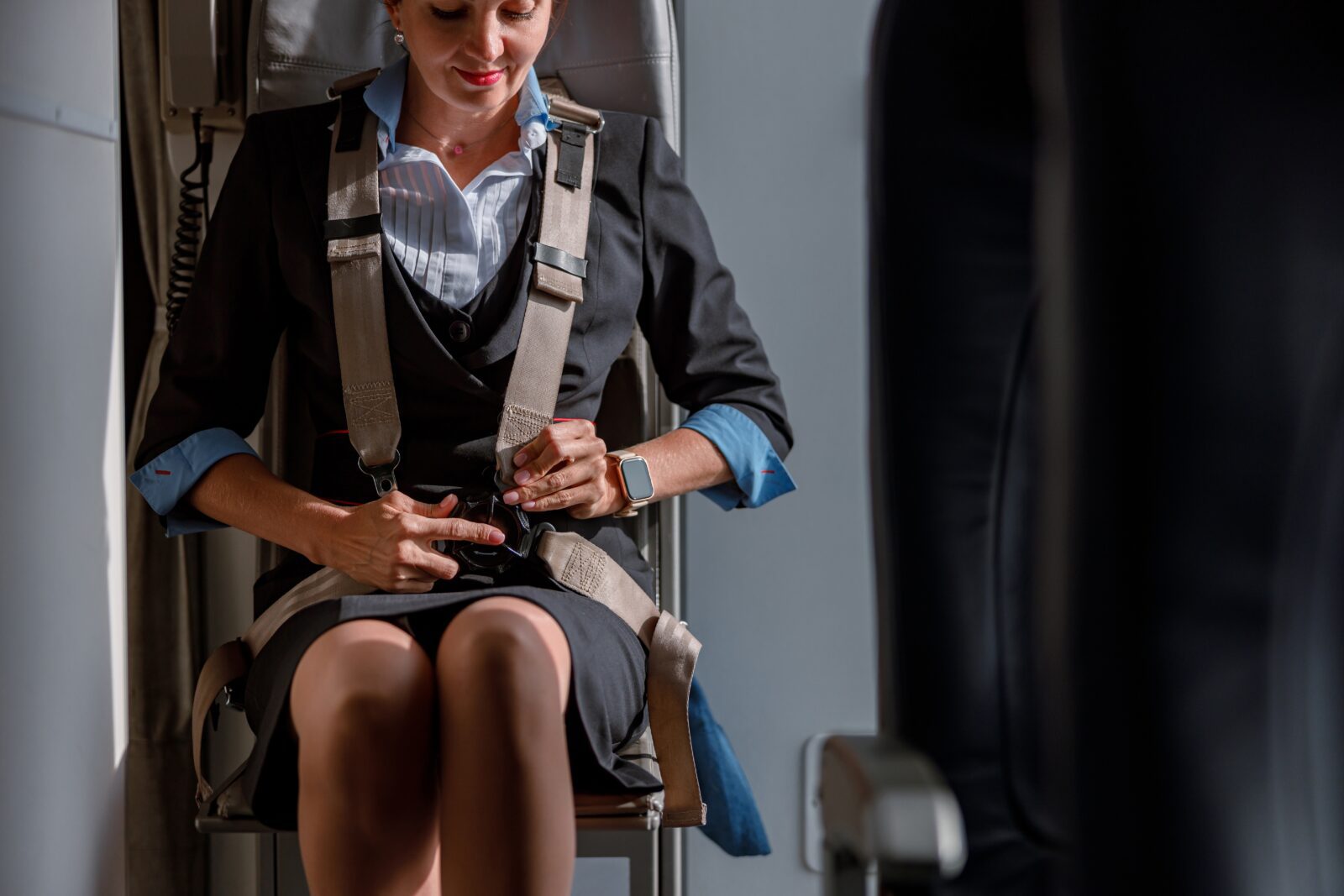
This one is simple to describe and completely binary: can you sit in a jump seat and fasten both the seatbelt and shoulder harness, at their largest setting, without any modification? If yes, you pass. If not, you don’t, regardless of how well you’ve done in every other part of the day.
It’s worth being clear about what this test actually is, and isn’t. Most airlines don’t hire based on weight or body size directly; there’s no scale, no BMI figure, no size chart. What they’re checking is whether you fit a specific, fixed piece of certified safety equipment. Body proportion, not just overall size, can have a big impact on this element of the Assessment Day.
The reason there’s no flexibility is regulatory, not a policy choice any individual airline has made. A jump seat and its harness are certified aviation safety equipment, built to a fixed design that’s been tested and approved to work reliably in an emergency evacuation, under real physical forces, and to release quickly when it matters. Airlines don’t have meaningful room to redesign this to accommodate a wider range of body sizes.
Is it fair that jump seats are built this way? Probably not, in the sense that it’s a hard limit some truly strong candidates will fail through no fault of their own. But it’s the regulatory environment every airline operates within, not a judgement on you as a candidate, and it isn’t something you can train, diet, or prepare your way around the way you can with the reach test above.
Your Reach and Height Checklist
-
Checked your target airline’s exact, current published height and reach requirements directly on their careers page
-
Marked your reach height on a wall at home and practised reaching it daily, barefoot and on tiptoes
-
Practised the specific reach motion your airline uses (simultaneous vertical and horizontal, if applicable), not just a general stretch
-
Understood the jump seat harness test is a fixed fit test, not something to prepare for through practice
-
Checked whether your target airline uses a step-through exit test as well
This page is part of our Assessment Day Hub, covering everything from the group exercise to what to wear on the day itself. If you're getting ready for your assessment, here's where to go next.