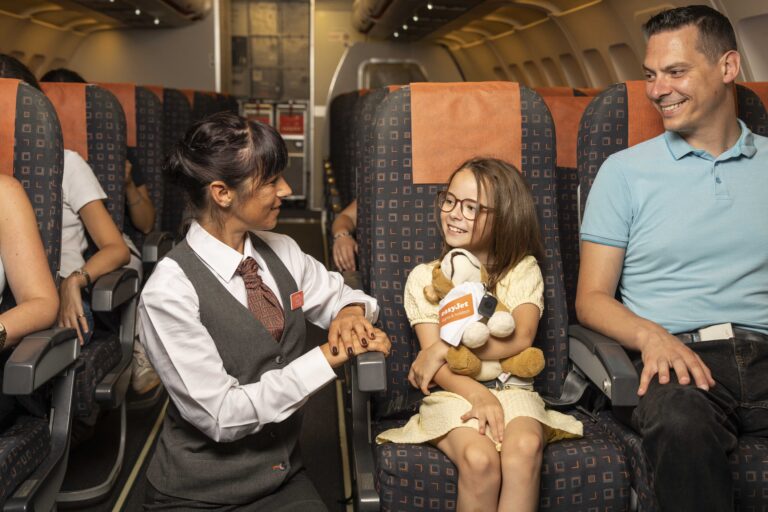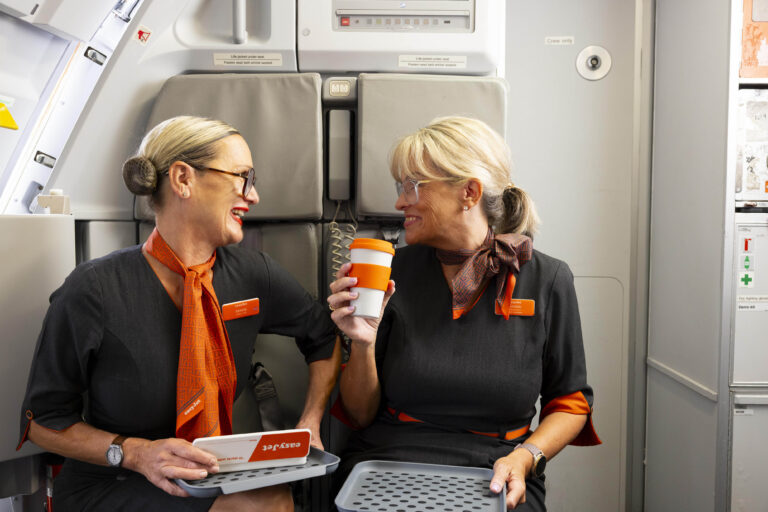
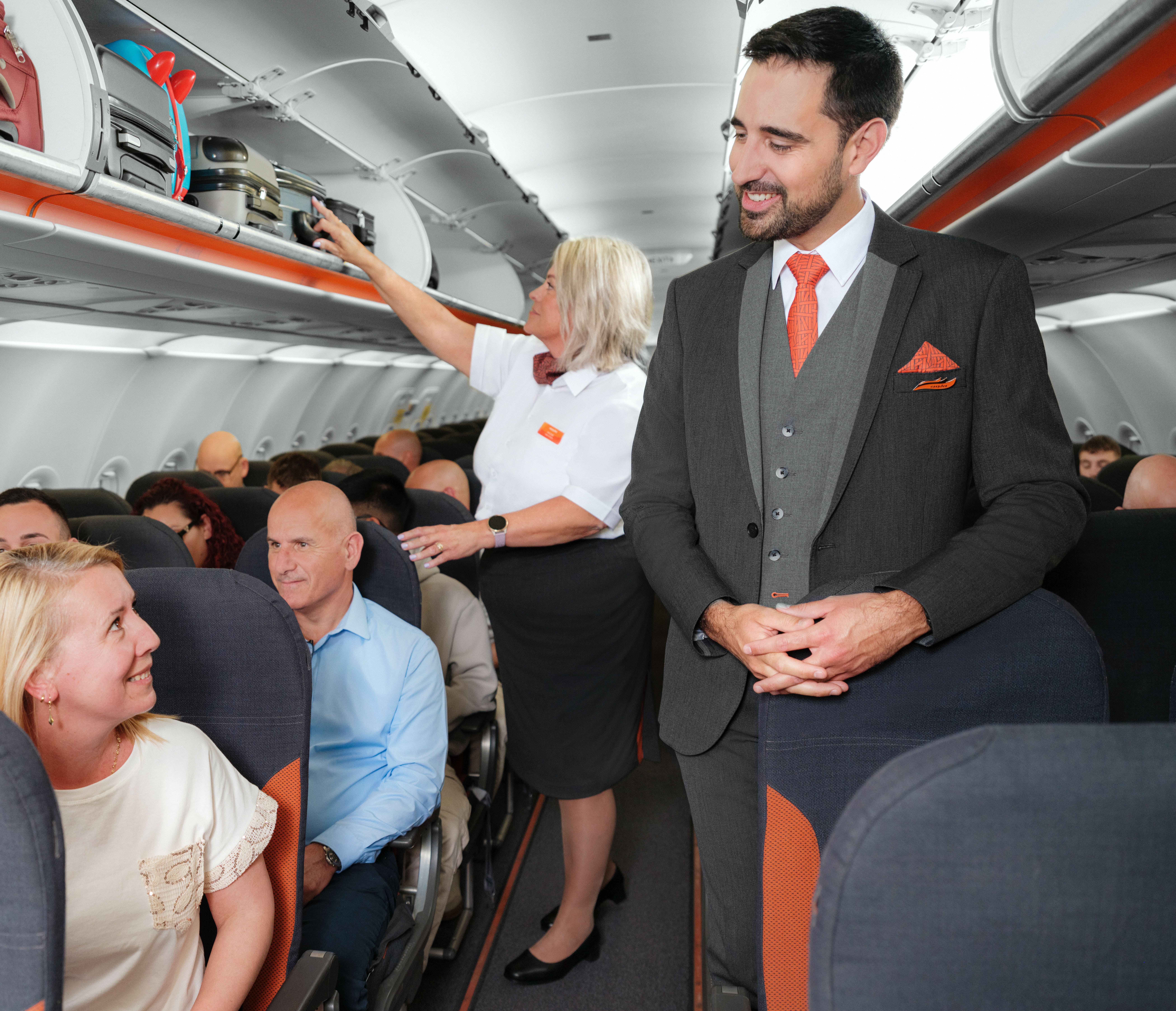

While EasyJet is famous for its low fares, the airline offers one of the better cabin crew salary and benefit packages amongst European airlines. The airline operates short-haul, high-frequency flights from bases across the UK and Europe, and the pay structure reflects that model. On top of that, EasyJet offers a permanent contract, direct employment, union representation, pension scheme, and one of the more generous commission structures for budget carriers. For candidates who want to build a long-term UK or European-based career, the overall package can make a lot of sense.
In recent years, the salary has also improved significantly. For UK-based cabin crew, a 20% pay increase came into effect from May 2025 following a successful agreement between EasyJet and the Unite the Union, bringing the base salary up to a level that is more competitive with the broader market than it was in previous years.
This guide breaks down exactly what EasyJet cabin crew earn in 2026, what the benefits are worth in practice, and what to factor in before you sign.
If you are considering applying, the full step-by-step recruitment guide is here: EasyJet Cabin Crew Recruitment 2026: The Complete Step-by-Step Guide
The Contract
EasyJet cabin crew in the UK are employed on a permanent contract directly by the airline. This is not agency employment and it is not fixed-term. You are building continuous employment rights from the first day you join.
UK cabin crew are represented by Unite the Union, which negotiates pay and conditions on behalf of members. The 20% pay rise from May 2025 was the result of that union representation working as it should.
The probationary period is typically six months. Training is paid throughout.
Insight: The permanent contract and union representation at EasyJet are structural advantages that do not show up in a headline salary comparison with Gulf carriers. At Emirates or Qatar Airways, for example, your employment is fixed-term, union-free, and subject to the discretion of management on pay changes. At EasyJet, your pay is collectively bargained, and your employment rights are legally protected from day one. Different trade-offs are worth understanding before you decide which model suits your life.
EasyJet Cabin Crew Salary
All figures are in GBP. As a UK-based role, earnings are subject to UK income tax and National Insurance.
- Basic annual salary: Starting from approximately £22,000 per year following the May 2025 pay uplift. This is the guaranteed fixed component paid regardless of flying hours.
- Annual increments: EasyJet operates a structured pay progression, with average increments of approximately £2,000 per annual cycle. Pay, therefore, increases with each year of service.
- Flight pay: An additional hourly rate applied to block hours flown, paid on top of the basic salary. This varies by sector and adds to monthly earnings on busier rosters.
- Commission: EasyJet cabin crew earn 10% commission on all onboard sales, including food and beverages from the CAFE.SHOP range and any other in-flight retail. This is one of the more generous commission structures among European carriers, and on busy routes with high passenger spend, it adds a consistent monthly top-up.
- Layover allowances: Cash per diems for overnight stays away from base, covering meals and incidentals. Paid per night away and yours to keep regardless of what you actually spend.
All-in annual estimate:
The picture by experience level, based on Glassdoor data from June 2026 across 703 EasyJet cabin crew salary submissions:
- New joiners (year one): Approximately £22,000 to £25,000 total annual earnings, including base, flight pay, and early commission
- Typical range (mid-career): £38,531 to £51,737 per year
- Experienced crew (75th percentile and above): Up to £59,068 per year
In monthly terms, a new joiner can expect total gross earnings of approximately £1,830 to £2,080 per month. After UK income tax and National Insurance, take-home pay for most new joiners will be approximately £1,500 to £1,750 per month, depending on tax code and roster intensity.
Worth knowing: The gap between year-one earnings and mid-career earnings at EasyJet is considerable. The annual increments, growing commission as you build confidence selling onboard, and flight pay accumulation all compound over time. The starting figure is modest in the context of London living costs, but the trajectory over three to five years is genuinely better than the entry point suggests.
Base Differences
Pay varies by base and country. UK bases pay in Pound Sterling under UK employment law. European bases pay in local currency under the employment law of that country, which affects everything from tax rates to employment rights. If you are considering applying to a European base, research the specific terms for that country before applying — the package at a French or Italian base is structured differently from a UK one.
Within the UK, London Gatwick and London Luton tend to generate higher commission earnings than regional bases simply because of passenger volume and spend patterns on those routes.
Accommodation and Transport
EasyJet does not provide accommodation. Crew members are responsible for their own housing and must live within 90 minutes of their base at the time of joining. For London-based crew, this means living costs are a significant factor in the net value of the package.
Transport to and from the airport is not provided. Commuting costs are the crew member’s own responsibility and should be factored into your monthly budget alongside the base salary.
Pension
EasyJet offers a contributory pension scheme with employer contributions. Both you and EasyJet contribute, building a retirement pot over your career. This is standard UK employment practice and a genuine structural advantage over the end-of-service gratuity model at Gulf carriers, where no pension accumulates during your time overseas.
EasyJet Cabin Crew Benefits
- Commission: 10% on all onboard sales, including food, beverages, and retail
- Flight pay: Additional hourly rate on block hours flown
- Layover allowances: Cash per diems for overnight stays away from base (although these are few and far between)
- Staff travel: Heavily discounted travel on EasyJet for crew and eligible family members, plus industry-wide staff travel discounts with partner carriers. Consistently described by EasyJet crew as one of the strongest benefits in the package.
- EasyJet Plus membership: Provided free to cabin crew, giving access to Speedy Boarding, allocated seating, and other Plus benefits
- Pension: Contributory scheme with employer contributions
- Sick pay: Proper contractual sick pay, as opposed to the statutory minimum
- Training: Initial training is fully paid. Recurrent safety training is part of your working schedule.
- Uniform: Provided by EasyJet
- Career progression: Structured pathways to Senior Cabin Crew and Cabin Manager roles. Promotion is based on performance and time served.
- Union representation: Unite the Union for UK crew, providing collective bargaining rights on pay and conditions
A few things to factor in before you sign. The basic salary at £22,000 requires careful financial planning for crew based in London or the South East, where housing costs are high and commuting to Gatwick, or Luton adds further expense. Monthly earnings vary depending on roster intensity, routes flown, and onboard sales performance.
Commission is genuinely variable — a quiet route with low passenger spend produces considerably less than a busy holiday route. And UK income tax and National Insurance apply in full.
How Does EasyJet Compare?
Within the UK short-haul market, EasyJet’s main competitor for cabin crew is Ryanair. EasyJet’s pay structure is broadly superior — the permanent contract, the union representation, and the commission rate all compare favourably. The basic salary is comparable, but EasyJet’s employment terms are more stable, and the career trajectory is clearer.
Against UK long-haul carriers like British Airways and Virgin Atlantic, EasyJet pays less at entry level, and the flying is fundamentally different in character. The trade-off is that you are home most nights, your roster is structured and predictable, and there are no long-haul fatigue or layover complications to manage.
Against Gulf carriers, EasyJet’s total package is lower in the early years. The trade-off is home-country living, pension contributions, union protection, and a permanent contract that does not expire.
Ready to Apply?
EasyJet is not currently recruiting but is expected to open a register of interest for Summer 2027 hiring shortly. Monitor the careers portal and sign up for job alerts to be notified when the registration opens.